
Baby Developmental Milestones: What to Expect in the First Year
Watching your baby grow is one of the most rewarding experiences as a parent—but it can also be one of the most anxiety-inducing.
Every parent wonders if their child is developing "normally." Is that first smile happening on schedule? Should they be rolling over by now? The truth is, developmental milestones are guidelines, not deadlines—and understanding what to actually expect can ease a lot of unnecessary worry while helping you spot genuine concerns early.
Why Developmental Milestones Matter (and When They Don't)
Developmental milestones are behavioral and physical markers that most children reach by certain ages. They cover four main categories: motor skills, cognitive development, communication, and social-emotional growth. Pediatricians use them as checkpoints to identify potential developmental delays early, when intervention is most effective.
But here's what many parents don't realize: there's a wide range of "normal." The CDC, BabySpark, and various parenting resources all give slightly different timelines, which can create confusion and unnecessary stress.
"The only milestones you need to worry about are the ones set by your child's doctor. There are also a lot of things that seem like 'milestones' that are actually not developmental milestones."— Reddit user in r/NewParents
Month-by-Month: What to Actually Expect in Year One
Months 1-3: The "Fourth Trimester"
Newborns are adjusting to life outside the womb. During this period, expect:
- ✅ First smile — Usually around 6-8 weeks, this social smile (not just gas!) is a major milestone
- ✅ Head control during tummy time — Brief lifting and turning by 2-3 months
- ✅ Tracking objects — Following faces and toys with their eyes
- ✅ Cooing and gurgling — Early communication attempts
For babies born early, remember to use their "adjusted age" (from their due date, not birth date) when tracking milestones.
"I hear that we should expect milestones—first smile, maturing digestive system, being able to recognize faces—by counting from due date."— Reddit user in r/NewParents
Months 4-6: The Interactive Phase
This is when babies become genuinely entertaining to be around:
- ✅ Laughing out loud — That first belly laugh is unforgettable
- ✅ Reaching and grabbing — Intentional hand movements develop
- ✅ Rolling over — Tummy to back usually comes first
- ✅ Babbling — "Ba-ba" and "da-da" sounds emerge (even if meaningless)
- ✅ Mirror fascination — They love seeing that "other baby"
Months 7-9: The Mobile Phase
Your baby starts becoming genuinely mobile—time to baby-proof:
- ✅ Sitting independently — Without support
- ✅ Crawling — Some babies skip this entirely and go straight to walking
- ✅ First foods — If you're doing baby-led weaning or purees
- ✅ Stranger anxiety — Suddenly skeptical of anyone who isn't mom or dad
- ✅ Object permanence — Understanding that things exist even when hidden (peek-a-boo becomes hilarious)
Months 10-12: The Cruising Phase
The countdown to walking begins:
- ✅ Pulling up to stand — Using furniture for support
- ✅ Cruising — Walking while holding onto furniture
- ✅ First words — "Mama" and "dada" with meaning (maybe)
- ✅ Waving and clapping — Social gestures develop
- ✅ First steps — Anywhere from 9-18 months is normal range
Red Flags vs. Normal Variation
While every baby develops at their own pace, certain signs warrant a conversation with your pediatrician:
- ❌ No social smiling by 3 months
- ❌ Not reaching for objects by 5 months
- ❌ Not babbling by 9 months
- ❌ No response to their name by 12 months
- ❌ Loss of previously acquired skills at any age
Early intervention services exist precisely because early support makes a huge difference. If something feels off, trust your instincts and ask—pediatricians would rather address concerns early than wait.
"Either they assess that your baby doesn't need additional support, or if they do, starting EI as early as possible will be super helpful."— Reddit user in r/NewParents
Tracking Milestones Without Obsessing
Here's the balance most parents struggle to find: you want to be aware enough to catch genuine delays, but not so anxious that you're comparing your baby to every child at daycare.
What Works
- Use one reliable source — The CDC's milestone tracker or your pediatrician's guidelines, not five conflicting apps
- Note the ranges — "Walking by 12-18 months" means 18 months is just as normal as 12
- Focus on progress — Is your baby learning new things? That matters more than exact timing
- Document with photos/videos — Easier to show your doctor a video than describe a concerning movement
Apps That Actually Help
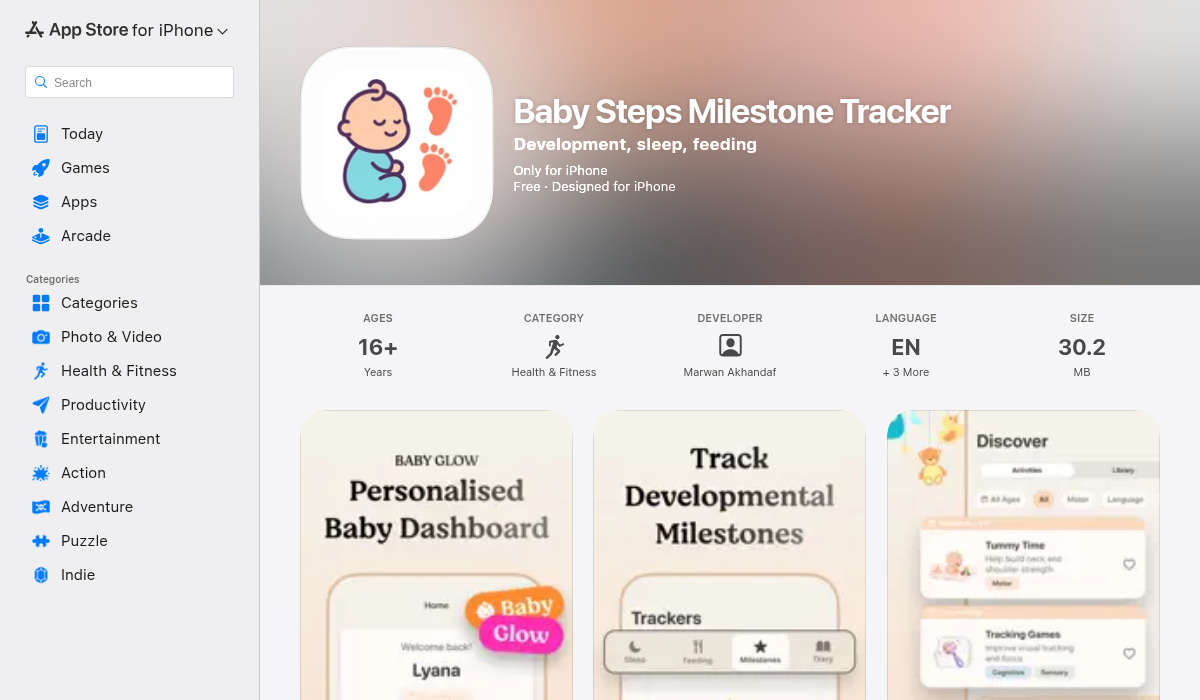
Baby Steps is built specifically for tracking developmental milestones based on CDC guidelines. Unlike generic baby apps that try to do everything, Baby Steps focuses on what matters:
- ✅ CDC-based milestone tracking — Evidence-based, not random internet timelines
- ✅ Age-appropriate activity suggestions — Ideas to encourage development naturally
- ✅ Sleep and feeding logs — Track patterns that affect development
- ✅ Learning library — Understand the "why" behind each milestone
- ✅ Smart reminders — Prompts for upcoming milestones without constant notifications
The key difference with Baby Steps is that it doesn't gamify your baby's development or make you feel like you're competing. It's a tool for awareness, not anxiety.
The Milestones Nobody Tells You About
Beyond the official CDC checklist, there are everyday moments that signal healthy development:
- 🎯 The "gimme" reach — When they see something they want and their whole body reaches for it
- 🎯 Anticipatory excitement — They know what comes next (bottle time, going outside)
- 🎯 Testing boundaries — Looking at you while doing something they shouldn't (cognitive awareness!)
- 🎯 Comfort object attachment — That specific blanket or toy they need
- 🎯 Jokes — Doing something silly intentionally to make you laugh
"Middle babyhood ones (4-8 months): reaching/grabbing, laughing, being entertained by mirrors, the progression from tummy time to rolling and then crawling, sitting, first foods, babbling."— Reddit user in r/NewParents
When to Actually Worry (Spoiler: Less Often Than You Think)
Most of the time, developmental variation is just that—variation. Babies have their own timelines, interests, and strengths. A baby who's early to walk might talk later. A verbal baby might be slower to crawl.
What genuinely matters:
- Overall trajectory — Are they progressing, even if slowly?
- Engagement — Do they interact with you and their environment?
- Regression — Are they losing skills they previously had?
If you're worried, the best thing you can do is ask your pediatrician. They'd rather reassure you unnecessarily than miss something important.
The Bottom Line
Developmental milestones are helpful signposts, not pass/fail tests. Every baby follows their own path, and most of the variation you'll see is completely normal. The goal isn't to check every box on schedule—it's to support your child's natural development while staying alert for genuine concerns.
Use tools like Baby Steps to stay informed without obsessing. Trust your pediatrician. And most importantly, enjoy watching your baby grow—those first smiles, laughs, and wobbly steps are worth more than any checklist.