
Best AI Calorie Counter Apps 2026: We Tested 5 Top Picks
Tracking calories used to mean tedious manual logging — typing every ingredient, guessing portion sizes, and eventually giving up by week two. AI calorie counter apps have changed the game in 2026, turning your phone camera into a nutrition scanner that identifies meals in seconds.
Whether you're trying to lose weight, build muscle, or simply eat more mindfully, AI-powered calorie tracking removes the biggest barrier: friction. We tested the best options on the market to see which ones actually deliver on their promises — and which ones fall short.
Why AI Calorie Tracking Is a Game-Changer
Traditional calorie counting is a chore. You take a bite of homemade pasta, then spend five minutes scrolling through a database trying to find something close to what you're eating. Multiply that by three meals and two snacks a day, and it's no wonder most people abandon their tracking goals within two weeks.
AI calorie counters flip this experience. Snap a photo of your plate, and the app identifies what you're eating, estimates portion sizes, and logs everything — calories, macros, and often micronutrients — in seconds. Some apps even support voice logging, so you can say "I had a chicken salad with avocado" and get an instant estimate.
The technology isn't perfect — complex dishes with hidden ingredients can throw off estimates — but for most meals, AI tracking is close enough to be genuinely useful. And the time savings mean you'll actually stick with it.
What We Looked For
We evaluated each app on five criteria:
- AI accuracy — How well does the photo scanner identify foods and estimate portions?
- Speed — How fast is the scan-to-log process?
- Database depth — Does the app recognize international dishes, packaged foods, and restaurant meals?
- Extra features — Workout tracking, meal planning, coaching, health integrations
- Value — Is the free tier useful, and is the premium price justified?
Best AI Calorie Counter Apps in 2026
1. Zwintji — AI Calorie Scanner
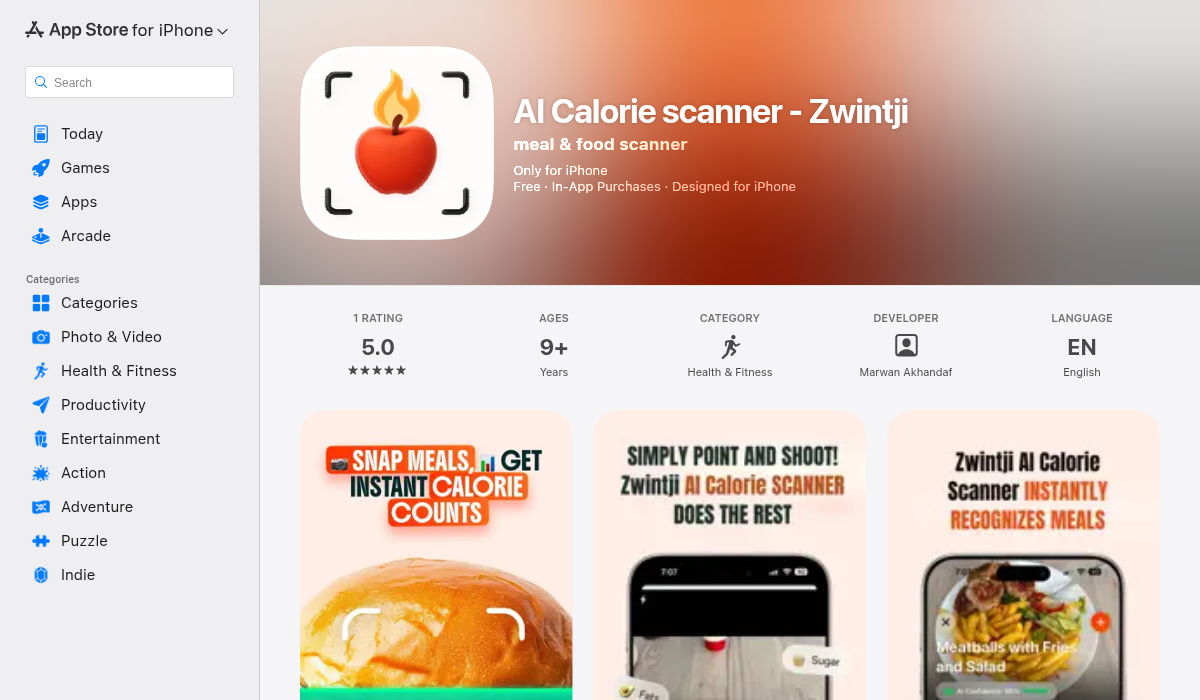
Zwintji takes a refreshingly direct approach to calorie tracking. Point your camera at any meal — home-cooked, restaurant, or packaged — and the AI identifies ingredients, estimates portions, and logs nutritional data in seconds. It also scans barcodes for packaged foods, pulling exact nutrition info from its database.
What sets Zwintji apart is how it combines calorie tracking with workout logging and personalized goals. Instead of needing separate apps for food and fitness, everything lives in one place. The app learns your patterns over time and provides insights about your eating habits — not just numbers, but actionable recommendations.
- ✅ Fast AI meal scanning with ingredient recognition
- ✅ Barcode scanner for packaged foods
- ✅ Integrated workout tracking
- ✅ Personalized nutritional insights and goals
- ✅ Clean, modern interface
- ❌ iOS only (no Android version yet)
Best for: People who want an all-in-one calorie and fitness tracker without the bloat of larger platforms.
2. Cal AI — Calorie Tracker
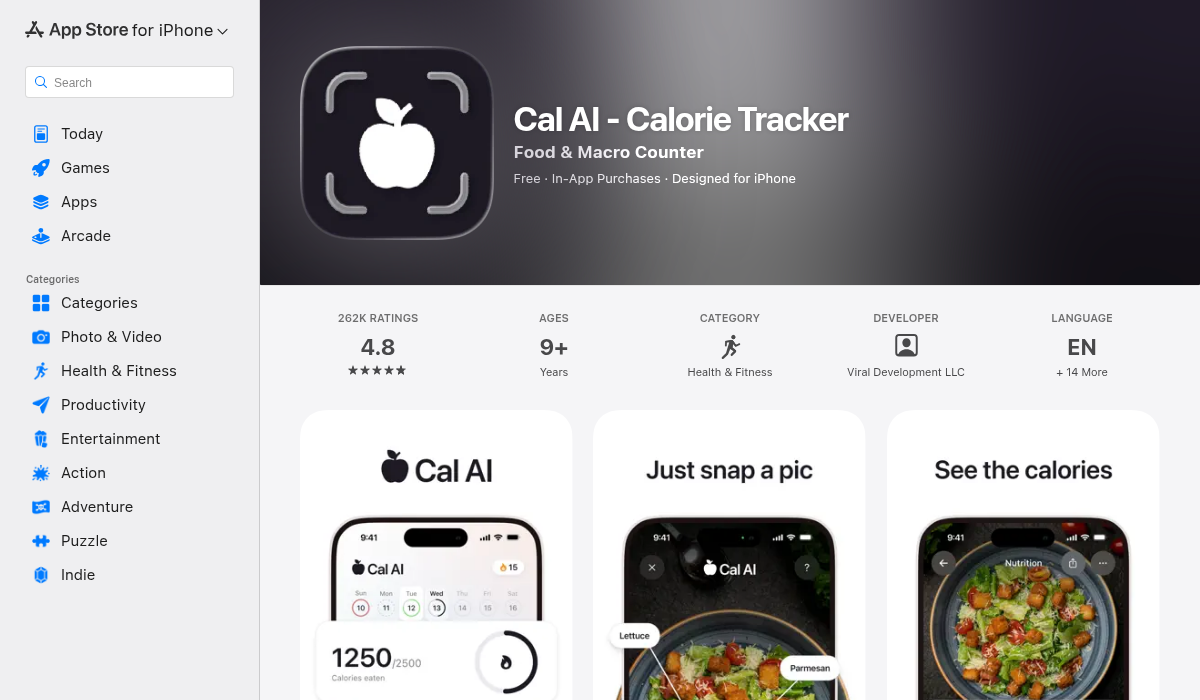
Cal AI has rapidly become one of the most popular AI calorie trackers, and for good reason. The photo scanning is genuinely impressive — it handles complex plates with multiple items and gives detailed macro breakdowns. You can also scan barcodes or describe your meal in natural language.
The app's interface is polished and fast, making the logging process feel almost effortless. It also integrates with Apple Health for a complete picture of your daily activity and nutrition. The premium tier unlocks advanced features like meal planning and detailed analytics.
- ✅ Highly accurate photo-based food recognition
- ✅ Barcode scanning and voice/text input
- ✅ Sleek, modern UI
- ✅ Apple Health integration
- ❌ Free tier is quite limited
- ❌ Premium subscription is on the pricier side
Best for: Users who want the most accurate AI food scanning and don't mind paying for premium features.
3. SnapCalorie
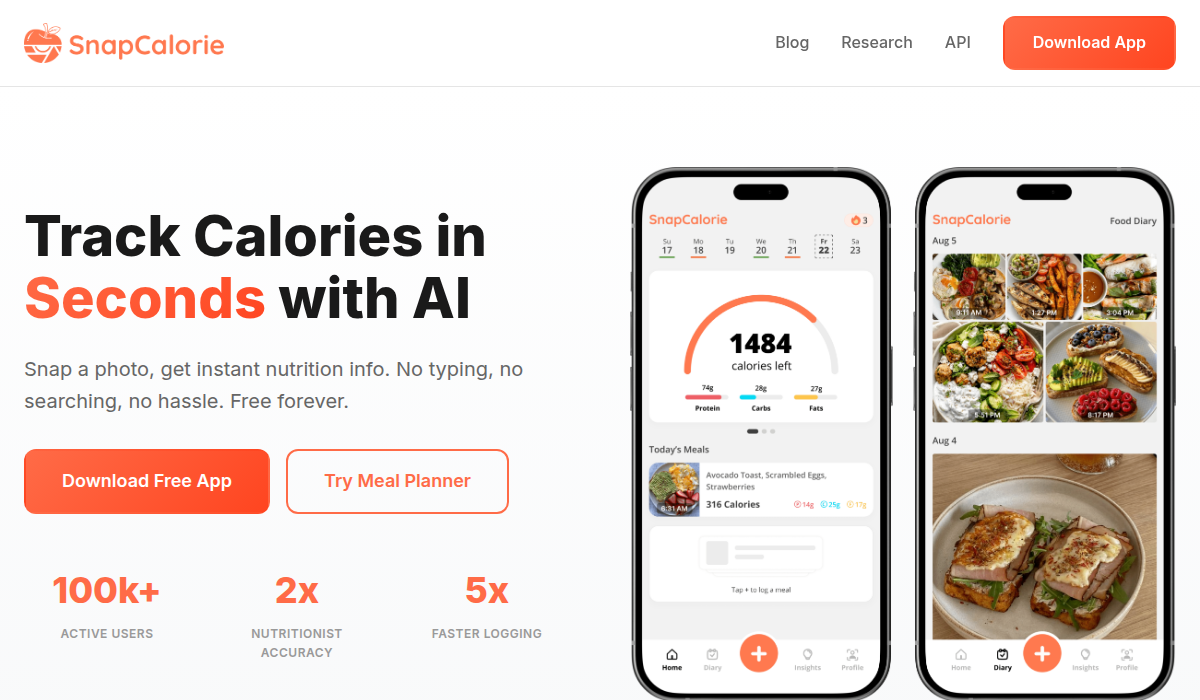
SnapCalorie focuses on one thing and does it well: turning food photos into accurate calorie estimates. The app uses 3D volume estimation technology to gauge portion sizes more precisely than most competitors. Instead of just recognizing "chicken breast," it estimates the actual size and weight of the chicken on your plate.
This makes SnapCalorie particularly useful if you're doing precise deficit tracking where every hundred calories matters. The trade-off is that it's more focused — you won't find workout tracking or extensive meal planning here.
- ✅ Industry-leading portion size estimation
- ✅ 3D volume analysis for more accurate counts
- ✅ Free meal planning tools included
- ❌ Limited features beyond calorie scanning
- ❌ Smaller food database than established competitors
Best for: Precision-focused trackers who care most about accurate calorie estimates.
4. MyFitnessPal
MyFitnessPal is the veteran of calorie tracking, now enhanced with AI features. Its massive database — over 18 million foods — means it can recognize almost anything you throw at it, including regional and international dishes. The recently added AI meal scanner and voice logging bring it up to speed with newer competitors.
The app's biggest strength is its ecosystem. It integrates with dozens of fitness devices and apps, has an active community, and offers detailed nutritional reports. However, the interface can feel cluttered compared to newer, AI-first apps, and many useful features sit behind the premium paywall.
- ✅ Largest food database (18M+ items)
- ✅ AI photo scanner and voice logging
- ✅ Extensive device and app integrations
- ✅ Strong community features
- ❌ Interface feels dated and cluttered
- ❌ Best features require premium subscription
Best for: Users who value database breadth and integration with other fitness platforms.
5. MacroFactor
MacroFactor takes a unique approach — instead of trying to scan your food with AI, it uses AI to calculate your actual energy expenditure based on your intake and weight trends. Log your food and weight consistently for a few weeks, and MacroFactor's algorithm will tell you exactly how many calories you're burning, adjusted in real-time.
This "expenditure algorithm" is MacroFactor's killer feature. Most calorie calculators use generic formulas based on height, weight, and estimated activity level. MacroFactor uses your actual data, making its recommendations far more personalized. The food logging itself is fast and well-designed, with a smart search that learns your habits.
- ✅ AI-calculated real energy expenditure
- ✅ Adaptive calorie targets based on your data
- ✅ Fast, intuitive food logging
- ✅ Designed by nutrition researchers
- ❌ No photo scanning feature
- ❌ Requires consistent logging to be effective
Best for: Serious trackers who want the most accurate calorie targets based on real metabolic data.
How to Get the Most Out of AI Calorie Tracking
- Good lighting matters — AI photo scanning works best with well-lit meals. A dark restaurant photo will give worse results than a naturally lit table shot. Take an extra second to get a clear photo.
- Verify complex meals — AI handles simple dishes (grilled chicken, rice, salad) extremely well. But for complex recipes with hidden ingredients — think casseroles, stir-fries, or sauces — it's worth reviewing and adjusting the estimates.
- Log consistently, not perfectly — The biggest benefit of AI tracking is reducing friction. Don't stress about being exact on every meal. Consistent 80% accuracy is infinitely more useful than perfect tracking for three days followed by giving up.
- Use barcode scanning for packaged foods — When eating packaged foods, always scan the barcode instead of using photo recognition. Barcode data comes directly from the manufacturer and is far more accurate.
- Combine with fitness tracking — Apps like Zwintji that include workout tracking alongside nutrition give you a more complete picture. Your calorie needs change based on activity, and having both in one place makes adjustments easier.
Quick Comparison
Here's how these apps stack up at a glance:
- Zwintji — Best all-in-one (meals + workouts + insights)
- Cal AI — Best photo scanning accuracy
- SnapCalorie — Best for precision portion estimation
- MyFitnessPal — Biggest food database
- MacroFactor — Smartest adaptive calorie targets
The Bottom Line
AI calorie tracking in 2026 is genuinely useful — not perfect, but good enough to make a real difference in your nutrition goals. The best app for you depends on what you value most.
If you want a clean, all-in-one solution that combines meal scanning with workout tracking and personalized insights, Zwintji is worth a look. If pure scanning accuracy is your priority, Cal AI and SnapCalorie are hard to beat. And if you're a data-driven tracker who wants the most personalized calorie targets, MacroFactor's adaptive algorithm is in a league of its own.
The key is picking one and actually using it. AI has removed the biggest excuse — that calorie tracking takes too long. Now the only question is whether you'll start.