Best Arabic Learning Apps for Beginners 2026
Want to learn Arabic but don't know where to start? You're not alone — Arabic is one of the most sought-after languages in 2026, yet finding the right learning app can feel overwhelming.
Arabic ranks among the top 5 most spoken languages globally, with over 400 million speakers. Whether you're learning for travel, business, religious study, or simply personal enrichment, choosing the right app makes all the difference between frustration and fluency. We tested the most popular Arabic learning apps to help you find the perfect fit for your learning style and goals.
Why Arabic Is Challenging (And Why Apps Help)
Let's be honest: Arabic is considered one of the more challenging languages for English speakers to learn. The script is completely different, it reads right-to-left, and there are sounds that don't exist in English. But here's the good news — modern language learning apps have made these hurdles much more manageable.
"I started with Dr. Imran Alawiye's 'Arabic from the Beginning' series and supplemented with apps. The combination of structured lessons and on-the-go practice really accelerated my progress."— Reddit user in r/learn_arabic
The key is finding an app that matches your learning pace and focuses on what you actually need — whether that's Modern Standard Arabic (MSA), Egyptian dialect, Levantine Arabic, or Quranic Arabic.
Best Arabic Learning Apps Compared
After extensive testing and reviewing community feedback, here are the top Arabic learning apps for beginners in 2026:
1. Duolingo

Duolingo is the most downloaded language learning app in the world, and for good reason. Its gamified approach makes daily practice feel less like studying and more like playing a game. The Arabic course has improved significantly over the years.
- ✅ Free to use with optional premium subscription
- ✅ Excellent for learning the Arabic alphabet
- ✅ Gamification keeps you motivated with streaks and XP
- ✅ Available on iOS, Android, and web
- ❌ Only teaches Modern Standard Arabic
- ❌ Grammar explanations can be shallow
- ❌ Won't get you to conversational fluency alone
Best for: Complete beginners who want to learn the Arabic alphabet and basic vocabulary in a fun, low-pressure environment.
2. Babbel
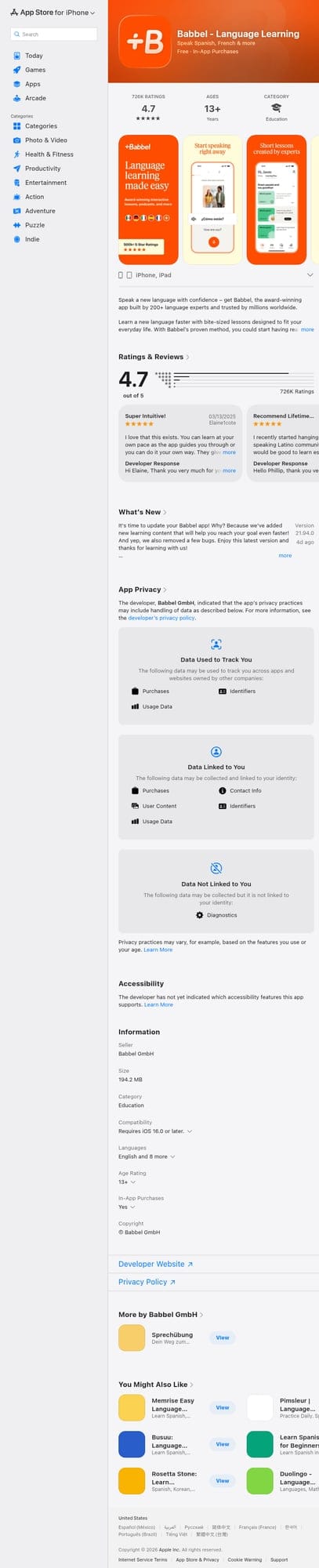
Babbel takes a more traditional approach to language learning, with courses designed by linguists and native speakers. Unfortunately, Arabic is not currently offered on Babbel — but it's worth mentioning because many learners search for it.
- ✅ High-quality, expert-designed courses
- ✅ Excellent speech recognition technology
- ❌ Arabic is NOT currently available
- ❌ Paid subscription required
Note: If you're specifically looking for Arabic, you'll need to explore other options. Babbel focuses on European languages primarily.
3. Mango Languages
Mango Languages is a hidden gem that many Arabic learners discover through their local library (many libraries offer free access). The app uses a conversation-based approach that focuses on practical communication.
- ✅ Teaches multiple Arabic dialects (MSA, Egyptian, Levantine, Iraqi)
- ✅ Color-coded grammar system
- ✅ Often free through public libraries
- ✅ Focus on practical, useful sentences
- ❌ Less gamification than competitors
- ❌ Interface feels dated compared to newer apps
"I've really liked Mango Languages. The color-coding, themes that are actually useful, and little emphasis on grammar. I've found that I could use the words and sentences really quickly with Arab friends to practice mini conversations."— Reddit user in r/learn_arabic
Best for: Learners who want to focus on speaking and conversation, especially if your library offers free access.
4. Pimsleur
Pimsleur is an audio-based learning method that's been around since the 1960s. It's now available as an app and focuses heavily on listening and speaking skills through spaced repetition.
- ✅ Excellent for pronunciation and listening comprehension
- ✅ Learn while commuting or exercising
- ✅ Scientifically-backed spaced repetition
- ❌ Expensive subscription ($20.95/month)
- ❌ No reading or writing practice
- ❌ Can feel repetitive
Best for: Learners who prefer audio-based learning or want to improve their pronunciation and listening skills.
5. Learn Arabic - Starters
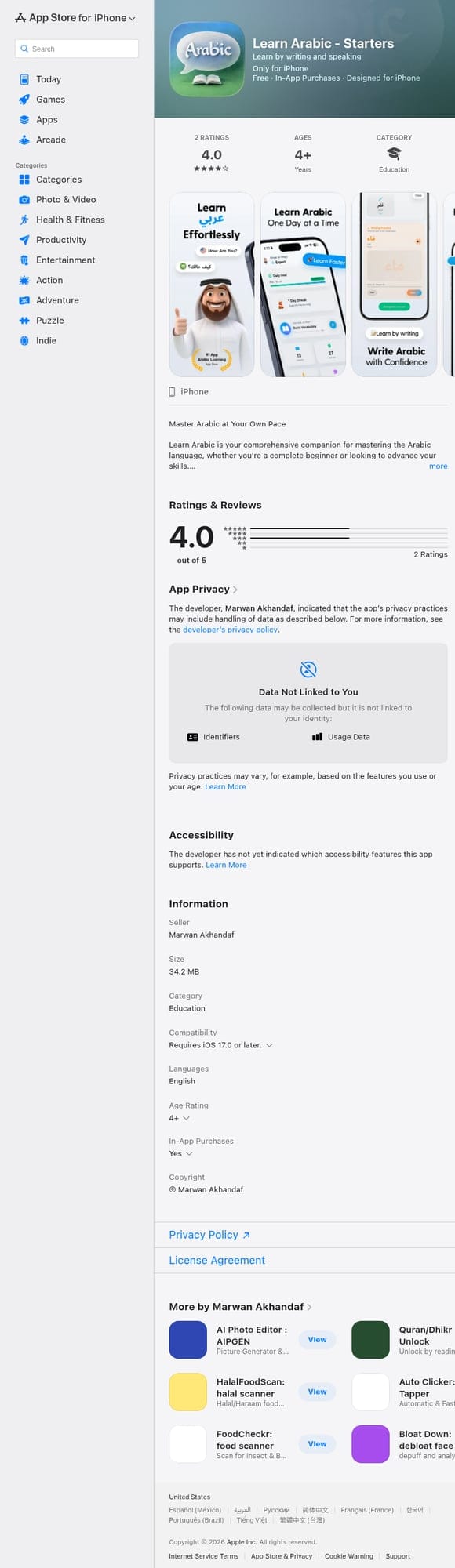
Learn Arabic - Starters takes a different approach by focusing specifically on beginners who are just starting their Arabic journey. Rather than trying to be everything to everyone, this app concentrates on building a solid foundation.
- ✅ Designed specifically for absolute beginners
- ✅ Interactive lessons with pronunciation practice
- ✅ Progress tracking and achievements system
- ✅ Daily goals to build consistent habits
- ✅ Learn by writing and speaking
- ✅ Affordable compared to premium alternatives
What sets Learn Arabic - Starters apart is its focus on the foundational skills that matter most when you're just beginning: recognizing letters, understanding basic pronunciation, and building core vocabulary. The app doesn't overwhelm you with advanced grammar or complex sentence structures before you're ready.
Best for: Complete beginners who want a structured, focused introduction to Arabic without the complexity of apps designed for all levels.
What About Rosetta Stone?
Rosetta Stone is a well-known name in language learning, and they do offer Arabic. Their immersion-based approach avoids English translations entirely, which some learners love and others find frustrating.
- ✅ Full immersion methodology
- ✅ Good speech recognition
- ✅ Comprehensive curriculum
- ❌ Expensive ($36/month or $179/year)
- ❌ Immersion can be confusing for absolute beginners
- ❌ Slower progress than competitors
Modern Standard Arabic vs. Dialects: Which Should You Learn?
This is one of the most common questions Arabic learners face. Here's a quick breakdown:
Modern Standard Arabic (MSA): The formal version used in news, literature, and official settings. Most apps teach this. It's understood across all Arab countries but rarely spoken in casual conversation.
Egyptian Arabic: The most widely understood dialect due to Egypt's influential film and music industry. Great if you want to understand Arabic media.
Levantine Arabic: Spoken in Syria, Lebanon, Jordan, and Palestine. Popular among those with connections to these regions.
Gulf Arabic: Spoken in Saudi Arabia, UAE, Kuwait, and neighboring countries. Useful for business in the Gulf region.
Our recommendation? Start with MSA to build a foundation, then branch into a dialect once you have the basics down. Most apps focus on MSA, making it the natural starting point.
Pro Tips for Learning Arabic Successfully
- Master the alphabet first — Don't rush past this step. A solid grasp of Arabic letters and sounds makes everything else easier.
- Use multiple resources — Combine apps with YouTube videos, podcasts, and if possible, native speakers. No single app is enough.
- Practice writing by hand — Even in 2026, handwriting helps cement letter recognition and memory.
- Set realistic expectations — The US Foreign Service Institute classifies Arabic as a Category IV language, requiring 2,200+ hours of study for professional proficiency. Be patient with yourself.
- Focus on consistency over intensity — 15 minutes daily beats 2 hours once a week. Daily practice builds the neural pathways you need.
- Listen, listen, listen — Passive listening to Arabic music, podcasts, or news trains your ear even when you're not actively studying.
Free vs. Paid: Is Premium Worth It?
Many Arabic learning apps offer both free and paid tiers. Here's our take:
Start free: Use free versions to find an app that matches your learning style. Duolingo's free tier is quite generous, and you can access Mango through most public libraries.
Upgrade when: You've been consistently using an app for 2-3 weeks and want to remove ads, access advanced features, or get offline access. The investment only makes sense if you've proven to yourself that you'll actually use it.
Best value: Apps like Learn Arabic - Starters offer premium features at lower price points than the big names, making them attractive options for budget-conscious learners.
The Bottom Line
There's no single "best" Arabic learning app — the right choice depends on your goals, budget, and learning style. Here's our quick recommendation guide:
- Best free option: Duolingo (great for alphabet and basics)
- Best for dialects: Mango Languages (if you have library access)
- Best for beginners: Learn Arabic - Starters (focused, structured approach)
- Best for audio learners: Pimsleur (if budget allows)
- Best overall value: Combine Duolingo (free) with a focused beginner app
The most important thing? Pick an app and start today. Arabic may be challenging, but millions of people have learned it — and with the right tools and consistent practice, you can too. يلا نبدأ — let's begin!