
Best Halal Scanner Apps for Travelers in Europe (2026)
Traveling through Europe as a Muslim means facing one constant challenge: figuring out what you can actually eat. Whether you're wandering through Amsterdam's cheese shops, navigating German supermarkets, or grabbing a quick snack at a French train station, ingredient labels in unfamiliar languages can make halal eating feel impossible.
The good news? Technology has caught up with this problem. Halal scanner apps have transformed how Muslim travelers approach food shopping abroad—but not all apps are created equal. After testing the top options across multiple European countries, here's what actually works in 2026.
Why European Travel Poses Unique Halal Challenges
Europe presents specific difficulties that Muslim travelers don't face in majority-Muslim countries. Ingredients are listed in local languages—Dutch, German, French, Italian—and even basic items can contain hidden animal derivatives. That innocent-looking chocolate bar? It might contain E441 (gelatin). Those seemingly safe chips? Check for E471 (mono and diglycerides that could be animal-sourced).
The challenge intensifies when you realize that European food labeling doesn't require halal certification, and many additives fall into the "mushbooh" (doubtful) category. As the Prophet Muhammad ﷺ advised: "What is lawful is clear and what is unlawful is clear, and between them are matters unclear that are unknown to most people" (Sahih Bukhari 5527).
This is precisely why a reliable halal scanner app becomes essential—not just convenient—for European travel.
What to Look for in a Halal Scanner App
Before comparing specific apps, understand what separates useful tools from frustrating ones:
- Comprehensive Database: Coverage of European products is crucial—many apps focus heavily on US or Asian markets
- Ingredient Analysis: Beyond barcodes, the ability to scan and analyze ingredient lists in multiple languages
- E-Number Classification: Clear halal/haram/mushbooh categorization of European food additives
- Offline Functionality: European roaming data isn't cheap—offline capabilities matter
- Minimal Ads: Nothing ruins a quick grocery run like waiting through 60-second advertisements
Best Halal Scanner Apps Compared (2026)
1. Mustakshif
Mustakshif has gained significant traction in Muslim communities, frequently recommended on Reddit and Islamic forums. The app offers barcode scanning and displays halal/haram/mushbooh status for products.
- ✅ Large community-driven database
- ✅ Simple interface
- ✅ Available in multiple languages
- ❌ Heavy advertising (users report 60-second ads between scans)
- ❌ Limited European product coverage
- ❌ No ingredient text analysis
The advertising issue is significant enough that users on r/converts have specifically asked for alternatives, with one user stating they "can't handle the ads every other second."
2. HalalFoodScan
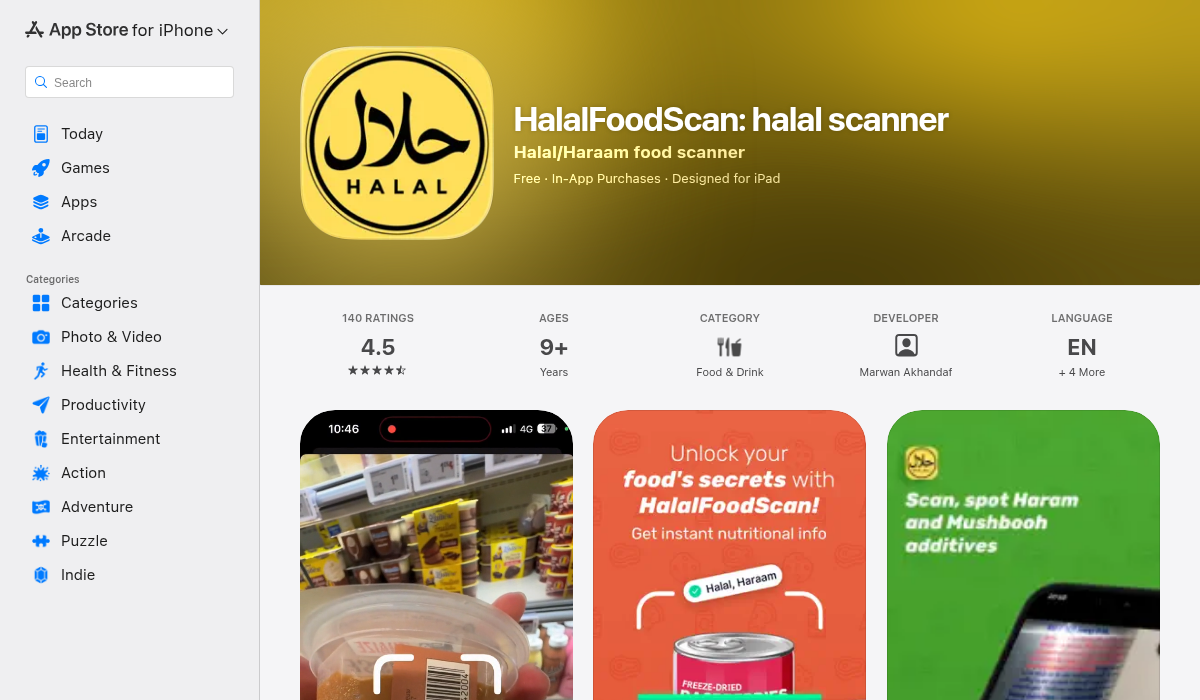
HalalFoodScan takes a more comprehensive approach to halal verification, particularly useful for European travelers. Beyond basic barcode scanning, it offers additive detection through AI-powered ingredient analysis.
- ✅ Barcode scanning with instant halal status
- ✅ AI-powered additive analysis—scan the ingredient list when products aren't in the database
- ✅ Comprehensive E-number database with halal classification
- ✅ Special vinegar detection feature (addresses common halal questions)
- ✅ Minimal ads with affordable premium options
- ✅ Available in English, Arabic, Dutch, French, and Spanish
- ✅ Privacy-focused—no data collection
What sets HalalFoodScan apart for European travel is the additive analysis feature. When you encounter a Dutch bread label or French sauce, you can photograph the ingredient list and receive AI analysis of every additive present. This proves invaluable in countries where product databases are less complete.
3. Scan Halal Food
Another option in the market, Scan Halal Food provides basic barcode functionality with a focus on US products.
- ✅ Clean interface
- ✅ Quick scans
- ❌ Database heavily weighted toward US products
- ❌ Limited European coverage
- ❌ No ingredient text scanning
4. Yuka (General Food Scanner)
While not specifically a halal app, Yuka deserves mention because it's extremely popular in Europe and shows detailed ingredient breakdowns.
- ✅ Excellent European product coverage
- ✅ Detailed ingredient lists
- ❌ No halal/haram classification
- ❌ You'll need to manually cross-reference additives
Some travelers use Yuka alongside a halal app—using Yuka for product identification and a halal-specific app for classification.
Understanding Common European Additives
European food products are packed with E-numbers—standardized codes for food additives. Here's what travelers should watch for:
Clearly Haram:
- E120 (Carmine/Cochineal): Derived from crushed insects—present in many red-colored foods and drinks
- E441 (Gelatin): When from pork sources—found in candy, yogurt, desserts
- E542 (Edible Bone Phosphate): From animal bones
Mushbooh (Doubtful—requires investigation):
- E471 (Mono/Diglycerides): Can be plant or animal origin
- E472 (Esterified Mono/Diglycerides): Same uncertainty
- E904 (Shellac): Insect secretion—scholarly difference of opinion exists
Generally Halal:
- E322 (Lecithin): Usually soy-based
- E300 (Vitamin C): Synthetic or plant-derived
- E330 (Citric Acid): Plant-derived
A good halal scanner should automatically categorize these when you scan products.
The Vinegar Question: Finally Resolved
One topic that consistently confuses Muslim travelers is vinegar—especially wine vinegar, which is common in European cooking. The scholarly consensus is clear: vinegar is halal, even when derived from wine.
"What an excellent condiment vinegar is."— Prophet Muhammad ﷺ (Sahih Muslim 2052)
The Prophet ﷺ himself ate vinegar with bread (Sahih Bukhari 5205). The transformation process (istihalah) from alcohol to acetic acid makes the final product permissible. HalalFoodScan specifically includes vinegar detection to address this common question, providing detailed explanations for uncertain travelers.
Pro Tips for Halal Eating Across Europe
- Download Before Departure—Ensure your chosen app is installed and updated before leaving. Test it at home to understand the interface.
- Learn Key Words—Even with scanners, knowing "varkensvlees" (Dutch for pork) or "Schweinefleisch" (German) helps. Most apps won't catch restaurant menus or freshly prepared food.
- Use Multiple Apps—No single database covers everything. Having HalalFoodScan for ingredient analysis alongside a product-focused app maximizes coverage.
- Screenshot Unknown Products—If you encounter something ambiguous, photograph it. You can research later or get a second opinion from scholars.
- Trust Local Muslim Communities—Halal butchers, Islamic centers, and local Muslims often know which supermarket products are safe. Apps supplement—they don't replace—community knowledge.
- When in Doubt, Leave It Out—Following the prophetic guidance about unclear matters, if multiple sources give conflicting information, err on the side of caution.
Country-Specific Tips
Germany
Strong Turkish Muslim community means good halal options in major cities. Supermarkets like REWE and Edeka carry some halal-labeled products. Scanner apps work well due to comprehensive labeling requirements.
France
Large North African Muslim population means excellent halal restaurant options in Paris, Marseille, and Lyon. Supermarkets are trickier—French labeling can be vague. AI ingredient scanning proves particularly useful here.
Netherlands
Albert Heijn supermarkets have halal sections in diverse neighborhoods. HalalFoodScan includes Dutch language support, which helps significantly.
Spain
Growing halal-consciousness, but products outside major cities can be challenging. The Moroccan influence in southern Spain means more halal options in Andalusia.
The Bottom Line
For European travel, the ability to analyze ingredient lists—not just scan barcodes—makes the difference between confident eating and constant uncertainty. Database-only apps struggle with Europe's product diversity and language barriers.
HalalFoodScan's combination of barcode scanning, AI ingredient analysis, E-number classification, and multi-language support makes it particularly suited for European travel. The vinegar detection and additive analysis features address real problems Muslim travelers face daily.
Note: For specific religious rulings (fatwa), always consult with qualified Islamic scholars or your local imam. This article provides general information based on recognized Islamic sources.
If you're planning European travel and want reliable halal verification, HalalFoodScan is worth downloading before your trip. The peace of mind alone—knowing you can analyze any ingredient list in any language—transforms the travel experience.
May Allah make your travels easy and your food pure. Safe journeys!