
Best Kosher Food Scanner Apps 2026: Complete Guide
Keeping kosher in 2026 means scanning barcodes at the grocery store while your cart slowly blocks the aisle. We've all been there — squinting at tiny hechsher symbols, wondering if that certification mark is legit, or trying to remember which additives are problematic.
The good news? Technology has finally caught up with kashrut observance. Modern kosher food scanner apps can instantly verify certifications, check ingredient lists, and even tell you if a product is Kosher for Passover. No more guesswork, no more holding up the checkout line.
We tested the most popular kosher scanner apps available in 2026 to find which ones actually deliver on their promises. Here's what works, what doesn't, and which app deserves a spot on your phone.
Why Traditional Kosher Shopping Is Getting Harder
The kosher food market has exploded in recent years, which sounds like good news until you realize what it actually means: thousands of new products, hundreds of certification agencies, and an increasingly complex web of hechsherim to navigate.
Consider this: there are now over 1,200 kosher certification agencies worldwide. Some are universally accepted, others are regional, and a few are, well, controversial. Unless you've memorized every symbol and know which rabbinical authority stands behind each one, you're essentially shopping blind.
"I spent 20 minutes in the ethnic foods aisle trying to figure out if an unfamiliar hechsher was legit. Turned out it was a regional certification from Brazil. Would've been nice to know that before I put it back."— Reddit user in r/Judaism
Then there's the ingredient problem. Processed foods contain dozens of additives, many with names that require a chemistry degree to pronounce. Is that emulsifier from an animal source? Does "natural flavors" hide something treif? These questions used to require a call to the kashrus hotline. Now, there's an app for that.
What to Look for in a Kosher Scanner App
Not all kosher apps are created equal. Before downloading anything, here's what actually matters:
- Database size — More products means fewer "not found" frustrations
- Certification verification — Can it identify which agency certified the product?
- Passover mode — Does it flag Kosher for Passover products?
- Cholov Yisroel / Pas Yisroel indicators — Essential for those who keep these chumros
- Offline functionality — Grocery store WiFi is notoriously unreliable
- Update frequency — Kosher status can change; the database needs to keep up
With these criteria in mind, let's look at the apps that actually deliver.
Best Kosher Food Scanner Apps Compared
1. KosherScan — The Gold Standard
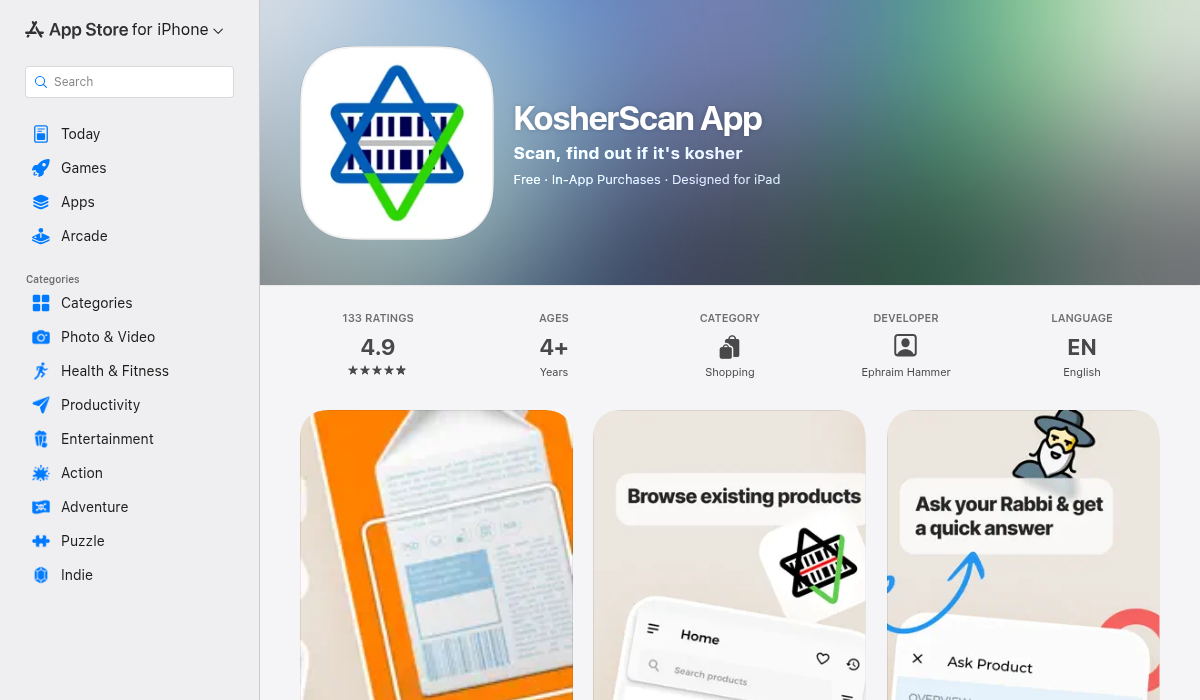
KosherScan has become the go-to app for serious kosher observers, and it's easy to see why. With a database covering products certified by major kashrus organizations worldwide, it handles the heavy lifting of verification so you don't have to.
The interface is refreshingly simple. Point your camera at a barcode, wait a second, and you'll see the kosher status along with the certifying agency. The app distinguishes between different levels of certification — so if you specifically need Cholov Yisroel or Kosher for Passover products, it'll tell you immediately.
What sets KosherScan apart:
- ✅ Massive database with products from 35+ countries
- ✅ Identifies specific certifying rabbi/organization
- ✅ Passover mode with detailed KLP information
- ✅ Regular database updates
- ✅ Available on both iOS and Android
- ✅ Clean, intuitive interface
Potential drawbacks:
- ❌ Premium subscription required for full features
- ❌ Some regional products may not be in database
For most kosher-keeping households, KosherScan is the most reliable choice. The app's 4.8-star rating across thousands of reviews isn't accidental — it consistently delivers accurate results when you need them.
2. Is It Kosher? — The Database Pioneer
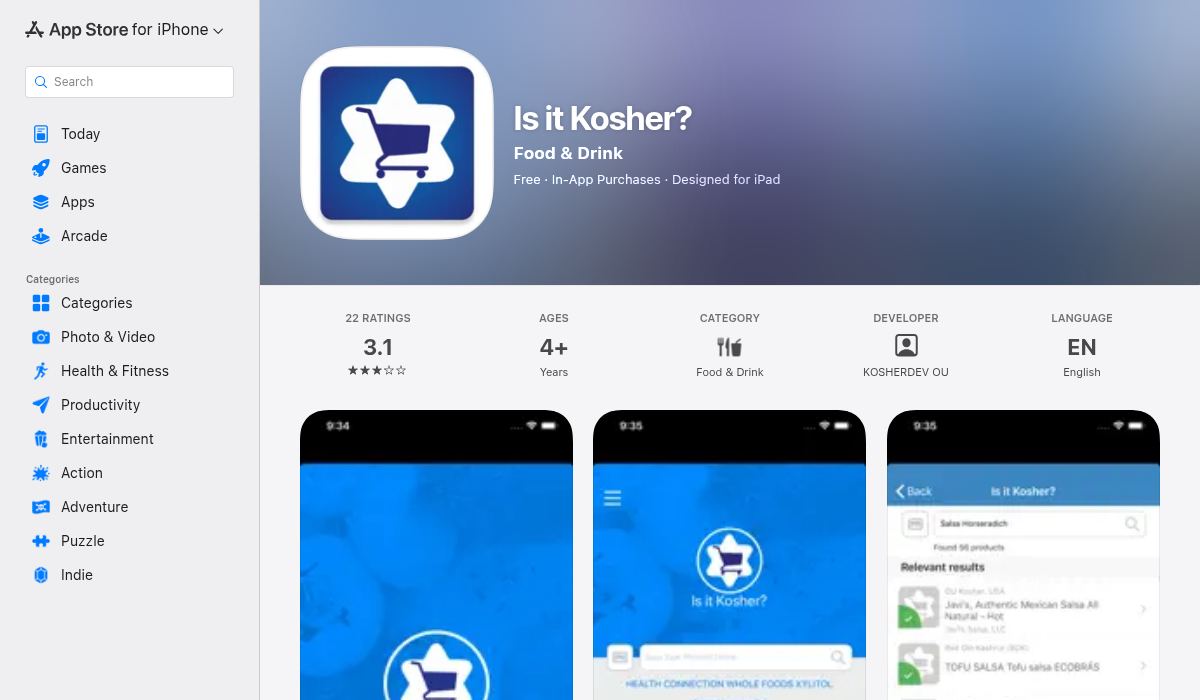
Is It Kosher? has been around longer than most competitors, and that longevity shows in its comprehensive database. The app connects to over 50 kosher certification databases spanning 35+ countries, making it particularly useful for international products or when traveling.
The barcode scanner works well, though the interface feels slightly dated compared to newer apps. What it lacks in polish, it makes up for in depth — you can search by product name, browse by category, or scan barcodes, and the results include detailed information about the certifying authority.
Strengths:
- ✅ Extensive international database coverage
- ✅ Multiple search options (barcode, name, category)
- ✅ Detailed certification information
- ✅ Free basic functionality
Limitations:
- ❌ Interface could use modernization
- ❌ Occasional slow loading times
- ❌ Some features require subscription
Is It Kosher? is a solid choice, especially if you frequently shop for imported products or travel internationally. The database depth compensates for the somewhat outdated user experience.
3. Kosher GPS — For Restaurants and Travel
While not strictly a product scanner, Kosher GPS deserves mention for anyone who eats out or travels frequently. The app focuses on finding kosher restaurants, synagogues, and mikvaot worldwide, with user reviews and up-to-date status information.
Think of it as the Yelp of kosher establishments. You can filter by hashgacha, cuisine type, and location, making it invaluable when you're in an unfamiliar city and need to find a reliable place to eat.
Best for:
- ✅ Finding kosher restaurants while traveling
- ✅ Locating shuls with minyanim
- ✅ User reviews from the kosher community
Not ideal for:
- ❌ Grocery product scanning
- ❌ Ingredient verification
How Kosher Scanner Apps Actually Work
Understanding the technology helps set realistic expectations. These apps don't magically analyze ingredients through your phone camera — they're essentially sophisticated database lookup tools.
When you scan a barcode, the app sends that number to a server, which checks it against databases of certified products. The result tells you what certification the product has (if any) and which organization stands behind it.
This means accuracy depends entirely on database quality and update frequency. A product that lost its hechsher last month might still show as kosher if the database hasn't been updated. Similarly, brand-new products might not appear at all.
Pro tip: When an app returns "not found," it doesn't necessarily mean the product isn't kosher — just that it's not in that app's database. Try a different app, or verify manually with the certification agency.
Pro Tips for Kosher Shopping with Apps
- Use multiple apps — No single database is complete. Having both KosherScan and Is It Kosher? covers more ground than either alone.
- Verify unfamiliar hechsherim — If an app shows a product as certified by an agency you don't recognize, do additional research. Not all certifications are accepted by all communities.
- Check dates during Passover — A product might be generally kosher but not KLP. Apps usually indicate this, but double-check during the Pesach season.
- Report errors — Good apps have feedback mechanisms. If you find incorrect information, report it so the database improves for everyone.
- Download before shopping — Make sure the app is installed and updated before you get to the store. Downloading apps over grocery store WiFi is a recipe for frustration.
Beyond Kosher: Other Dietary Scanner Apps
The technology powering kosher scanners has inspired similar apps for other dietary requirements. If you have family members or friends with different needs, these might be worth knowing about:
- Halal food scanners — Apps like HalalFoodScan use similar barcode technology to verify halal certification and identify problematic ingredients for Muslim dietary laws.
- Vegan scanners — VeganCheckr scans products to identify hidden animal-derived ingredients.
- Allergen scanners — Apps that flag specific allergens like gluten, nuts, or dairy.
The underlying technology is similar — barcode scanning connected to specialized databases. The kosher app ecosystem is arguably the most mature, having had years to build comprehensive databases and refine their verification processes.
The Bottom Line
Keeping kosher in 2026 doesn't have to mean memorizing every hechsher or calling kashrus hotlines from the grocery aisle. The right scanner app turns your phone into a portable verification tool that handles the complexity for you.
For most users, KosherScan is the best choice. Its combination of database coverage, accurate certification identification, and user-friendly interface makes it the most reliable option for everyday shopping.
Is It Kosher? is the best alternative if you frequently buy international products or want a second opinion when KosherScan comes up empty.
Kosher GPS is essential for travelers who need to find kosher restaurants and shuls in unfamiliar cities.
Whichever app you choose, remember that technology is a tool, not a replacement for knowledge. When in doubt, verify with your local kashrus authority. But for the 95% of shopping decisions that are straightforward, these apps save time, reduce stress, and help you keep kosher with confidence.
Have you tried any of these kosher scanner apps? Share your experience in the comments below.