
Best Low Histamine Diet Scanner Apps 2026
Managing histamine intolerance feels like navigating a minefield blindfolded — until you find the right tools.
If you've ever stood in a grocery store aisle, squinting at ingredient labels and wondering if that fermented seasoning will trigger a reaction, you're not alone. Histamine intolerance affects millions of people, and the traditional approach of memorizing food lists simply doesn't cut it anymore. In 2026, food scanner apps have evolved to become essential companions for anyone following a low histamine diet.
Why Histamine Intolerance Is So Tricky to Manage
Unlike a straightforward food allergy, histamine intolerance operates on a cumulative basis. You might tolerate a small amount of aged cheese one day, but combine it with leftover chicken and a glass of wine? That's when the headaches, hives, and digestive issues hit hard. The challenge is that histamine content varies wildly based on food freshness, storage conditions, and preparation methods.
"I'm looking for the holy grail in terms of apps that track symptoms related to diet and possibly other events during the day."— Reddit user in r/HistamineIntolerance
This frustration echoes across online communities. People aren't just looking for a list of foods to avoid — they need smart tools that can scan packaged products, track cumulative intake, and help identify personal triggers. Because here's the thing: everyone's threshold is different.
What to Look for in a Low Histamine Diet Scanner
Not all food scanner apps are created equal, especially when it comes to managing histamine intolerance. The best options in 2026 offer:
- Barcode scanning — Instantly check packaged foods without manual ingredient research
- Additive detection — Many processed foods contain histamine-liberating additives that aren't obviously problematic
- Fresh food databases — Not just packaged goods, but guidance on whole foods too
- Symptom correlation — Track what you eat alongside how you feel
- Customizable sensitivity — Your tolerance is unique
Best Apps for Low Histamine Diet in 2026
We've tested the leading options to help you find the right fit for your lifestyle.
1. InTolerApp: Histamine & FODMAP
InTolerApp has become a popular choice in the histamine community, and for good reason. It's specifically designed for people with histamine intolerance, fructose malabsorption, lactose intolerance, and FODMAP sensitivities. The app includes a barcode scanner that checks products against its database of histamine-containing ingredients.
- ✅ Dedicated histamine intolerance mode
- ✅ Combines multiple intolerance profiles
- ✅ Food diary with symptom tracking
- ❌ Database can be limited for regional products
- ❌ Premium subscription required for full features
2. Fig: Food Scanner & Discovery
Fig is frequently recommended in Reddit communities for its flexibility. You can set a "low histamine diet" filter and it'll scan products accordingly. The app excels at personalization — you can add specific ingredients you want to avoid beyond the standard low histamine list.
"They have a low histamine diet option and let you select specific ingredients as well!"— Reddit user in r/MCAS
- ✅ Highly customizable diet filters
- ✅ Large product database
- ✅ Restaurant menu scanning
- ❌ May be overwhelming with all the options
- ❌ Free version has limitations
3. FoodCheckr – Comprehensive Additive Scanner
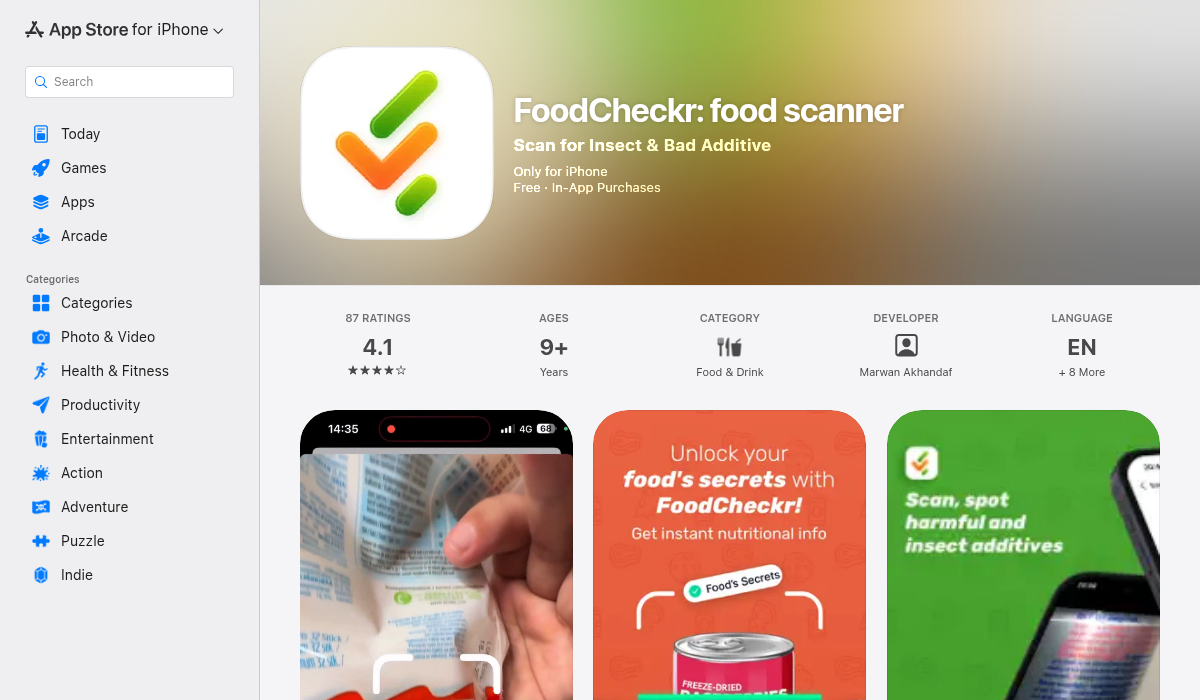
While not specifically marketed as a histamine app, FoodCheckr deserves attention for its powerful additive detection capabilities. Many histamine intolerance sufferers react not just to high-histamine foods, but also to certain additives that trigger histamine release — sulfites, benzoates, and certain artificial colors among them.
FoodCheckr uses AI to analyze ingredients and flag potentially harmful additives, including those known to affect histamine-sensitive individuals. Its bioengineered ingredient detection and comprehensive additive database make it valuable for anyone who needs to scan beyond the obvious.
- ✅ Detects histamine-liberating additives
- ✅ AI-powered ingredient analysis
- ✅ Clean, fast barcode scanning
- ✅ Nutritional information included
- ❌ Not specifically histamine-focused (broader scope)
For histamine intolerance sufferers who also need to watch for other problematic ingredients, FoodCheckr's broad detection capabilities provide an extra layer of protection that specialized apps might miss.
4. Baliza Food Intolerances App
Coming from Germany — where histamine intolerance research is well-established — the Baliza app offers detailed food tables with histamine content ratings. It's particularly useful for understanding whole foods rather than just packaged products.
- ✅ Detailed food database with histamine levels
- ✅ Multiple intolerance support (FODMAP, lactose, fructose)
- ✅ Scientific backing from German research
- ❌ Less focus on barcode scanning
- ❌ Interface can feel dated
Building Your Low Histamine Toolkit
Here's what we've learned from testing these apps: no single solution does everything perfectly. Many people in the histamine community use a combination approach:
- Primary scanner — InTolerApp or Fig for daily grocery shopping
- Additive checker — FoodCheckr for deep ingredient analysis
- Symptom diary — To track reactions and identify personal triggers
The key is finding what works for your specific needs. Someone with mild histamine sensitivity might only need a basic food list reference, while those with severe MCAS (Mast Cell Activation Syndrome) need comprehensive scanning at every meal.
Pro Tips for Managing Low Histamine Diet with Apps
- Scan before you buy — Make it a habit, even for products you've bought before (formulations change)
- Track consistently — Use symptom tracking for at least 2-4 weeks to identify patterns
- Watch fermentation indicators — "Aged," "fermented," "cultured," and "smoked" are red flags
- Consider freshness — No app can tell you how long that fish has been sitting out, so combine technology with common sense
- Update your apps — Food databases improve constantly; keep them current
What the Research Says
Histamine intolerance affects an estimated 1-3% of the population, though many experts believe the actual number is higher due to underdiagnosis. The condition occurs when the body can't break down histamine efficiently, typically due to low levels of the DAO enzyme.
While apps can't diagnose or treat histamine intolerance, they serve as valuable tools for implementing the dietary changes recommended by healthcare providers. The Swiss Interest Group Histamine Intolerance (SIGHI) maintains extensive food compatibility lists that many of these apps reference.
The Bottom Line
Managing a low histamine diet in 2026 is easier than ever thanks to specialized scanning apps. For dedicated histamine tracking, InTolerApp and Fig lead the pack with their specific diet modes. For broader ingredient safety — especially important when additives are triggering your symptoms — FoodCheckr provides comprehensive protection.
The best approach? Start with one app, use it consistently for a few weeks, and see how well it fits your routine. Your grocery shopping trips will become less stressful, and over time, you'll develop an intuitive understanding of what works for your body — with technology backing you up every step of the way.