
Best Macro Tracking Apps for Bodybuilders 2026
Tracking macros isn't optional for serious bodybuilders—it's the difference between making gains and spinning your wheels. Whether you're in a caloric surplus trying to pack on lean mass or deep into a cutting phase for competition, knowing exactly what you're eating down to the gram is essential.
The problem? Most calorie tracking apps weren't built with bodybuilders in mind. They're designed for casual dieters who just want to "eat healthier." You need something that can handle meal prep at scale, quick barcode scanning for your protein powder and supplements, and ideally some intelligence that adapts to your changing needs throughout a training cycle.
We tested the most popular macro tracking apps in 2026 to find out which ones actually deliver for bodybuilders. Here's what we found.
Why Bodybuilders Need Specialized Macro Tracking
General fitness apps treat all calories equally. But any experienced lifter knows that hitting 180g of protein on a 2,500 calorie cut is a completely different beast than hitting 180g on a 3,500 calorie bulk. The timing matters. The sources matter. The macro ratios matter.
"I was really meticulous on tracking because I did a few preps for natural bodybuilding where I'd diet for 20-22 weeks and now I can't do the same with apps that don't let me adjust macros by goal."— r/naturalbodybuilding user
Bodybuilders need apps that offer:
- Precise macro targets — Not just calories, but specific protein, carb, and fat goals you can adjust weekly
- Quick logging — When you're eating 5-6 meals a day, every second counts
- Large food databases — Including niche supplements, protein brands, and meal prep staples
- Progress tracking — Weight trends, measurements, and the ability to adjust intake based on results
- Workout integration — Understanding how training affects your energy expenditure
The Best Macro Tracking Apps for Bodybuilders in 2026
After extensive testing, here are the top options ranked by their usefulness for serious lifters.
1. MacroFactor — Best for Data-Driven Athletes
MacroFactor has become the gold standard in the natural bodybuilding community, and for good reason. Developed with input from fitness researcher Jeff Nippard, it uses a sophisticated algorithm to calculate your actual energy expenditure based on your logged food and weight changes—not just generic TDEE formulas.
"MacroFactor all the way. Love their algorithm for calculating expenditure. I also feel like I stay more honest with it since it doesn't punish you for going over your calories. It just tracks. No big red fonts telling you you went over your goal."— r/naturalbodybuilding user
Pros:
- ✅ Adaptive TDEE algorithm learns from your data
- ✅ Non-judgmental tracking (no guilt-inducing red numbers)
- ✅ Excellent food database with verification
- ✅ Now includes workout tracking feature
- ✅ Detailed analytics and trends
Cons:
- ❌ Premium only—$72/year with no free tier
- ❌ Algorithm needs 2-3 weeks of data to become accurate
- ❌ Overkill for casual lifters
Best for: Experienced bodybuilders who want science-backed tracking and can commit to consistent logging.
2. Cronometer — Best for Micronutrient Obsessives
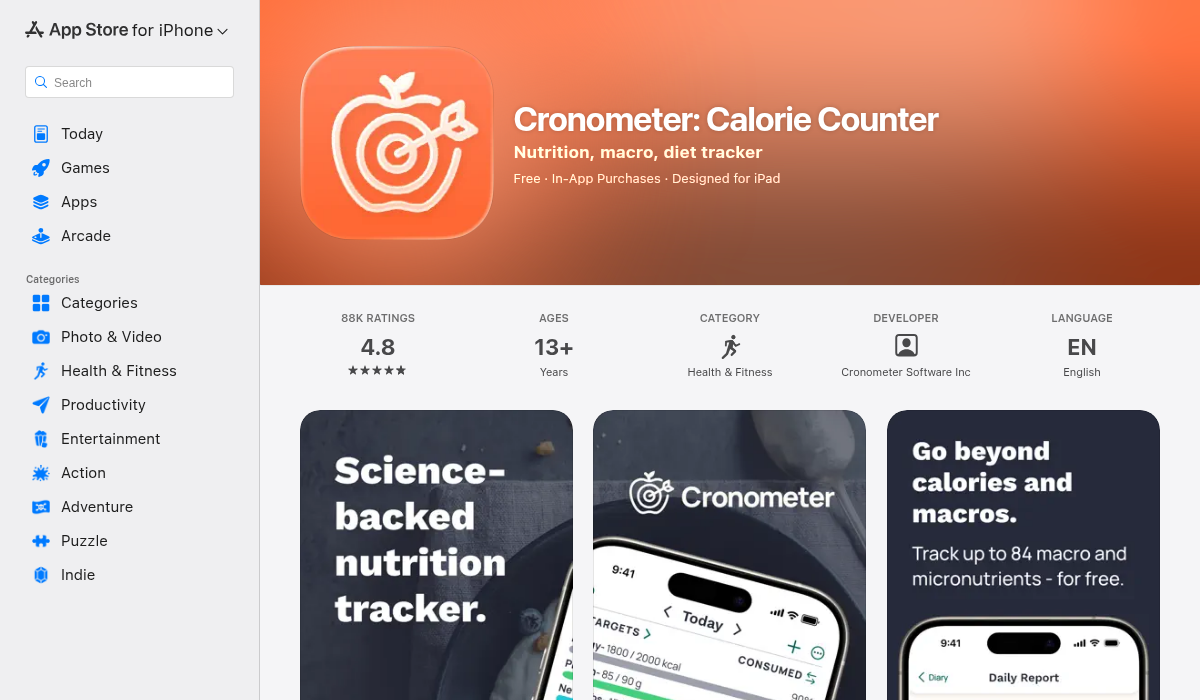
While most apps stop at protein, carbs, and fats, Cronometer goes deep into micronutrients. This is invaluable for bodybuilders in prep who need to ensure they're not becoming deficient in zinc, magnesium, or B vitamins while eating at a significant deficit.
"MFP only tracks a select group of Macro nutrients and does not track Micro nutrients. I pay very close attention to what I consume, most importantly, Macro and Micro nutrients."— r/naturalbodybuilding user
Pros:
- ✅ Tracks 80+ micronutrients
- ✅ Curated, verified food database
- ✅ Free tier available
- ✅ Excellent for identifying nutritional gaps
Cons:
- ❌ Interface feels dated compared to competitors
- ❌ Food database smaller than MyFitnessPal
- ❌ No AI features for quick logging
Best for: Bodybuilders in competition prep who need to monitor micronutrient intake during extreme diets.
3. Zwintji — Best AI-Powered Scanner for Busy Lifters
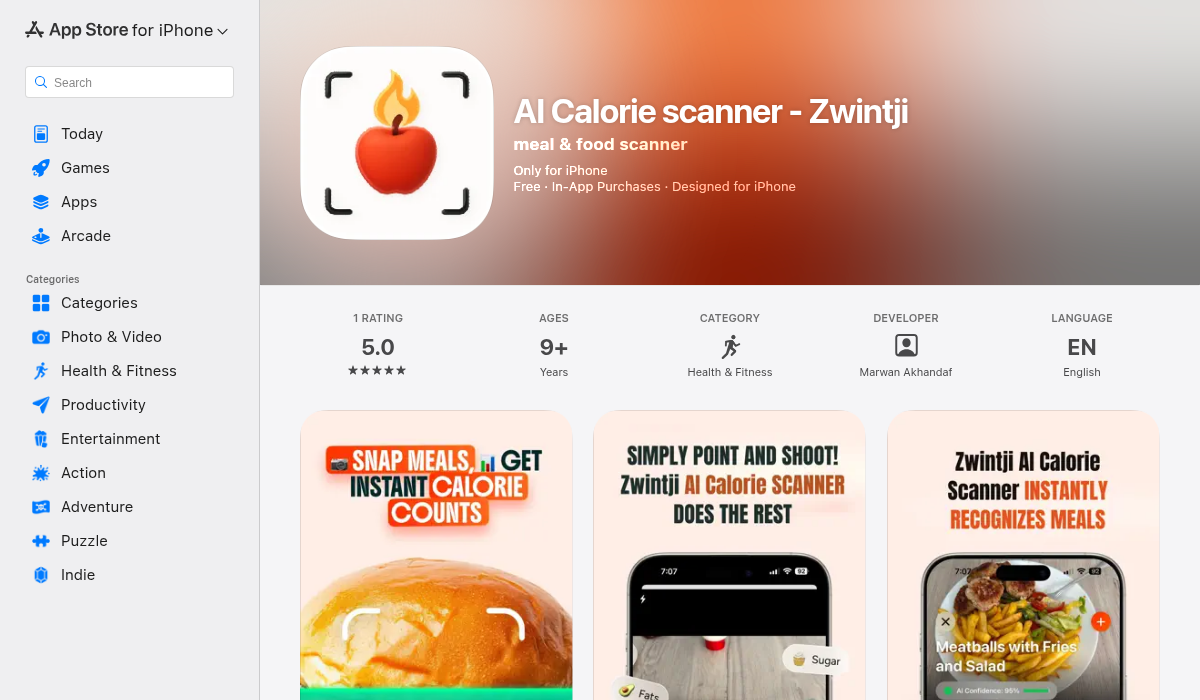
Here's where things get interesting. Zwintji represents the new generation of calorie trackers that use AI to eliminate the biggest pain point in macro tracking: the time it takes to log everything.
Instead of manually searching through databases or scanning barcodes one by one, Zwintji lets you take a photo of your meal and uses AI to identify ingredients and estimate portions. For bodybuilders eating the same rotation of meals, this is a game-changer.
Key features for bodybuilders:
- ✅ AI meal scanning — Point, shoot, done. The app identifies foods and estimates macros
- ✅ Packaged food scanning — Traditional barcode scanning for supplements and packaged foods
- ✅ Ingredient recognition — Breaks down complex meals into component parts
- ✅ Workout tracking — Log training sessions alongside nutrition
- ✅ Personalized goals — Set and adjust macro targets based on your phase
- ✅ Insights — Get personalized recommendations based on your data
Cons:
- ❌ AI estimation not as precise as manual weighing (use a food scale for prep)
- ❌ Newer app, smaller community
Best for: Bodybuilders who value speed and convenience, especially during bulking phases or maintenance when perfect precision isn't critical.
4. MyFitnessPal — The Familiar Giant
MyFitnessPal remains the most downloaded calorie counter, which means it has the largest food database. However, its dominance has led to complacency, and many bodybuilders report frustrations with accuracy issues in user-submitted entries.
Pros:
- ✅ Massive food database (14+ million foods)
- ✅ Most recipes and restaurant meals included
- ✅ Integrates with almost every fitness device
Cons:
- ❌ User-submitted entries often inaccurate
- ❌ Free tier increasingly limited
- ❌ 2022 data breach raised security concerns
- ❌ Aggressive ads and upselling
Best for: Casual lifters or those already heavily invested in the MFP ecosystem.
Head-to-Head Comparison: What Actually Matters
| Feature | MacroFactor | Cronometer | Zwintji | MyFitnessPal |
|---|---|---|---|---|
| AI Meal Scanning | ❌ | ❌ | ✅ | Limited |
| Adaptive TDEE | ✅ | ❌ | ✅ | ❌ |
| Micronutrients | Basic | ✅ 80+ | Basic | Basic |
| Workout Tracking | ✅ | Limited | ✅ | ✅ |
| Free Tier | ❌ | ✅ | Limited | ✅ |
| Speed of Logging | Fast | Moderate | Very Fast | Moderate |
Pro Tips for Effective Macro Tracking
Regardless of which app you choose, these strategies will maximize your results:
- Weigh your food (at least initially) — AI scanning and database entries are estimates. During cutting phases or competition prep, a food scale is non-negotiable. Use it for at least a few weeks to calibrate your eye for portions.
- Log in real-time, not retroactively — Trying to remember what you ate leads to errors. Log as you eat, or prep your daily meals the night before and log them all at once.
- Create custom foods for your meal prep — If you batch cook chicken, rice, and broccoli every Sunday, create a single "meal prep container" entry with accurate macros. Logging becomes one tap instead of three.
- Track consistently, even on "bad" days — The data from your cheat meals or off days is just as valuable. It helps you understand your true average intake and prevent binges from spiraling.
- Review weekly trends, not daily numbers — Fluctuations happen. Water retention, sodium, and fiber all affect the scale. Look at your 7-day averages to make decisions about adjusting intake.
Which App Should You Choose?
The best app depends on your current training phase and priorities:
- In competition prep? Use MacroFactor or Cronometer for maximum precision. The adaptive algorithm and micronutrient tracking justify the cost when every detail matters.
- Bulking or maintaining? Zwintji's AI scanning shines here. Speed matters when you're eating 4,000+ calories across 6 meals. The slight precision trade-off is worth the time saved.
- Just starting out? Start with Cronometer's free tier to build the habit. Once you're consistently logging for 30+ days, consider upgrading to a premium option.
The Bottom Line
Macro tracking is a tool, not a lifestyle. The goal is to use these apps to build awareness of what you're eating, hit your targets consistently, and eventually develop enough intuition that you can dial things in without obsessive logging.
For most bodybuilders in 2026, we'd recommend starting with Zwintji for its AI-powered convenience during bulking and maintenance phases, then switching to MacroFactor when you're deep into a cutting phase and precision becomes critical.
The best app is the one you'll actually use consistently. Pick one, commit to it for at least 8 weeks, and watch your gains improve as your nutrition finally matches your training intensity.