Best Speed Reading Apps 2026
Reading faster isn't about skipping words — it's about training your brain to process text more efficiently.
Whether you're a student drowning in textbooks, a professional racing through reports, or simply someone who wants to consume more books without sacrificing comprehension, speed reading apps have evolved dramatically in 2026. Gone are the days of simple word-flashing tools — today's best apps combine RSVP technology, bionic reading techniques, and AI-powered personalization to genuinely transform how you read.
We tested dozens of speed reading apps across iOS and Android to find which ones actually deliver results. Here's what stood out — and what didn't.
Why Speed Reading Apps Work (When They're Done Right)
The science behind speed reading is straightforward: most people read at 200-300 words per minute, but our brains can process text much faster. The bottleneck isn't comprehension — it's subvocalization (silently pronouncing words) and regression (re-reading passages unnecessarily).
Effective speed reading apps attack these habits through two main approaches:
- RSVP (Rapid Serial Visual Presentation) — Words flash one at a time at a controlled pace, eliminating eye movement and forcing focus
- Bionic Reading — Strategic bolding of word beginnings guides your eyes through text faster while maintaining natural reading flow
The best apps combine these techniques with progress tracking, adjustable speeds, and support for your actual reading material — not just built-in practice texts.
The Problem: Most Speed Reading Apps Over-Promise
Here's the uncomfortable truth: many speed reading apps promise dramatic results but deliver frustrating experiences. Common complaints from the r/speedreading community include apps that only work with their own library, aggressive subscription models for basic features, and training exercises that feel disconnected from real-world reading.
"I've tried Superead, Spreeder, Outread, and Reading Trainer. Most have tons of ads and the exercises don't translate to actual book reading."— User in r/speedreading
What readers actually want is simple: an app that works with their own content (articles, PDFs, ebooks), uses proven techniques, and doesn't require a psychology degree to operate.
Best Speed Reading Apps Compared (2026)
1. Spreeder — Best for Serious Training
Spreeder remains the gold standard for dedicated speed reading training. At $67 for lifetime access, it combines RSVP reading with structured video lessons, comprehension exercises, and progress tracking across 15 different training activities.
- ✅ Comprehensive training program with expert videos
- ✅ Supports 46 file formats including ebooks and PDFs
- ✅ AI-adaptive drills that adjust to your progress
- ✅ Works on desktop, iOS, and web browsers
- ❌ Steep learning curve for casual readers
- ❌ Desktop experience is better than mobile
Best for: Committed learners who want long-term improvement and structured methodology.
2. Speechify — Best for Audio Learners
Speechify takes a different approach — converting text to remarkably natural AI speech at adjustable speeds up to 4.5x. It's less traditional speed reading and more about consuming content faster through listening.
- ✅ Exceptional AI voice quality in dozens of languages
- ✅ Works with PDFs, articles, scanned documents
- ✅ Great for multitasking or accessibility needs
- ❌ Premium pricing at $139/year
- ❌ Not traditional visual speed reading
Best for: Professionals with long commutes or anyone who prefers audio consumption.
3. Readwise Reader — Best for Knowledge Workers
Readwise Reader combines speed reading with powerful annotation and recall features. It aggregates articles, newsletters, PDFs, and even YouTube transcripts into one place with spaced repetition to help you remember what you read.
- ✅ All-in-one reading inbox with excellent organization
- ✅ Spaced repetition resurfaces key highlights
- ✅ AI summaries and definitions built-in
- ✅ Exports to Notion, Obsidian, and other tools
- ❌ Subscription required after trial
- ❌ Focus on retention over pure speed
Best for: Researchers, writers, and anyone who needs to remember — not just consume — content.
4. BN Reading — Best for Bionic Speed Reading
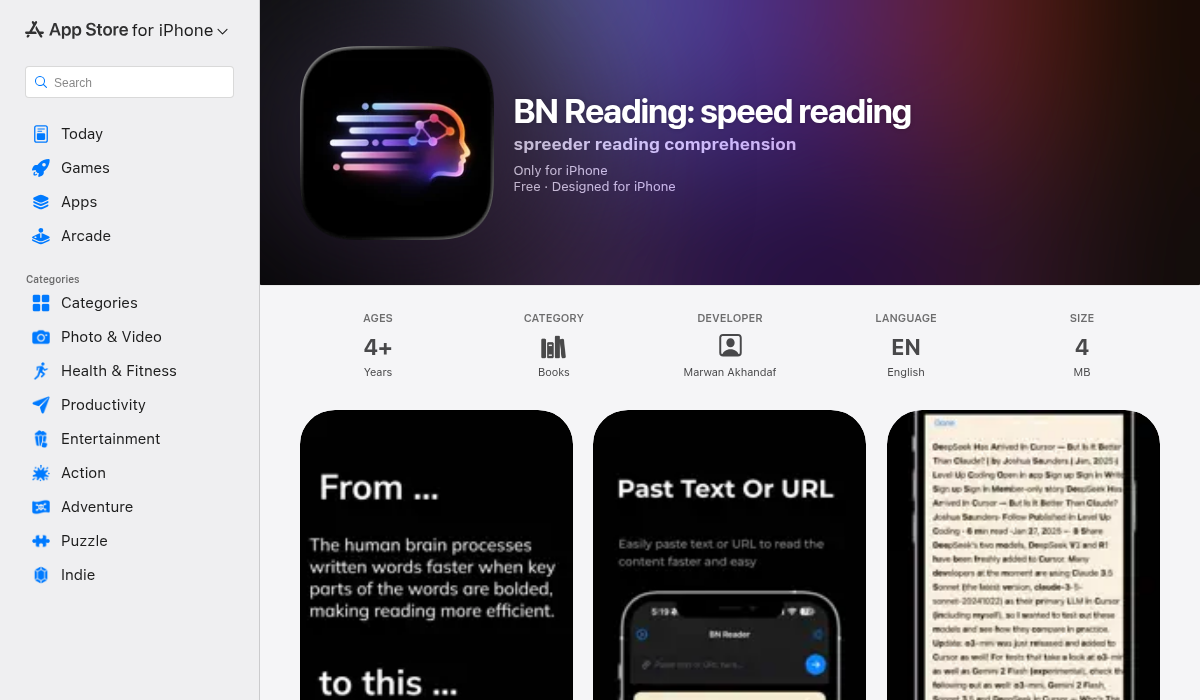
BN Reading takes the bionic reading approach to its logical conclusion. Instead of flashing words RSVP-style, it highlights the beginnings of words as you read — training your eyes to move faster while maintaining the natural reading experience.
What sets BN Reading apart is its focus on simplicity. You import your text files, adjust the bold intensity to your preference, and start reading. No gamification, no lengthy onboarding — just effective speed reading.
- ✅ Adjustable bionic bold intensity (customize how much gets highlighted)
- ✅ Multiple fonts and themes for comfortable reading
- ✅ Text file import — use your own content
- ✅ Search and bookmarks for longer documents
- ✅ Clean, distraction-free interface
- ❌ iOS only (no Android version yet)
The bionic approach works particularly well for readers who find RSVP disorienting. You maintain control over your pace while the visual highlighting trains faster eye movement over time.
Best for: Readers who want a natural reading experience with subtle speed enhancement.
5. Read Aloud — Best for Text-to-Speech Speed Reading
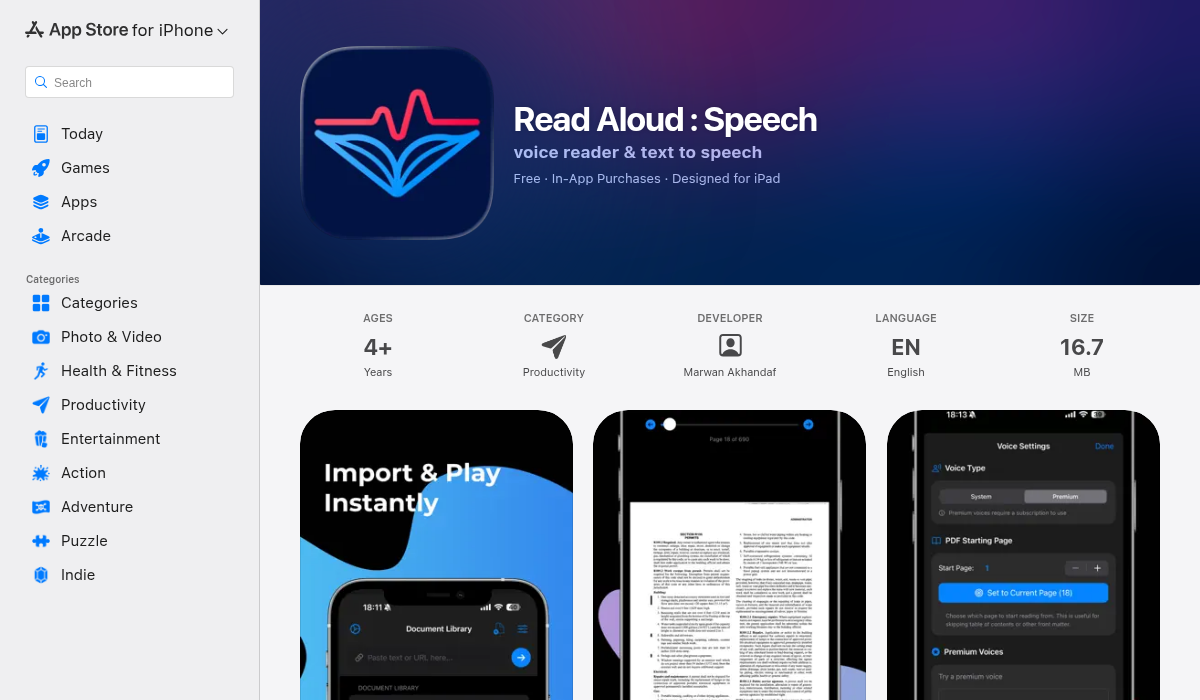
For those who prefer listening over reading, Read Aloud offers premium TTS with text highlighting as it reads. Import articles, PDFs, or web content and let it read to you at adjustable speeds while following along visually.
- ✅ Premium realistic voices beyond system defaults
- ✅ Highlighted text synced with audio playback
- ✅ Multiple themes for comfortable viewing
- ✅ Great for accessibility or reading fatigue
Best for: Readers who want audio support or struggle with sustained visual reading.
6. AceReader Cloud — Best for Students
AceReader Cloud has decades of research behind its methodology, offering graduated drills that progressively increase your reading speed from 1x to 2-3x your baseline. It includes thousands of leveled comprehension tests to ensure speed gains don't come at the cost of understanding.
- ✅ Research-backed methodology with proven results
- ✅ Comprehensive comprehension testing
- ✅ Great for classroom use with educational edition
- ❌ $39.99 annual pricing
- ❌ Interface feels dated compared to newer apps
Best for: Students and parents who want structured, measurable improvement.
Pro Tips for Speed Reading Success
- Start slow — Don't immediately crank speed to maximum. Increase gradually as your comprehension keeps pace.
- Practice with easy material first — Master the technique on light content before tackling dense academic texts.
- Use your own content — Training with practice texts is fine, but real improvement comes from reading material you actually need.
- Combine approaches — Try both RSVP and bionic methods to see which works better for your brain.
- Be consistent — 15-20 minutes of daily practice beats occasional marathon sessions.
Which Speed Reading App Should You Choose?
The "best" app depends entirely on your goals:
- For maximum speed gains: Spreeder's structured training delivers measurable results if you commit to the program.
- For natural reading enhancement: BN Reading's bionic approach improves speed without disrupting your reading flow.
- For multitaskers: Speechify or Read Aloud let you consume content while doing other things.
- For knowledge retention: Readwise Reader combines speed with spaced repetition for lasting recall.
Most speed reading apps offer free trials or lite versions. Start with 2-3 that match your preferred approach, test them with your actual reading material, and commit to whichever feels most sustainable long-term.
The Bottom Line
Speed reading is a skill that compounds over time. Whether you choose RSVP flashing, bionic highlighting, or audio acceleration, the key is consistent practice with material you actually want to read. The apps on this list represent the best tools available in 2026 — pick one that matches your learning style and start training your brain to read faster.
If you want a simple, no-nonsense approach to bionic speed reading, BN Reading is worth trying — it's the cleanest implementation we've seen of this increasingly popular technique.