
Can Calorie Scanner Apps Estimate Restaurant Meals Accurately?
You're at a restaurant, eyeing that gorgeous pasta dish, and you have no idea if it's 600 or 1,200 calories. The menu doesn't help — and even when restaurants list calorie counts, they're often wildly inaccurate.
AI-powered calorie scanner apps promise to solve this problem by snapping a photo and instantly estimating the nutritional content. But how accurate are they really when it comes to restaurant meals — where portion sizes vary, cooking methods are unknown, and hidden ingredients lurk in every sauce?
We tested the leading calorie scanning apps on real restaurant meals to find out what actually works, and what's just marketing hype.
Why Restaurant Meals Are So Hard to Track
Restaurant meals are the ultimate calorie-counting nightmare. Unlike packaged food with standardized nutrition labels, restaurant dishes involve countless variables that make accurate estimation incredibly difficult:
- Hidden oils and butter — Chefs frequently use far more fat than home cooks
- Portion inconsistency — The same dish can vary by 30% between servings
- Sauces and dressings — Often packed with sugar, cream, or oil you can't see
- Cooking method mysteries — Grilled vs. pan-fried makes a huge difference
"I use Nutrionix Track. Huge database verified by dieticians. It's a company that restaurants use to determine calorie counts, so it has the actual info for chain restaurants."— Reddit user in r/CICO
This comment highlights a key insight: for chain restaurants, apps with verified databases can be quite accurate. But for independent restaurants and complex dishes, AI estimation becomes essential.
How AI Calorie Scanners Actually Work
Modern calorie scanning apps use computer vision and machine learning to identify foods in your photo. The process typically involves:
- Food recognition — AI identifies what's on your plate (chicken, rice, vegetables, etc.)
- Portion estimation — Algorithms estimate serving sizes based on plate proportions
- Nutritional calculation — The app pulls calorie data from its food database
- Adjustment options — Most apps let you modify portions or ingredients
The challenge? AI can see what food looks like, but it can't see how much butter the chef used or whether the chicken was marinated in oil. This is where different apps diverge in their approaches.
Best Calorie Scanner Apps for Restaurant Meals in 2026
1. MyFitnessPal
The original calorie tracking app has added AI scanning, powered by Passio AI. It's backed by the largest food database in the industry, which helps when matching restaurant dishes to known entries.
- ✅ Massive verified food database
- ✅ Chain restaurant menus built-in
- ✅ Barcode scanning for packaged foods
- ❌ AI photo scanning is slower
- ❌ Premium features locked behind subscription
- ❌ Can feel overwhelming with features
"For accuracy, nothing beats weighing + logging in a database app like MFP, LoseIt, or Cronometer. But photo apps can be a fun supplement if you treat them as 'estimates, not truth.'"— Reddit user in r/WeightLossAdvice
2. Lose It!
Lose It! offers Snap It, their AI-powered meal scanner. It's known for a cleaner interface than MyFitnessPal and good accuracy on recognizable dishes.
- ✅ Clean, intuitive interface
- ✅ Snap It photo recognition
- ✅ One-time premium purchase option
- ❌ Smaller database than MFP
- ❌ Limited restaurant coverage
3. Zwintji – AI Calorie Scanner
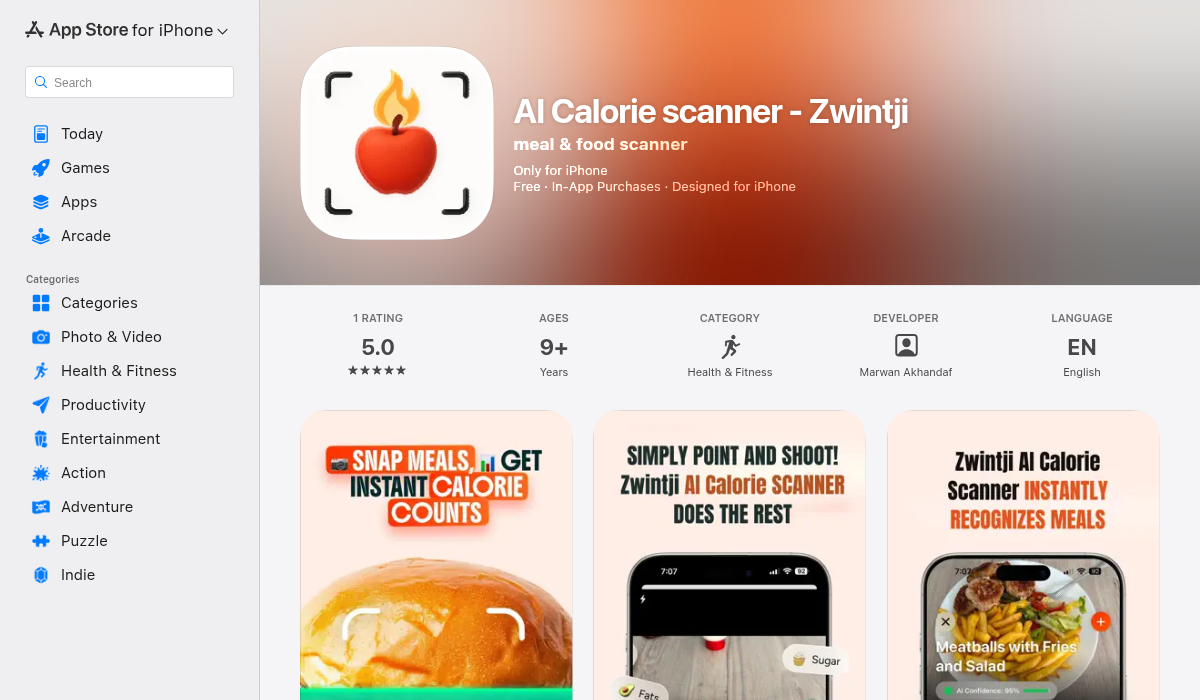
Zwintji takes a different approach — it's built specifically around AI meal scanning rather than treating it as an add-on feature. Point your camera at any meal, and it identifies ingredients and estimates calories in seconds.
- ✅ AI-first design — scanning is the core experience
- ✅ Works on both restaurant meals and packaged foods
- ✅ Ingredient recognition, not just dish matching
- ✅ Workout tracking and personalized goals included
- ✅ Clean, modern interface
What makes Zwintji interesting for restaurant meals is that it analyzes individual ingredients rather than trying to match the entire dish to a database entry. This means it can handle unique combinations and local restaurant dishes that aren't in any database.
4. MacroFactor
MacroFactor is the choice for serious trackers. It doesn't just log what you eat — it calculates your actual TDEE based on real weight changes and adjusts your targets automatically.
- ✅ Dynamic TDEE calculation
- ✅ AI describe feature for complex meals
- ✅ Adherence-neutral (no guilt-tripping)
- ❌ Paid only — no free tier
- ❌ Steeper learning curve
"Macrofactor — it isn't free, but gives you your actual TDEE (which fluctuates in real life BTW) and is adherence neutral. It has a barcode scanner and AI describe as well."— Reddit user in r/CICO
The Accuracy Problem: What the Research Shows
Here's the uncomfortable truth: no AI calorie scanner is fully accurate for restaurant meals. Studies consistently show that even the best apps have a margin of error of 15-30% on complex dishes. But that doesn't mean they're useless.
The key insight from the Reddit communities tracking their meals:
"Super helpful for keeping track of meals. Do have to consider that the technology isn't able to fully determine amount of oil, butter, sugar, or seasoning used but it's a great option to help see if you are on the right or wrong track."— Reddit user in r/CalorieEstimates
The goal isn't perfection — it's awareness. Knowing that your meal is approximately 800 calories is far better than having no idea and accidentally eating 1,500.
Tips for More Accurate Restaurant Meal Tracking
- Take photos from multiple angles — Many apps perform better with additional context
- Include a reference object — A coin or your hand helps AI estimate portion sizes
- Adjust for cooking methods — If it looks oily or buttery, add 100-200 calories manually
- Log sauces separately — That creamy dressing could be 200+ calories on its own
- When in doubt, round up — Restaurant portions are almost always bigger than home cooking
- Use chain restaurant data when available — The verified calorie counts are more reliable than AI guesses
The Bottom Line
Can calorie scanner apps estimate restaurant meals accurately? The honest answer is "somewhat" — expect 15-30% margin of error on complex dishes. But that's still incredibly valuable for anyone trying to maintain awareness of their intake.
For chain restaurants, apps with verified databases like MyFitnessPal and Nutrionix are your best bet. For independent restaurants and unique dishes, AI-powered scanners like Zwintji provide useful estimates that beat blind guessing.
The best approach? Use AI scanning as a starting point, then adjust based on what you can observe about the dish. A little mindfulness about hidden oils and oversized portions goes a long way toward making these estimates more accurate.
If you eat out frequently and want a quick, AI-first approach to calorie tracking, Zwintji is worth trying — it's designed specifically for this use case rather than treating photo scanning as an afterthought.