
Carmine (E120): The Bug-Based Dye Hiding in Your Food
That vibrant red color in your favorite yogurt or candy might come from an unexpected source — crushed beetles.
Carmine, also known as E120, cochineal extract, or natural red 4, is one of the most widely used red dyes in the food industry. What many people don't realize is that this "natural" colorant is derived from the dried bodies of female cochineal insects. Every year, billions of these tiny beetles are harvested, dried, and processed to create the crimson hue found in everything from strawberry yogurt to red velvet cupcakes.
What Exactly Is Carmine?
Carmine is a bright red pigment extracted from carminic acid, which cochineal beetles produce naturally as a defense mechanism. These insects live on prickly pear cacti, primarily in Peru, Mexico, and the Canary Islands. To produce just one pound of carmine dye, manufacturers need approximately 70,000 female cochineal insects.
The extraction process involves drying the insects in the sun, crushing them into a fine powder, and then boiling them in an ammonia or sodium carbonate solution. The resulting dye is exceptionally stable, heat-resistant, and produces a vivid red color that synthetic alternatives often struggle to match — which is why the food industry has used it for centuries.
Where You'll Find Carmine (It's Everywhere)
The prevalence of carmine in everyday products might surprise you. Here are some common categories where E120 frequently appears:
- Dairy products — Strawberry and raspberry yogurts, flavored milk, ice cream
- Candies and sweets — Gummy bears, lollipops, frosting, Skittles (original recipe)
- Beverages — Fruit juices, energy drinks, some alcoholic beverages like Campari
- Meat products — Sausages, processed meats (to enhance pink color)
- Cosmetics — Lipstick, blush, eyeshadow, nail polish
- Bakery items — Red velvet cakes, macarons, colored frostings
Even products labeled as "natural" or "made with real fruit" may contain carmine instead of actual fruit-derived coloring.
Why People Are Increasingly Avoiding Carmine
The shift away from carmine is driven by several groups with different concerns:
Vegans and Vegetarians
Since carmine is derived from insects, it's not suitable for plant-based diets. Many vegans are shocked to discover that products they assumed were plant-based actually contain beetle extract.
"Truly shocking how much stuff this poor little insect is in. It's sometimes listed as carmine, cochineal red, or E120."— Reddit user in r/vegan
Religious Dietary Requirements
Carmine presents challenges for those following kosher and halal dietary laws. While some authorities consider it permissible due to the extensive processing, others rule that insect-derived ingredients remain prohibited regardless of transformation. This ambiguity means many people simply avoid it to be safe.
Allergy Concerns
Perhaps most seriously, carmine can trigger severe allergic reactions in some individuals. The FDA requires carmine to be listed on labels specifically because of documented cases of anaphylaxis. Symptoms can range from hives and swelling to potentially life-threatening responses.
"Carmine, a red food dye used in many popular foods, is made of crushed insects. Specifically, the female cochineal bug. Even Nerds candy aren't considered vegan because they're made with Carmine red coloring."— Reddit user in r/YouShouldKnow
How to Identify Carmine on Labels
Manufacturers use various names for carmine, which can make it difficult to spot. Look for any of these on ingredient lists:
- Carmine
- Cochineal
- Cochineal extract
- E120
- Natural Red 4
- Crimson Lake
- C.I. 75470
- Carminic acid
The challenge is that ingredient lists are often tiny, hard to read, and use technical terminology. In a busy grocery store, checking every product manually is practically impossible.
The Smart Solution: Scanning Technology
This is where modern technology becomes invaluable. Instead of squinting at ingredient lists or memorizing dozens of additive names, you can use your smartphone to instantly analyze any product's ingredients.
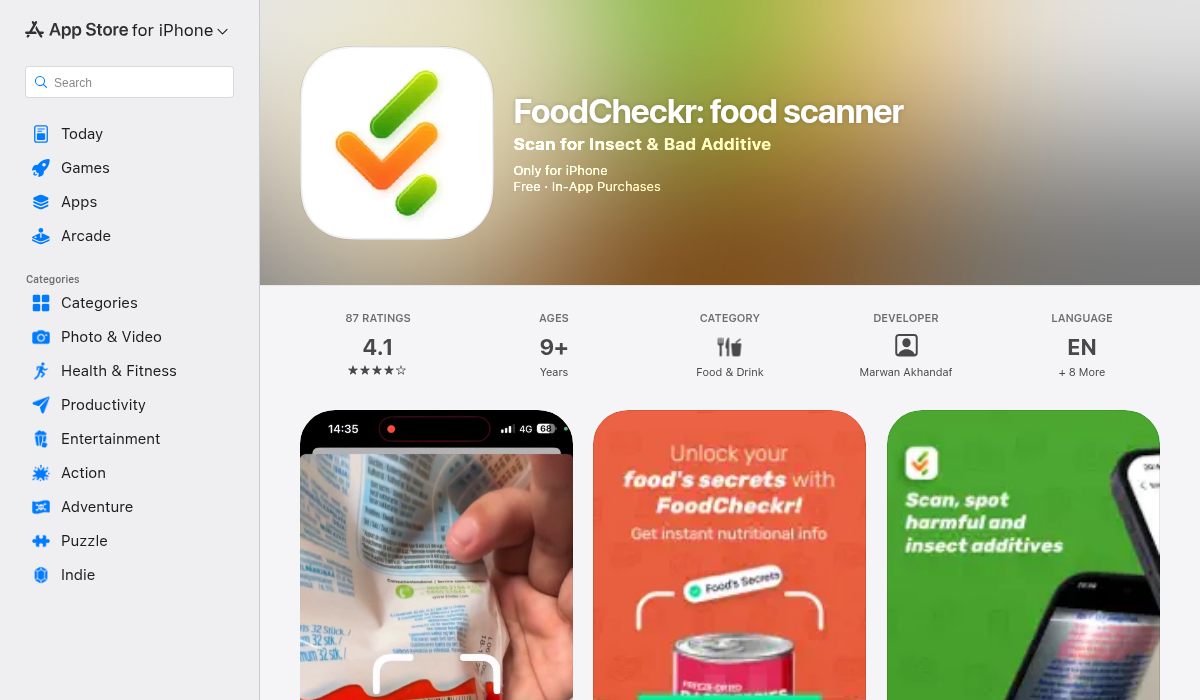
FoodCheckr is specifically designed to identify problematic additives, including insect-derived ingredients like carmine (E120) and shellac (E904). Simply scan a product's barcode, and the app instantly flags any concerning ingredients with clear explanations of what they are and where they come from.
What Makes FoodCheckr Different
- Instant barcode scanning — Results in seconds, works with millions of products
- Insect-derived ingredient detection — Specifically flags E120, E904, and other bug-based additives
- AI-powered analysis — Goes beyond simple database lookups to identify hidden concerns
- Additive risk ratings — Clear color-coded warnings (green/yellow/red) for each ingredient
- Complete E-number explanations — Understand exactly what each additive is and why it matters
- Offline history — Review past scans anytime, even without internet
Other Insect-Derived Food Additives to Watch For
Carmine isn't the only insect-derived ingredient lurking in your food. Here are others to be aware of:
E904 — Shellac
This glossy coating comes from lac beetle secretions and is used to make candies, pills, and fresh produce shiny. You'll find it on apples, citrus fruits, and coated chocolates. Also known as "confectioner's glaze" or "resinous glaze."
E901 — Beeswax
While produced by bees rather than from their bodies, beeswax is considered non-vegan. It's commonly used as a glazing agent on candies, fruits, and in some chewing gums.
L-Cysteine (E920)
Though often derived from duck feathers or human hair, some sources use insects. It's used as a dough conditioner in bread products.
Pro Tips for Avoiding Insect Ingredients
- Scan before you buy — Make it a habit to scan unfamiliar products with an app like FoodCheckr before adding them to your cart
- Learn the alternative names — Carmine has many aliases; knowing them helps when apps aren't available
- Look for "vegan" certifications — Officially vegan-certified products won't contain carmine
- Check makeup too — Carmine is extremely common in red lipsticks and blushes
- Be wary of "natural" claims — Carmine is technically natural, so "natural coloring" doesn't mean insect-free
- Consider synthetic alternatives — Red 40 (E129) is a synthetic option that's vegan-friendly, though it has its own controversy
The Industry Response
As consumer awareness grows, some major companies have reformulated their products. Starbucks famously switched from carmine to lycopene (a tomato-based dye) in their Strawberries & Crème Frappuccino after public outcry in 2012. However, many products still contain carmine, and manufacturers aren't always eager to publicize its insect origins.
The good news is that alternatives exist. Beetroot extract, anthocyanins from red cabbage, and lycopene from tomatoes can all produce red hues without insects. Whether manufacturers choose to use them often comes down to cost and color stability.
The Bottom Line
Carmine (E120) is one of those ingredients that perfectly illustrates why reading labels matters — and why modern scanning technology has become so valuable. Whether you're vegan, following religious dietary laws, dealing with allergies, or simply prefer not to eat crushed beetles, knowing what's in your food empowers you to make informed choices.
The reality is that checking every ingredient list manually isn't practical in 2026. That's why tools like FoodCheckr exist — to do the tedious work instantly and flag exactly what you need to know. A quick scan takes seconds; peace of mind about what you're eating is worth much more.
Next time you see something suspiciously red on the shelf, you'll know to check. And now you have the tools to do it effortlessly.