
Digital Detox with Quran: A New Approach to Screen Time for Muslims
The average person now spends nearly 7 hours a day glued to a screen — and for Gen Z, that number climbs past 7 hours and 43 minutes. If you've ever felt the guilt of mindlessly scrolling through Instagram when you meant to read Quran, you're far from alone. But what if your phone could actually help you reconnect with your faith instead of pulling you away from it?
Digital detox has become a buzzword in wellness circles, but for Muslims, the concept goes deeper than just reducing screen time. It's about reclaiming those stolen hours for something that truly nourishes the soul — Quran recitation, dhikr, and spiritual reflection. The good news? A new wave of apps is making this easier than ever, and some are taking a genuinely Islamic approach to the problem.
The Silent Crisis: How Screens Are Stealing Our Deen
Let's be honest about the scale of the problem. According to a 2025 report by DemandSage, global average screen time has risen to approximately 6 hours and 54 minutes per day — and that's just the average. For younger Muslims navigating university, social media, and the pressures of modern life, the numbers are often far worse.
The real cost isn't just time. It's spiritual connection. When you're doomscrolling at 11 PM, you're not just losing sleep — you're losing the quiet moments that were once reserved for reflection, dua, and night prayers. The Quran itself warns against this kind of waste:
"And do not spend wastefully. Indeed, the wasteful are brothers of the devils, and ever has Satan been to his Lord ungrateful."— Quran, Surah Al-Isra (17:26–27)
Muslim communities on Reddit have been grappling with this openly. One user on r/islam described the struggle many can relate to:
"Has anyone else felt like phone addiction is slowly affecting their deen? I started using AppBlock to block certain applications and tried to read Quran 2 hours a day... it's a constant battle."— Reddit user in r/islam
Another user in the same community shared their approach: "Try to set a specific time in a day just for Quran and try your best to solely focus on Quran at that time." The advice is sound — but willpower alone rarely wins against algorithms designed to keep you hooked.
Why Traditional Digital Detox Doesn't Work for Muslims
Most digital detox apps on the market — Forest, Opal, One Sec, Freedom — are built around a simple idea: block distracting apps and track your screen time. They work well for general productivity, but they miss something crucial for Muslims.
The goal isn't just to stop using your phone. It's to redirect that time toward something meaningful. Blocking TikTok for an hour is great, but if you spend that hour staring at the wall, have you really achieved anything? The Islamic approach to digital detox isn't about absence — it's about presence. Presence with the Quran. Presence with dhikr. Presence with Allah.
This is where a new category of apps is emerging — tools that don't just lock your phone, but condition the unlock on spiritual practice.
Best Digital Detox Apps Compared
1. Opal — Screen Time Control
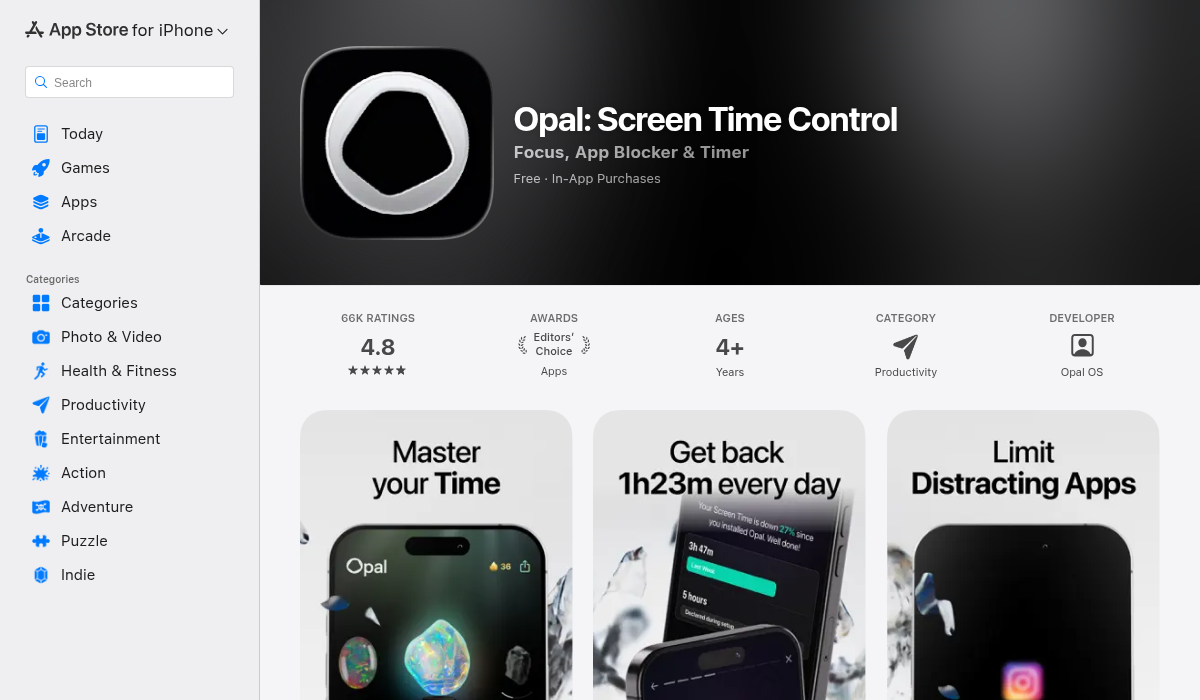
Opal is one of the most popular screen time apps on iOS, with a polished interface and powerful blocking features. It lets you create focus sessions, block specific apps, and track your daily screen time trends.
- ✅ Beautiful interface with detailed analytics
- ✅ Scheduled focus sessions and app blocking
- ✅ Weekly progress reports
- ❌ No spiritual or religious component
- ❌ Expensive — premium plans can cost $8-16/month
- ❌ Blocking is the only strategy (no redirection)
Opal is excellent for general productivity, but if you're looking to replace screen time with Quran time specifically, you'll need to build that habit on your own. It won't guide you there.
2. Forest — Focus for Productivity
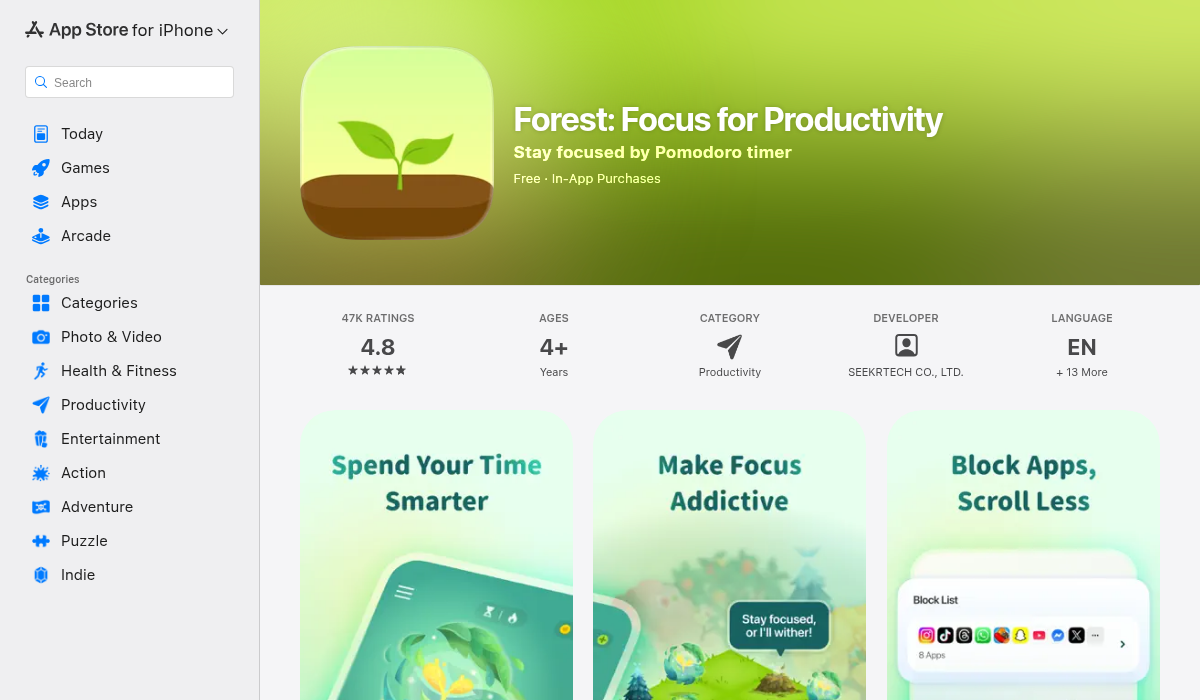
Forest takes a creative approach: when you want to focus, you plant a virtual tree. If you leave the app to check social media, the tree dies. Over time, you grow a digital forest. It's a clever psychological trick, and the gamification works well for many people.
- ✅ Fun gamification with virtual trees
- ✅ Plants real trees through partnership with Trees for the Future
- ✅ Simple and effective concept
- ❌ No connection to any spiritual practice
- ❌ Passive — it stops you from using your phone but doesn't encourage you to do anything specific
- ❌ Limited app blocking compared to dedicated blockers
Forest is charming, but it treats all phone-free time equally. Whether you spent 30 minutes reading Quran or 30 minutes watching paint dry, your tree grows the same way.
3. Quran/Dhikr Unlock — The Islamic Digital Detox
This is where things get interesting. Quran/Dhikr Unlock flips the entire digital detox concept on its head. Instead of just blocking apps, it locks your selected apps until you've completed your Quran or dhikr reading. Want to open Instagram? Read a page of Quran first. Feel the urge to check Twitter? Complete your morning adhkar.
It's a beautifully simple idea rooted in Islamic psychology — the concept that replacing a bad habit with a good one is more effective than simply stopping the bad habit. The Prophet Muhammad ﷺ taught us to replace harmful actions with beneficial ones, and this app operationalizes that wisdom for the smartphone age.
- ✅ Locks selected apps until Quran/dhikr reading is completed
- ✅ Customizable duration requirements — set how long you need to read
- ✅ Multiple Quran fonts for comfortable reading
- ✅ Streak tracking to build consistent habits
- ✅ Usage limits to control overall screen time
- ✅ Specifically designed for Muslim users
What makes this approach powerful is the psychological conditioning. Over time, your brain starts associating the urge to scroll with the act of reading Quran. The impulse that once pulled you toward distraction now pulls you toward your faith. That's not just digital detox — that's spiritual rewiring.
The Science Behind Habit Stacking
What Quran/Dhikr Unlock is doing, perhaps without knowing it, is leveraging a well-studied behavioral psychology technique called habit stacking — attaching a new desired behavior to an existing trigger.
James Clear, author of Atomic Habits, describes the formula as: "After [current habit], I will [new habit]." In this case, it becomes: "Before [opening Instagram], I will [read Quran]." The existing urge to check social media becomes the cue for Quran reading, and over weeks and months, the reading becomes automatic.
Research from the European Journal of Social Psychology found that it takes an average of 66 days for a new behavior to become automatic. With an app enforcing this pattern every single day, you're building the habit whether you feel like it or not — and that's exactly the point.
From an Islamic perspective, this aligns with the concept of mujahadah (spiritual striving). The Quran tells us:
"And those who strive for Us — We will surely guide them to Our ways. And indeed, Allah is with the doers of good."— Quran, Surah Al-Ankabut (29:69)
The effort itself is rewarded, even when it feels forced at first.
Practical Tips for an Islamic Digital Detox
Whether you use an app or go manual, here's a framework that actually works:
- Start with salah boundaries — Make the 10 minutes before and after each prayer completely phone-free. That's five built-in detox periods every day, totaling over an hour and a half.
- Replace, don't just remove — Every app you block should be replaced with a specific activity. Block Twitter? Replace it with 5 minutes of Quran. Block YouTube? Replace it with listening to a lecture. The key insight is that empty time creates anxiety, and anxious people reach for their phones.
- Use the Fajr advantage — The time between Fajr and sunrise is described in hadith as one of the most blessed periods. If you can keep your phone locked until after Fajr dhikr, you've already won the hardest battle of the day. Your cortisol is naturally rising, your mind is fresh, and you haven't been contaminated by notifications yet.
- Set a daily Quran minimum — Even one page. The Prophet ﷺ taught that the most beloved deeds to Allah are the most consistent, even if they are small (Sahih Bukhari 6464). A daily minimum with an app like Quran/Dhikr Unlock enforcing it makes this non-negotiable.
- Track your streaks, not just your screen time — Screen time going down feels good, but Quran reading streaks going up feels better. Focus on the positive metric. How many consecutive days have you read Quran? That number should be the one you're proud of.
- Create a Ramadan prep plan — Ramadan 2026 is approaching, and it's the perfect time to begin a structured digital detox. Start reducing screen time now so that by the time Ramadan arrives, you have the discipline and habits in place to make the most of every blessed minute.
What the Community Is Saying
The conversation around digital detox in Muslim communities has exploded in recent years. On Reddit's r/islam, posts about phone addiction regularly garner hundreds of upvotes and deeply personal replies. One user who cut their screen time by 60% shared their approach: eliminating unnecessary apps entirely and replacing smartphone time with dedicated Quran sessions.
Another common theme is the impact on children. A widely discussed post on r/MuslimLounge highlighted the dangers of unrestricted screen access for children, with parents sharing strategies like setting screen time limits and replacing device time with family Quran reading sessions.
The consensus emerging from these discussions is clear: generic digital detox tools aren't enough. Muslims need tools that understand the specific goal isn't just less screen time — it's more time with the Quran, more presence in salah, and more connection with Allah.
Beyond Apps: Building a Holistic Approach
No app is a silver bullet. The most effective digital detox combines technology with intentional lifestyle design:
- Physical Quran — Keep a mushaf (physical copy of the Quran) visible in your home. The act of opening a physical book creates a different relationship with the text than reading on a screen.
- Accountability partner — Find a friend or family member who shares the goal. Share your Quran reading streaks. Check in weekly.
- Environment design — Charge your phone outside the bedroom. Place your mushaf or prayer mat where your phone used to sit on your nightstand.
- Dua — Ask Allah for help. Seriously. The Prophet ﷺ used to seek refuge from laziness and anxiety (Sahih Bukhari 6369). Phone addiction is a modern form of both.
The Bottom Line
Digital detox isn't about hating technology — it's about using it intentionally. For Muslims, the most powerful version of this isn't just blocking distracting apps; it's redirecting that impulse energy toward the Quran and remembrance of Allah.
Apps like Opal and Forest do a fine job of reducing screen time in general, but they treat all phone-free time as equal. Quran/Dhikr Unlock takes the approach further by making your spiritual practice the key that unlocks your digital world — turning every urge to scroll into an opportunity to connect with your Creator.
As the Quran reminds us:
"Verily, in the remembrance of Allah do hearts find rest."— Quran, Surah Ar-Ra'd (13:28)
In a world designed to keep you distracted, that rest has never been more valuable.
Note: For specific religious rulings (fatwa), always consult with qualified Islamic scholars or your local imam. This article provides general information based on recognized Islamic sources.