
Hidden Animal Ingredients in Snacks: A Vegan's Checklist
That bag of chips you just grabbed? It might contain beetle secretions. Those gummy bears? Ground-up animal bones. Welcome to the hidden world of non-vegan ingredients lurking in everyday snacks.
Going vegan sounds simple until you realize how many animal-derived ingredients hide behind scientific names and E-numbers. Even experienced vegans get caught off guard by products that seem obviously plant-based — but aren't.
This guide exposes the most common hidden animal ingredients in snacks, so you can shop with confidence instead of squinting at ingredient lists in grocery store aisles.
Why Snacks Are a Minefield for Vegans
Unlike meat or dairy, which are obviously animal products, many snack ingredients are derived from animals through processes most consumers never learn about. Manufacturers aren't required to label the source — only the ingredient name.
"I was vegan for two years before someone told me my favorite candy was coated in shellac. I felt so betrayed — how was I supposed to know beetle secretions were making my gummies shiny?"— Reddit user in r/vegan
The food industry uses animal byproducts because they're cheap, effective, and widely available. Understanding which ingredients to watch for is the first step to avoiding them.
The Complete Hidden Animal Ingredients Checklist
🚨 Always Non-Vegan (Avoid These)
Gelatin — The most common offender. Made by boiling animal bones, skin, and connective tissue. Found in gummies, marshmallows, some yogurts, and candy. Look for "pectin" or "agar" as vegan alternatives.
Carmine / E120 / Cochineal — A red dye made from crushed cochineal beetles. Used in red and pink candies, drinks, and even some chips. It takes about 70,000 beetles to produce one pound of dye.
Shellac / E904 / Confectioner's Glaze — A resin secreted by lac beetles, used to make candies shiny. Common on jelly beans, candy corn, and some chocolate-covered snacks.
Casein / Caseinate — Milk protein found in "non-dairy" creamers, some chips, and protein bars. The "non-dairy" label doesn't mean vegan — check ingredients.
Whey — A milk byproduct present in many chips, crackers, and baked goods. Even salt and vinegar chips often contain whey.
Lactose — Milk sugar used as a filler and flavor enhancer. Hides in chips, crackers, and seasoned snacks.
Isinglass — Fish bladder used to clarify some beers, wines, and occasionally fruit juices. Rarely listed on labels.
⚠️ Sometimes Non-Vegan (Check the Source)
Vitamin D3 — Usually derived from lanolin (sheep wool oil) or fish. Some brands now use lichen-based D3, but most don't. Common in fortified cereals and drinks.
Glycerin / E422 — Can be plant-based or animal-derived. Used in candies, baked goods, and protein bars. "Vegetable glycerin" is safe; plain "glycerin" is questionable.
Mono and Diglycerides / E471 — Emulsifiers that can come from plant or animal fats. Found in bread, peanut butter, and baked snacks. Impossible to tell without contacting the manufacturer.
Stearic Acid — Can be animal or plant-derived. Used in chewing gum and some candies.
L-Cysteine / E920 — An amino acid often derived from duck feathers or human hair, used as a dough conditioner in bread and bagels. Some sources are synthetic.
Natural Flavors — The most frustrating label. Could be plant-based, or could include animal-derived flavorings. Companies aren't required to specify.
Lecithin / E322 — Usually from soy (vegan), but can be from eggs. Check if it says "soy lecithin" specifically.
🍬 Surprising Non-Vegan Snacks
- Many gummy candies — Gelatin-based (Haribo, Swedish Fish in some regions)
- Red-colored chips — May contain carmine
- Shiny candy coatings — Often shellac
- Some tortilla chips — Contain whey or cheese powder
- Many protein bars — Whey protein, casein, gelatin
- Some dark chocolate — May contain milk fat or butterfat
- Beer and wine — Clarified with isinglass, gelatin, or casein
- Some orange juice — Fortified with fish-derived omega-3
- Certain breads — L-cysteine, mono and diglycerides
- White sugar — Some brands filter through bone char
How to Check Snacks Quickly
Reading every ingredient list is tedious, and some ingredients (like "natural flavors") don't reveal their source. Here's how to speed up the process:
1. Look for Vegan Certifications
The Certified Vegan logo or Vegan Society trademark means the product has been verified. This is the fastest way to shop — but not all vegan products are certified.
2. Scan the "Contains" Statement
Allergen statements like "Contains: Milk" catch obvious dairy, but won't flag gelatin, carmine, or other non-allergen animal ingredients.
3. Use a Scanner App
Barcode scanning apps can instantly check products against vegan databases, saving you from decoding ingredient lists manually.
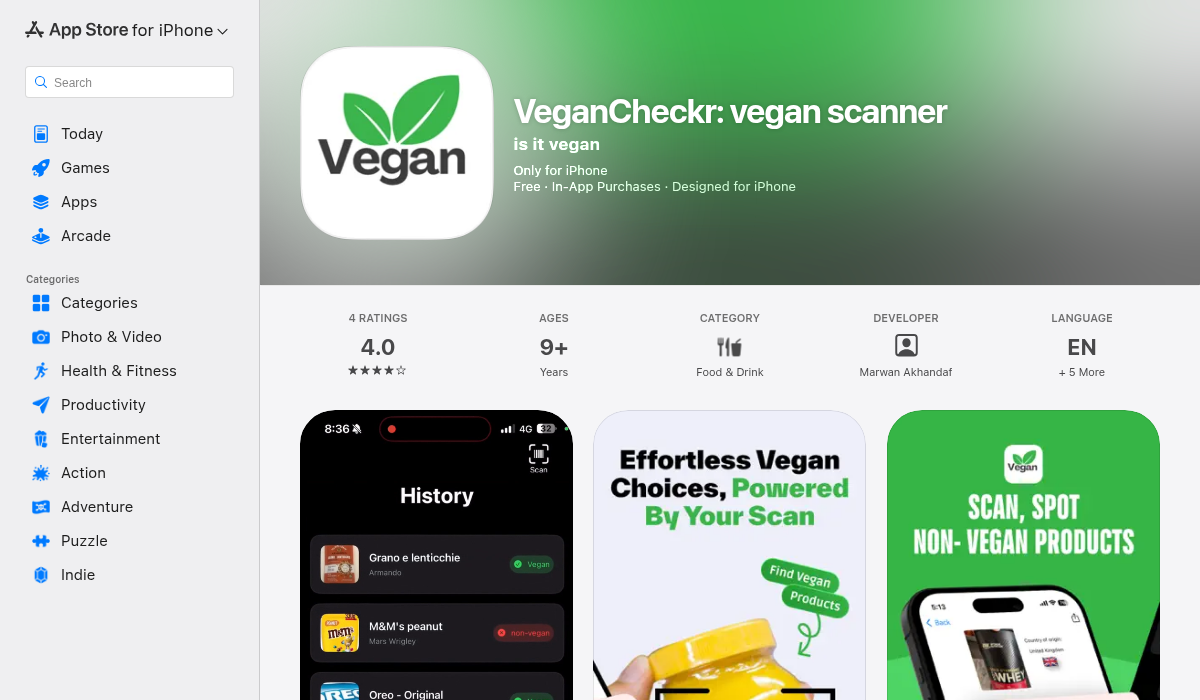
VeganCheckr is designed specifically for this — scan any barcode to instantly see if a product is vegan, may contain animal products, or is definitely non-vegan. It breaks down individual ingredients and explains why something is flagged.
The app also includes an additive checker (E-numbers), a vegan map to find nearby vegan-friendly restaurants, and an ingredient lookup for when you encounter something unfamiliar.
Vegan-Friendly Snack Alternatives
Instead of Gelatin Gummies:
- Surf Sweets (pectin-based)
- Annie's Organic Bunny Fruit Snacks
- YumEarth Organic Gummy Bears
- Candy Kittens
Instead of Dairy-Based Chips:
- Kettle Brand (most flavors)
- Late July (most flavors)
- Siete (grain-free, dairy-free)
- Hippeas (chickpea puffs)
Instead of Whey Protein Bars:
- GoMacro (plant protein)
- Larabar (fruit and nut based)
- No Cow (plant protein)
- Clif Builder's (some flavors)
E-Number Quick Reference
E-numbers are standardized codes for food additives. Here are the ones vegans should watch for:
- E120 — Carmine (crushed beetles)
- E441 — Gelatin (animal bones/skin)
- E542 — Bone phosphate
- E901 — Beeswax
- E904 — Shellac (beetle secretion)
- E910, E920, E921 — L-Cysteine (may be animal-derived)
- E913 — Lanolin (sheep wool)
- E966 — Lactitol (milk-derived)
Pro Tips for Vegan Snack Shopping
- Buy whole foods when possible — Fruit, nuts, and vegetables don't have hidden ingredients
- Check international foods carefully — Labeling standards vary by country
- Don't assume "organic" means vegan — Organic certification doesn't exclude animal products
- "May contain traces" — This refers to cross-contamination, not intentional ingredients; many vegans accept this
- When in doubt, scan it — Apps like VeganCheckr remove the guesswork
The Bottom Line
Hidden animal ingredients make vegan shopping harder than it needs to be. But once you know what to look for — gelatin, carmine, shellac, whey, and the rest — avoiding them becomes second nature.
The fastest approach is combining knowledge with technology. Keep this checklist handy, and use a scanner app like VeganCheckr when you're unsure. No more squinting at ingredient lists or Googling E-numbers in store aisles.
Your snack game doesn't have to suffer for your values — you just need to know where the hidden ingredients are hiding.