
Hidden Ingredients That Aren't Halal: Complete Guide
That bag of chips you've been eating for years? It might contain ingredients derived from pork. For Muslims trying to maintain a halal diet, the challenge isn't just avoiding obvious haram foods — it's the hidden ingredients lurking in everyday products.
From gelatin in gummy bears to carmine in strawberry yogurt, many common foods contain ingredients that aren't immediately recognizable as non-halal. This complete guide breaks down what to watch for, why these ingredients are problematic, and how to check products quickly.
The Hidden Ingredient Problem
In Western countries, food labeling laws don't require manufacturers to disclose the source of many ingredients. "Enzymes" could be microbial or animal-derived. "Natural flavors" might include dozens of undisclosed components. This creates real challenges for anyone trying to eat halal.
"In the US, they're not required to disclose whether 'enzymes' are microbial or from animal products. For example, all Lay's branded snacks here with the same 'cheese' ingredients are not halal."— Reddit user in r/islam
Let's look at the most common hidden ingredients and what Islamic sources say about them.
Gelatin — The Most Common Culprit
Gelatin appears everywhere: gummy candies, marshmallows, yogurt, ice cream, some cereals, and even medication capsules. It's derived from collagen in animal skin and bones — often pork.
The Islamic Ruling:
- ✅ Plant-based gelatin (agar-agar, pectin): Always halal
- ✅ Fish gelatin: Always halal
- ❌ Pork gelatin: Haram by scholarly consensus
- ⚠️ Beef gelatin: Only halal if from halal-slaughtered animals
The prohibition stems from the Quranic verse regarding pork:
"He has only forbidden you dead animals, blood, the flesh of swine, and that which has been dedicated to other than Allah."— Quran, Surah Al-Baqarah 2:173
Some scholars discuss whether the chemical transformation (istihalah) of collagen into gelatin changes its ruling. However, most major Islamic bodies, including JAKIM (Malaysia) and MUI (Indonesia), maintain that pork-derived gelatin remains haram.
E-Numbers: The Coded Ingredients
E-numbers are codes for food additives used in the EU and many other countries. Some are always problematic, others depend on their source.
❌ Haram E-Numbers
E120 (Carmine/Cochineal) — This red food coloring comes from crushed cochineal beetles. It's found in strawberry yogurt, red candies, some fruit juices, and cosmetics.
"Cochineal/Carmine color — ingredients from insects. It is a red color obtained from insects. All insects except locust are Haram in Hanafi Madhab."— Reddit user in r/islam
According to the Hanafi, Shafi'i, and Hanbali schools of thought, insects (except locusts) are not permissible to eat. This ruling is based on the Quran categorizing pure things as halal and impure things (khabaith) as haram:
"He makes lawful for them the good things (tayyibat) and prohibits for them the evil things (khabaith)."— Quran, Surah Al-A'raf 7:157
⚠️ Mushbooh (Doubtful) E-Numbers
E441 (Gelatin) — As discussed above, depends on source
E471 (Mono and Diglycerides of Fatty Acids) — Can be plant-based or animal-derived. Used as emulsifiers in bread, ice cream, and many processed foods. Without contacting the manufacturer, it's impossible to know.
E904 (Shellac) — A resin secreted by lac bugs, used to coat candies and pills. Scholars differ on whether bug secretions fall under the insect prohibition.
✅ Generally Halal E-Numbers
E322 (Lecithin) — Usually soy-based and halal, but check for egg-derived versions
E330 (Citric Acid) — Typically produced by fermentation, halal
Cheese and Rennet
Here's one that surprises many Muslims: certain cheeses are not halal due to how they're made.
Rennet is an enzyme used to coagulate milk into cheese. Traditional rennet comes from the stomach lining of calves. Unless the calf was slaughtered according to Islamic guidelines, this rennet is haram.
"Cheese and bread should be paid particular attention to as they sometimes have animal derived enzymes, rennet and l-cysteine."— Reddit user in r/islam
What to look for:
- ❌ "Animal rennet" or just "rennet" — likely not halal
- ✅ "Microbial rennet" or "vegetable rennet" — halal
- ✅ "Suitable for vegetarians" cheese — typically uses non-animal rennet
Note: Parmesan, Grana Padano, and similar traditional Italian cheeses almost always use animal rennet as part of their protected designation.
Alcohol in Food Products
Alcohol shows up in unexpected places: vanilla extract, some sauces, certain breads, and obviously cooking wines.
The Prophet ﷺ said regarding intoxicants:
"Every intoxicant is khamr, and every khamr is haram."— Jami at-Tirmidhi 1726
However, there are important distinctions:
✅ Vinegar — Even wine vinegar is halal. The transformation (istihalah) from alcohol to acetic acid is complete, changing its nature entirely. The Prophet ﷺ himself praised vinegar:
"What an excellent condiment vinegar is."— Sahih Muslim 2052
✅ Vanilla extract — While it contains alcohol, scholars generally permit it because the amount used is negligible and the alcohol evaporates during use.
❌ Cooking wine and rum — These are added for their alcoholic content and should be avoided.
L-Cysteine in Bread
L-cysteine (E920) is an amino acid used as a dough conditioner in commercial bread. It can be derived from:
- Human hair (most common, and yes, it's as uncomfortable as it sounds)
- Pig bristles
- Duck feathers
- Synthetic production
Many scholars consider human hair and pig-derived L-cysteine haram. Checking with manufacturers is the only way to know for certain.
How to Check Products Quickly
Reading every ingredient list is exhausting. Modern apps can help by instantly identifying problematic ingredients.
HalalFoodScan — Your Pocket Halal Guide
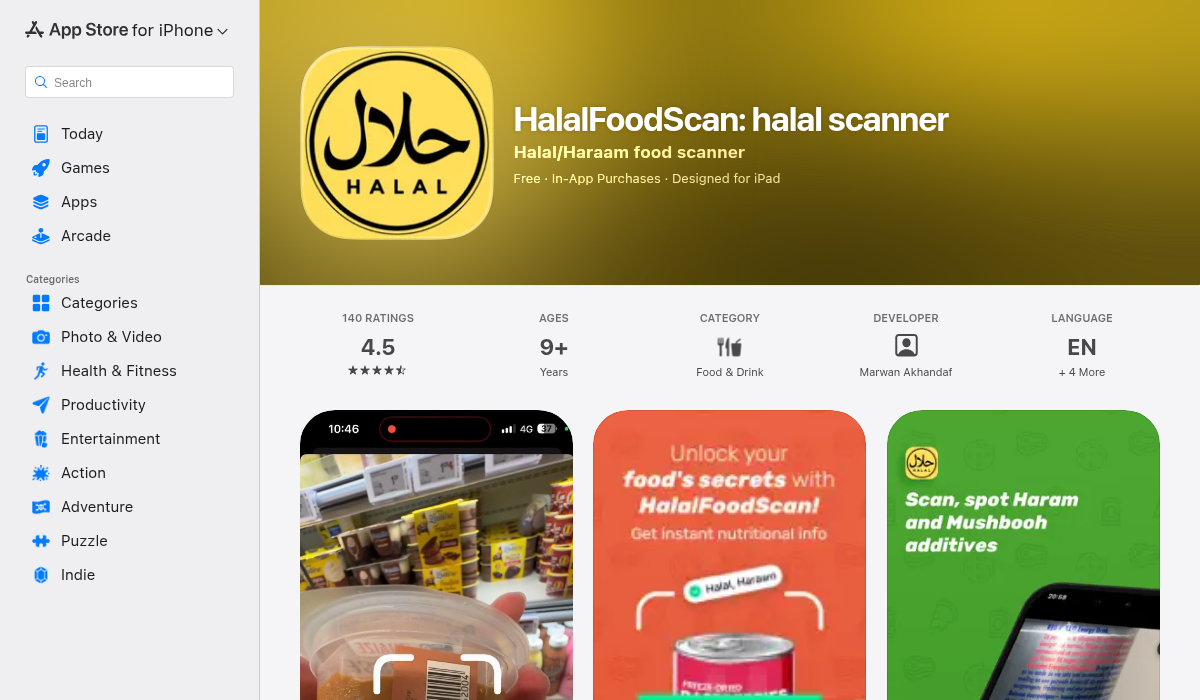
HalalFoodScan lets you quickly scan product barcodes to check their halal status. The app categorizes ingredients as:
- ✅ Halal (حلال) — Safe to consume
- ⚠️ Mushbooh (مشبوه) — Questionable, needs verification
- ❌ Haram (حرام) — Should be avoided
Key features:
- Barcode scanning with instant results
- Additive detection and analysis
- Special vinegar detection feature
- Works with millions of products
- Available in English, Arabic, Dutch, French, and Spanish
For products not in the database, you can scan the back of the package. The AI detects additives and E-numbers, providing analysis based on established halal guidelines.
Pro Tips for Halal Shopping
- Look for certification logos — JAKIM, ISNA, HMC, and other recognized halal certifying bodies
- "Suitable for Vegetarians" is helpful — Products that are vegetarian avoid most (but not all) haram ingredients
- When in doubt, contact the manufacturer — Many companies have halal status information available on request
- Keep an app handy — Scanning a barcode takes seconds and removes guesswork
- Pay special attention to: Cheese, gummy candies, yogurt, bread, and anything with red coloring
Scholarly Differences
It's worth noting that scholars sometimes differ on certain ingredients. For example:
- Some Hanafi scholars permit beef gelatin after chemical transformation
- The Maliki school has different views on certain sea creatures
- Opinions on E904 (shellac) vary among scholars
When there's legitimate scholarly difference (ikhtilaf), follow the opinion of scholars you trust or your local imam.
Note: For specific religious rulings (fatwa), always consult with qualified Islamic scholars or your local imam. This article provides general information based on recognized Islamic sources.
The Bottom Line
Maintaining a halal diet in non-Muslim majority countries requires vigilance, but it's absolutely manageable. The key hidden ingredients to watch for are:
- Gelatin (check the source)
- E120/Carmine (insect-derived red dye)
- Animal rennet in cheese
- E471 (can be animal-derived)
- L-cysteine in bread
Tools like HalalFoodScan make this process much easier. A quick barcode scan tells you instantly whether a product is safe, questionable, or should be avoided.
As the Prophet ﷺ reminded us:
"What is lawful is clear and what is unlawful is clear, and between them are matters unclear that are not known to most people. Whoever guards against the unclear matters, he has protected his religion and honor."— Sahih Bukhari 5527
When it comes to food, taking a few extra seconds to check ingredients is a small effort for peace of mind.