
Hidden Non-Vegan Ingredients to Watch For in 2026
You've committed to a vegan lifestyle, but your grocery cart might be hiding some uncomfortable secrets. From crushed beetles in your candy to fish bladders in your beer, non-vegan ingredients lurk in places you'd never expect — and they're designed to fly under the radar.
Going vegan seems straightforward in theory: skip the meat, dairy, and eggs. But the reality is far more complicated. Food manufacturers use dozens of animal-derived additives with cryptic names that most people wouldn't recognize on a label. Even experienced vegans get caught off guard. In this guide, we'll expose the sneakiest non-vegan ingredients hiding in everyday products — and show you how to spot them before they end up in your shopping bag.
Why Hidden Ingredients Are a Bigger Problem Than You Think
The modern food industry relies heavily on animal-derived additives for texture, color, shelf life, and flavor. Many of these ingredients don't sound like they come from animals at all. Names like "E120," "natural flavors," or "stearic acid" could easily pass as harmless chemical compounds — but they're often sourced from insects, animal fat, or dairy byproducts.
The problem isn't just about reading labels — it's about understanding them. A 2024 survey by The Vegan Society found that over 60% of new vegans accidentally consumed non-vegan products in their first year, primarily because they didn't recognize hidden animal-derived ingredients.
"I've been vegan for three years and I JUST found out my bread has L-cysteine in it — which can come from animal hair or feathers. You really have to read every single label."— Reddit user in r/vegan
The 12 Sneakiest Non-Vegan Ingredients You Need to Know
Here's the complete list of hidden animal-derived ingredients that catch vegans off guard most often. Bookmark this — you'll want it next time you're at the store.
1. Carmine (E120) — Crushed Beetles
That vibrant red in your yogurt, candy, or juice? It might come from carmine — a pigment made from crushed cochineal insects. It takes roughly 70,000 beetles to produce one pound of this dye. You'll find it listed as carmine, cochineal extract, crimson lake, or simply E120. It shows up in everything from strawberry-flavored drinks to red lipstick.
Found in: Red candies, fruit yogurts, juices, cosmetics, red velvet baked goods
2. L-Cysteine (E920) — From Feathers and Hair
This amino acid is used as a dough conditioner to make bread softer and more elastic. The disturbing part? It's commonly sourced from duck feathers, pig bristles, or even human hair. It's in more baked goods than you'd think — bagels, pizza dough, tortillas, and commercial bread products.
Found in: Bread, bagels, pizza crusts, tortillas, croissants
3. Casein and Sodium Caseinate — Hidden Dairy
Casein is a milk protein that sneaks into products you'd assume are dairy-free. It's particularly deceptive when it appears in "non-dairy" creamers and some plant-based cheeses. The FDA allows products to be labeled "non-dairy" even if they contain casein — one of the most confusing loopholes in food labeling.
Found in: Non-dairy creamers, some plant-based cheeses, protein bars, processed foods
4. Gelatin — Boiled Bones and Skin
Most people know about gelatin, but few realize how many products contain it beyond gummy bears. Gelatin is derived from the collagen inside animals' skin, bones, and connective tissue — primarily from pigs and cows. It's used as a gelling agent, thickener, and stabilizer in hundreds of products.
Found in: Marshmallows, gummy candies, frosted cereals, gel capsules, some yogurts
5. Isinglass — Fish Bladders in Your Beer
Here's one that shocks even long-time vegans: many wines and beers are filtered using isinglass, a substance derived from the swim bladders of fish. It's used as a fining agent to make drinks clear. While it's removed during processing, the product still technically used animal parts in production.
Found in: Many beers, wines, and ciders (especially traditional British ales)
6. Shellac (E904) — Bug Secretion Glaze
That shiny coating on your apples, candy, or pharmaceutical pills? It's often shellac — a resin secreted by the female lac bug. Around 100,000 lac bugs produce about 500 grams of shellac. It's also listed as "confectioner's glaze" or "pharmaceutical glaze" on labels.
Found in: Shiny candy, coated fruits, pills, jelly beans, sprinkles
7. Vitamin D3 (Cholecalciferol) — From Sheep Wool
Most vitamin D3 added to fortified foods is derived from lanolin — the waxy oil extracted from sheep's wool. This means your fortified orange juice, cereal, or bread might not be vegan. Look for vegan D3 sourced from lichen, or check for D2 (ergocalciferol), which is always plant-derived.
Found in: Fortified cereals, orange juice, bread, plant milks (check the source)
8. Whey and Lactose — Dairy Derivatives Everywhere
Whey (a milk byproduct) and lactose (milk sugar) appear in an astonishing range of products. They're used as flavor enhancers, binding agents, and fillers. Whey powder is especially common in chips, crackers, and baked goods where you wouldn't expect dairy.
Found in: Chips, crackers, bread, processed snacks, medications
9. Mono and Diglycerides (E471) — Possibly Animal Fat
These emulsifiers can be derived from either plant or animal sources — and labels rarely specify which. When sourced from animals, they come from rendered fat. They're one of the most common additives in processed food, appearing in everything from bread to ice cream to peanut butter.
Found in: Bread, margarine, ice cream, peanut butter, baked goods
10. Natural Flavors — The Mystery Wildcard
"Natural flavors" is one of the vaguest terms in food labeling. It can include castoreum (from beavers), dairy derivatives, or dozens of other animal-sourced compounds. Since manufacturers aren't required to disclose the exact source, this ingredient is essentially a black box for vegans.
Found in: Nearly everything — drinks, snacks, sauces, candy, cereals
11. Bone Char — The Sugar Secret
Some white sugar is processed using bone char — charred cattle bones used to filter and bleach the sugar. While the final product doesn't contain bone, animal bones are integral to the manufacturing process. This one is nearly impossible to identify from a label alone.
Found in: Refined white sugar, and any product made with it
12. Glycerin (E422) — Could Go Either Way
Glycerin is used in countless products as a sweetener, moisturizer, and preservative. It can be plant-based (from soy or palm oil) or animal-derived (from tallow — rendered beef or mutton fat). Unless a product specifies "vegetable glycerin," there's no way to know from the label.
Found in: Baked goods, toothpaste, soap, candy, protein bars
Products That Surprise Most Vegans
Beyond individual ingredients, entire product categories catch people off guard:
- Orange juice — Some brands add omega-3 sourced from fish oil or use vitamin D3 from lanolin
- Red candy and drinks — Carmine (E120) from crushed beetles gives them that bright color
- Bread and bagels — L-cysteine, mono/diglycerides, and whey are common additions
- Wine and beer — Filtered with isinglass (fish bladders) or gelatin
- Worcestershire sauce — Traditional recipes contain anchovies
- Some "veggie" burgers — May contain egg whites or casein as binding agents
- Refined sugar — Potentially processed with bone char
- Certain chips — Whey powder and cheese flavoring hide in unexpected varieties
"Casein, rennet, confectioner's glaze. The ingredient itself isn't sneaky, but a lot of 'vegetable' products will have chicken or chicken fat in the ingredients. Sadly, you have to read every label and really familiarize yourself with ingredients."— Reddit user in r/vegan
How to Protect Yourself: Tools That Actually Help
Reading every label is necessary, but it's exhausting — and it doesn't cover ingredients with ambiguous sourcing (like glycerin or E471). That's where technology comes in. Vegan scanner apps have evolved significantly in the past couple of years, making it possible to check products instantly right in the grocery aisle.
WhatsVegan
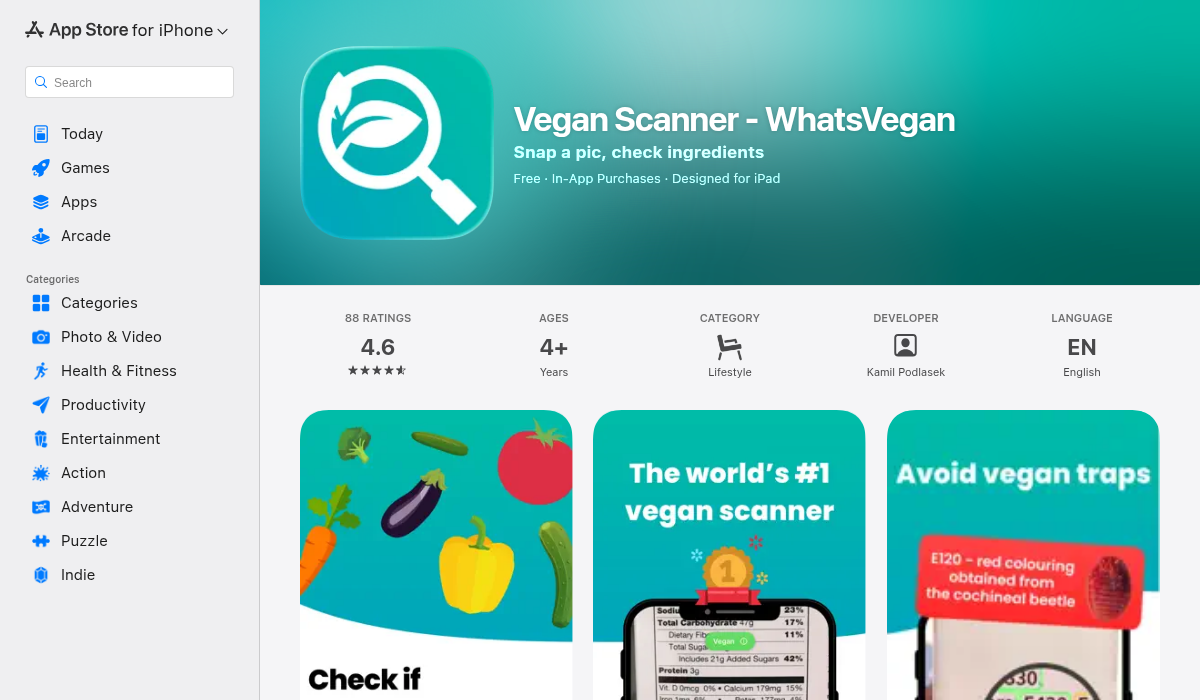
WhatsVegan takes a different approach by scanning ingredient lists with your camera rather than relying on barcodes. You point your phone at the ingredients label and it highlights anything non-vegan. This is great for products without barcodes — like bakery items or restaurant menus — but it can struggle with blurry text and doesn't provide sourcing details for ambiguous ingredients like "natural flavors."
- ✅ Camera-based ingredient scanning — no barcode needed
- ✅ Works on menus and loose items
- ❌ Less reliable with poor lighting or small text
- ❌ Doesn't cover supply chain transparency
VeganCheckr
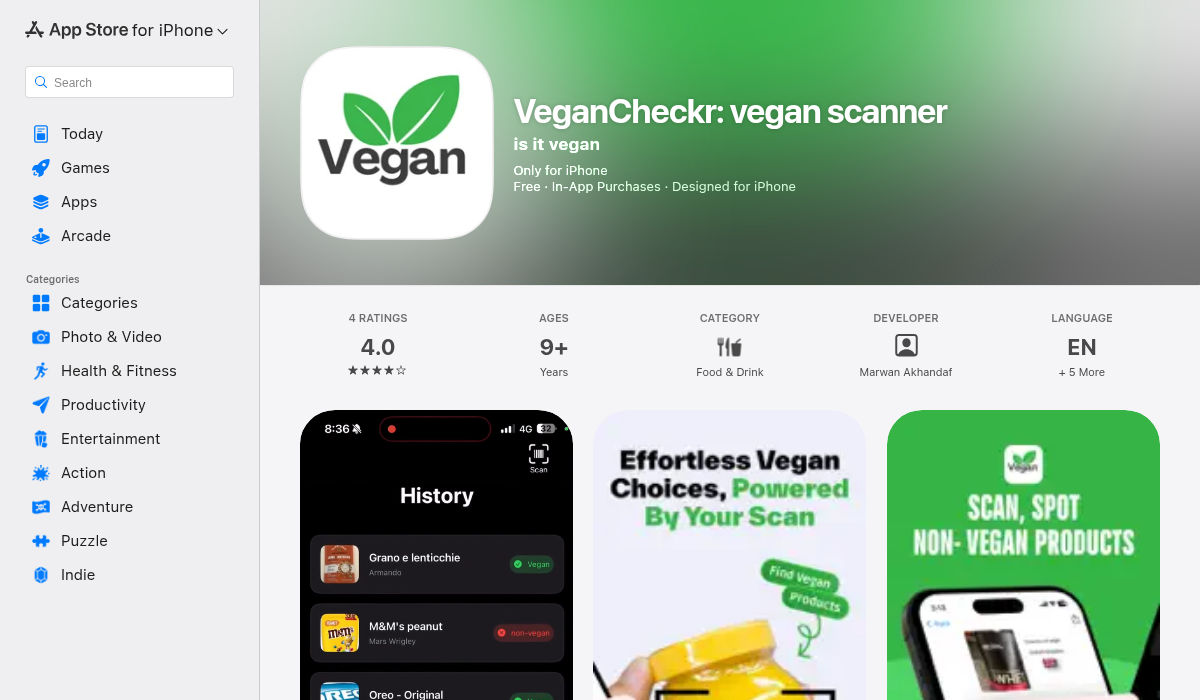
VeganCheckr combines barcode scanning with a deep ingredient analysis engine. Scan any product and you instantly get a clear verdict — vegan, may contain, or not vegan — along with details on why each flagged ingredient is problematic and where it typically comes from. The additive checker is particularly useful for decoding cryptic E-numbers like E120 (carmine) or E904 (shellac) on the spot.
What sets it apart is the built-in vegan map, which locates vegan-friendly restaurants and stores nearby — useful if you're traveling and need to find safe options fast. The supply chain transparency feature also goes deeper than most apps, tracing where ingredients are sourced.
- ✅ Barcode scanner with instant vegan verdicts
- ✅ E-number and additive checker — perfect for hidden ingredients
- ✅ Vegan map for restaurants and stores
- ✅ Supply chain transparency
- ✅ Product comparison tool
FoodCheckr
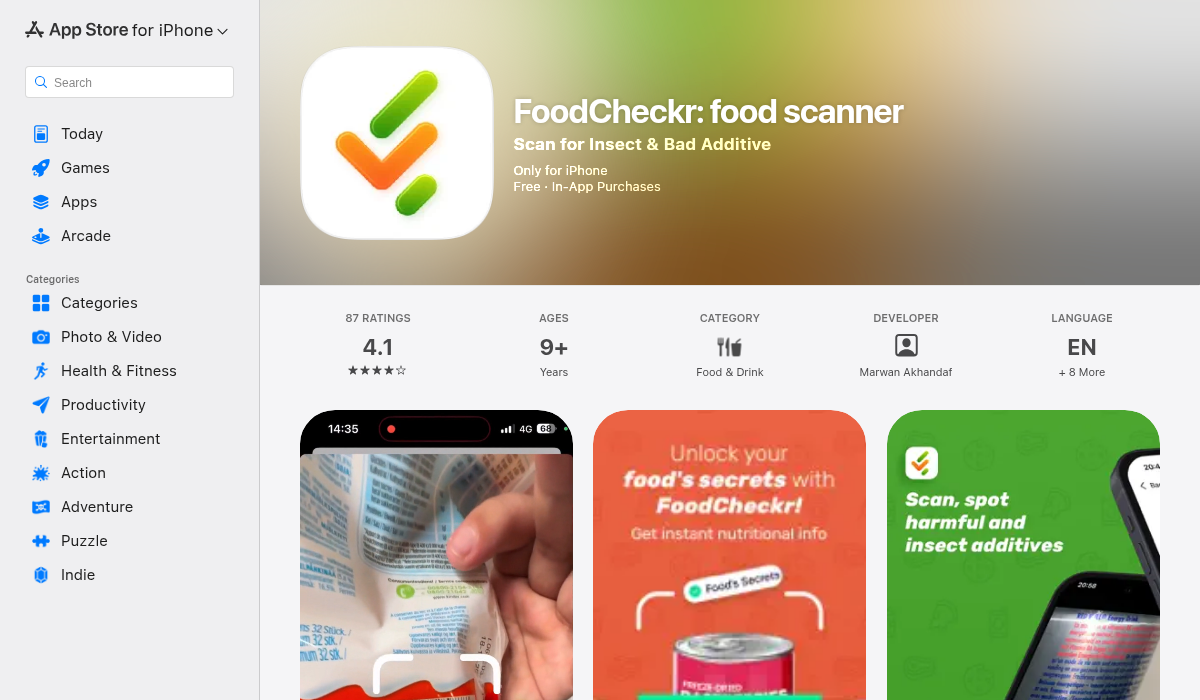
If your concerns go beyond vegan-specific issues, FoodCheckr is worth a look. It scans for a wider range of dietary concerns including additives, insect-derived ingredients, and artificial chemicals. While it's not vegan-specific, it's a solid companion app for anyone who wants a broader food safety check alongside their vegan scanner.
- ✅ Broad additive and insect detection
- ✅ General food safety analysis
- ❌ Not specifically designed for vegans
Pro Tips for Spotting Hidden Ingredients
- Learn the E-numbers — E120 (carmine), E441 (gelatin), E542 (bone phosphate), E901 (beeswax), E904 (shellac), E920 (L-cysteine), and E471 (mono/diglycerides) are the most common non-vegan additives. Memorize these and you'll catch most offenders.
- Look for vegan certifications — The Vegan Society trademark, Certified Vegan logo, or "Suitable for Vegans" labels take the guesswork out. Not all vegan products carry them, but when they're there, you can trust them.
- "May contain" vs. "contains" — "May contain traces of milk" is a cross-contamination warning and is generally considered vegan-acceptable. "Contains: milk" means it's an actual ingredient — not vegan.
- Use a scanner app in the store — Don't try to memorize every ingredient. Open VeganCheckr and scan the barcode. It takes two seconds and catches things you'd miss.
- Check drinks separately — Beer, wine, and juice are filtered using animal products, but this won't appear on ingredients lists. Use Barnivore.com or look for "vegan-friendly" on the label.
- When in doubt, contact the manufacturer — For ambiguous ingredients like "natural flavors" or "glycerin," the brand's customer service can confirm the source. Many companies are happy to clarify.
The Bottom Line
Going vegan is about more than skipping the obvious animal products — it's about navigating a food system that buries animal-derived ingredients behind scientific names and E-numbers. The good news is that once you know what to look for, spotting these hidden ingredients becomes second nature.
The twelve ingredients we covered — carmine, L-cysteine, casein, gelatin, isinglass, shellac, vitamin D3, whey, mono/diglycerides, natural flavors, bone char, and glycerin — account for the vast majority of "accidental" non-vegan consumption. Learn them, and you'll be ahead of most people.
And for everything else, let technology do the heavy lifting. A quick barcode scan with VeganCheckr in the grocery aisle takes the stress out of label reading entirely — no memorization required.