How to Identify Added Sugars with Food Scanner Apps
You're eating "healthy" granola bars, drinking smoothies, and choosing whole grain bread — but your sugar intake is still through the roof.
Here's the frustrating truth: added sugars hide in 74% of packaged foods under more than 60 different names. From maltodextrin to evaporated cane juice, food manufacturers have become experts at disguising sugar in plain sight. And unless you're a trained nutritionist, you're probably consuming way more than you think.
The Hidden Sugar Problem That's Fooling Everyone
The American Heart Association recommends no more than 25 grams of added sugar per day for women and 36 grams for men. Yet the average American consumes 77 grams daily — more than triple the recommended amount. The scary part? Most people have no idea.
Added sugars are fundamentally different from natural sugars found in fruits and dairy. Natural sugars come packaged with fiber, vitamins, and minerals that slow absorption. Added sugars hit your bloodstream fast, spike insulin, and contribute to weight gain, diabetes, and heart disease.
"I've been using the Lose It app for a few months but am frustrated that it only shows total sugars, not added sugars. Is there an app that actually separates these?"— Reddit user in r/nutrition
This frustration is incredibly common. Traditional food tracking apps combine natural and added sugars into one number, making it impossible to know what you're actually consuming. And reading labels manually? Food companies use at least 61 different names for sugar — from dextrose to rice syrup to "fruit juice concentrate."
Why Reading Labels Manually Doesn't Work
According to the CDC, nutrition labels show total sugars — the combined amount of naturally occurring and added sugar. While newer FDA labels do separate added sugars, many products still use old labeling. And even when the number is there, do you really want to do math in the grocery aisle?
Here are some of sugar's sneaky aliases you'd need to memorize:
- High fructose corn syrup
- Agave nectar
- Barley malt
- Dextrose, maltose, sucrose (anything ending in "-ose")
- Evaporated cane juice
- Fruit juice concentrate
- Rice syrup
- Maltodextrin
Even "healthy" products like yogurt, protein bars, and whole grain cereals can contain 15-20 grams of added sugar per serving. Without a tool to instantly decode labels, you're essentially guessing.
Food Scanner Apps: The Modern Solution
The good news is that 2026 has brought us AI-powered food scanner apps that do the detective work for you. Scan a barcode, and within seconds you know exactly what's hiding in your food — including added sugars, harmful additives, and ingredients you can't pronounce.
"There's so much hidden in kids' products — additives, preservatives, hidden sugars, 'healthy' labels that aren't actually healthy."— Reddit user in r/moderatelygranolamoms
We tested the leading food scanner apps to find which ones actually help you identify added sugars effectively.
Best Apps for Identifying Added Sugars
1. Yuka
Yuka has become the go-to food scanner for many health-conscious shoppers. It scans barcodes and provides an overall health score based on nutritional content, additives, and organic certification.
- ✅ Large product database
- ✅ Easy-to-understand color ratings
- ❌ Can rate some products misleadingly
- ❌ Subscription required for full features
2. Trash Panda
Trash Panda takes a different approach — instead of rating everything, it only flags specific ingredients to avoid. This includes GMOs, seed oils, and added sugars.
- ✅ Specifically flags added sugars
- ✅ Less judgmental about whole foods
- ❌ Limited international product database
- ❌ No nutritional breakdown
3. FoodCheckr
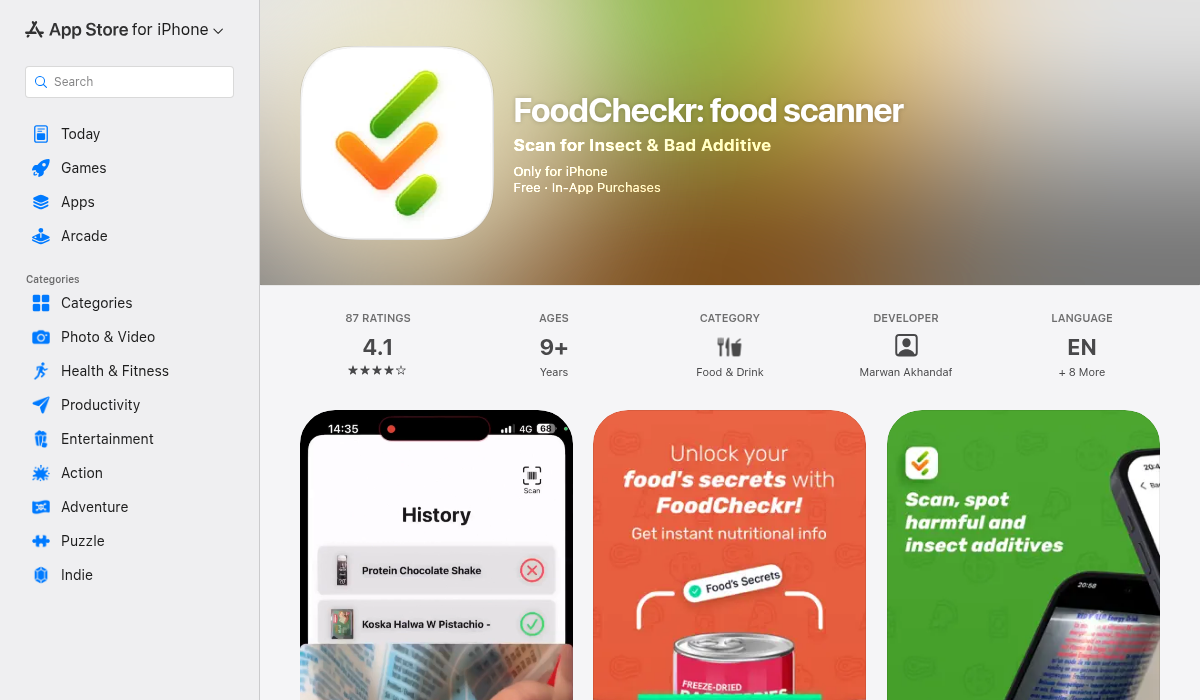
FoodCheckr stands out with its AI-powered approach to food analysis. Beyond just flagging added sugars, it provides complete nutritional information including energy, protein, sugars, and fats — all from a quick barcode scan.
What makes FoodCheckr particularly useful for sugar tracking:
- ✅ AI bioengineered ingredient detection
- ✅ Harmful additive warnings (E-numbers explained)
- ✅ Complete nutritional breakdown
- ✅ Scan history to track your choices
- ✅ Insect trace detection (increasingly common in foods)
The app goes beyond basic sugar detection by analyzing the full ingredient list for hidden concerns — including additives, preservatives, and even controversial ingredients that other apps miss.
Pro Tips for Spotting Hidden Sugars
- Check the first five ingredients — Ingredients are listed by weight. If sugar (or any alias) appears in the first five, the product is sugar-heavy.
- Look for "-ose" endings — Maltose, dextrose, fructose, and sucrose are all sugars. Multiple "-ose" ingredients = multiple sugar sources.
- Beware of "healthy" products — Granola, yogurt, and protein bars often contain more sugar than candy bars.
- Scan before you buy — Using an app takes 3 seconds and can save you from accidentally buying sugar bombs.
- Compare alternatives — Most food scanner apps suggest healthier alternatives when they flag a product.
Foods That Commonly Hide Added Sugars
These "healthy" foods are often loaded with hidden sugars:
- Flavored yogurt — Can contain 15-20g of added sugar per serving
- Granola and granola bars — Often as sugary as cookies
- Instant oatmeal packets — Flavored varieties are sugar traps
- Pasta sauce — Some brands add sugar for taste
- Bread — Even "whole grain" varieties often contain added sugar
- Salad dressing — Low-fat versions compensate with sugar
- Sports drinks — Can contain as much sugar as soda
- Dried fruit — Often coated with additional sugar
The FDA's Updated Labeling Requirements
Good news: the FDA now requires manufacturers to list added sugars separately on nutrition labels. You'll see "Includes Xg Added Sugars" under the total sugars line. However, smaller manufacturers had until 2021 to comply, and many imported products still use old-style labels.
This is exactly why food scanner apps remain valuable — they can identify added sugars even when the label doesn't clearly separate them, by analyzing the ingredient list with AI.
The Bottom Line
Added sugars are everywhere, and food manufacturers aren't making it easy to avoid them. Reading labels manually requires memorizing 60+ sugar aliases and doing math in the grocery store — not exactly practical for busy people.
Food scanner apps have become essential tools for anyone serious about reducing sugar intake. They decode labels instantly, flag hidden sugars, and help you make informed choices without becoming a nutrition expert.
If you're ready to take control of your sugar consumption, FoodCheckr is worth trying. Its AI-powered analysis goes beyond basic sugar detection to give you a complete picture of what you're really eating.