
How to Identify Bioengineered Ingredients in Food
You've probably noticed something new on food labels lately: a little green symbol with the letters "BE" inside, or the phrase "contains bioengineered food ingredients."
If you're confused about what this actually means — and whether you should care — you're not alone. The labeling requirements that went into effect aren't exactly straightforward, and there are significant loopholes that leave many GMO-containing products unlabeled entirely.
What Does "Bioengineered" Actually Mean?
The official definition from the USDA is: foods that "contain detectable genetic material that has been modified through certain lab techniques and cannot be created through conventional breeding or found in nature."
In plain English: these are genetically modified organisms (GMOs). The government just chose to rebrand them as "bioengineered" rather than use the term most consumers know.
Why the name change? Critics argue it was intentional — "bioengineered" sounds more scientific and less alarming than "GMO." The Non-GMO Project called the federal labeling system inadequate, noting that "loopholes and exemptions leave many GMO products unlabeled."
Which Foods Contain Bioengineered Ingredients?
The USDA maintains an official list of bioengineered foods. Currently, these are the main crops:
- Corn — ~92% of U.S. corn is bioengineered
- Soybeans — ~94% bioengineered
- Cotton — Used for cottonseed oil
- Canola — Most canola oil
- Sugar Beets — ~95% of U.S. sugar beet production
- Alfalfa — Used in animal feed
- Papaya — Rainbow variety grown in Hawaii
- Summer Squash — Some varieties
- Potatoes — Certain non-browning varieties
- Apples — Arctic apple varieties
The catch? Most of these crops are processed into ingredients like corn syrup, soybean oil, and sugar — which appear in thousands of packaged foods. If you eat processed food in America, you're almost certainly consuming bioengineered ingredients.
The Labeling Loopholes
Here's where it gets frustrating: the labeling law has significant exemptions.
1. Highly Refined Ingredients
If a bioengineered ingredient is "highly refined" and doesn't contain detectable genetic material, it doesn't require labeling. This means corn syrup from GMO corn, sugar from GMO sugar beets, and refined oils from GMO crops can all be unlabeled.
2. Detection Threshold
Foods only need labeling if bioengineered DNA is "detectable." Processing often destroys the genetic material while keeping the GMO-derived product.
3. Small Manufacturers
Small food companies with sales under $2.5 million are exempt from mandatory disclosure.
4. Restaurants and Delis
Food prepared and sold in restaurants, cafeterias, and deli counters doesn't require BE labeling.
Why This Matters (Or Doesn't)
Let's be clear: the scientific consensus from organizations like the FDA, WHO, and National Academy of Sciences is that approved bioengineered foods are safe to eat. There's no credible evidence they cause health problems.
So why do people want to know? Several reasons:
- Right to Know — Many believe consumers should have information about how their food is produced, regardless of safety
- Environmental Concerns — Some worry about GMO crop impacts on biodiversity and farming practices
- Personal Choice — Some prefer to avoid bioengineered foods for non-scientific reasons
- Religious/Cultural Reasons — Some religious traditions prefer "natural" foods
How to Identify Bioengineered Ingredients
If you want to track what you're eating, here's what to look for:
On Labels
- The BE Symbol — A green circle with "bioengineered" text
- Text Disclosure — "Contains bioengineered food ingredients"
- QR Code — Some manufacturers use scannable codes instead of direct labeling
Common Ingredients Likely to Be Bioengineered
- Corn syrup, high fructose corn syrup
- Corn starch, corn oil
- Soybean oil, soy lecithin
- Canola oil
- Sugar (unless labeled "cane sugar")
- Maltodextrin (usually from corn)
Using Technology to Scan Your Food
Reading every ingredient label is tedious. That's where food scanning apps come in — they can instantly analyze what you're about to buy and flag potential concerns.
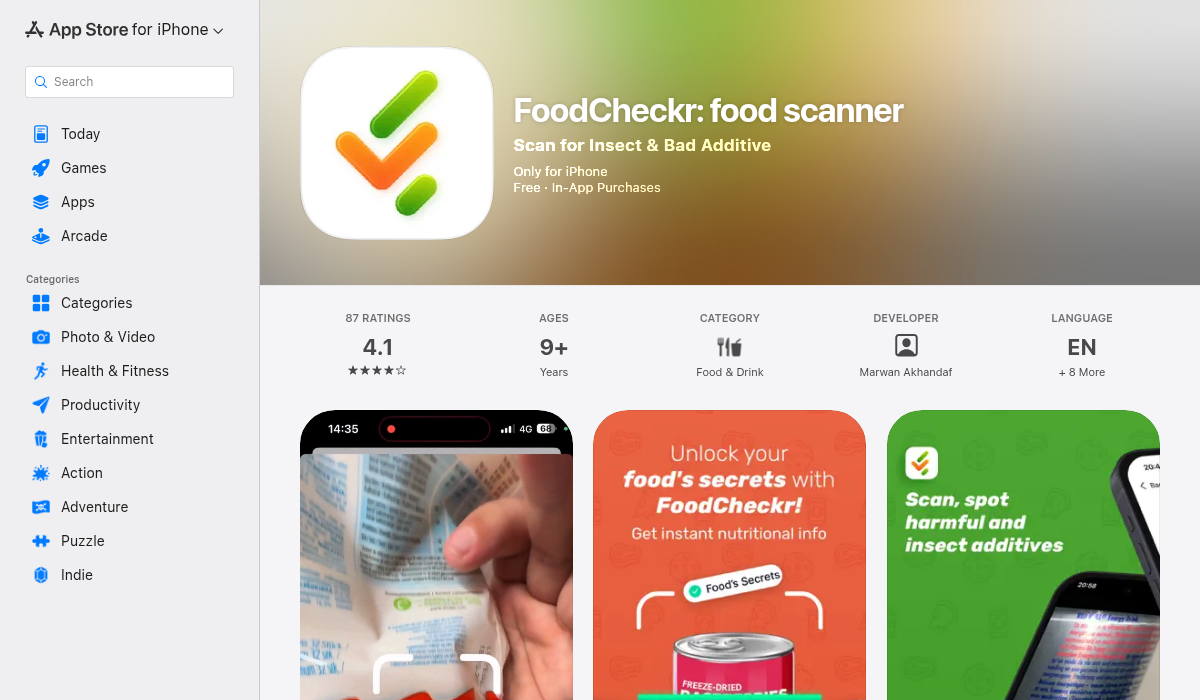
FoodCheckr is designed specifically for this: scan a barcode and it analyzes the product for bioengineered ingredients, harmful additives, and even insect-derived components. The AI-powered analysis goes beyond what's on the label to identify likely bioengineered ingredients based on the product's composition.
What FoodCheckr scans for:
- ✅ Bioengineered ingredient detection (GMOs)
- ✅ Insect-derived ingredients (carmine, shellac, etc.)
- ✅ Harmful additive warnings (E-numbers explained)
- ✅ Complete nutritional breakdown
- ✅ Scan history for reference
The app is particularly useful because it catches things the labeling system misses — like highly refined ingredients that don't trigger mandatory disclosure.
Quick Reference: Reading Labels
Here's a practical cheat sheet:
- Look for "Non-GMO Project Verified" — The butterfly symbol is the most reliable indicator a product is free of bioengineered ingredients
- Check for "Organic" — USDA Organic certification prohibits bioengineered ingredients
- Scan the barcode — Use FoodCheckr or similar apps for instant analysis
- "Cane sugar" vs "sugar" — If it just says "sugar," it's likely from bioengineered sugar beets
- Assume corn and soy products are BE — Unless labeled otherwise, they probably are
The Bigger Picture
Bioengineered ingredients are deeply embedded in the American food system. Avoiding them completely while eating processed foods is nearly impossible — over 75% of processed foods in U.S. supermarkets contain at least one bioengineered ingredient.
The question isn't really whether to avoid all bioengineered foods (that's impractical for most people). It's about having the information to make informed choices. Some people want to minimize BE ingredients; others don't care. Both are valid — but you need the information first.
The Bottom Line
The bioengineered food labeling system is better than nothing, but it's full of loopholes that leave many GMO-derived products unlabeled. If you want to actually know what you're eating, you need to:
- Understand which ingredients are likely bioengineered
- Look for organic or Non-GMO Project Verified labels
- Use scanning apps to catch what labels miss
If identifying bioengineered ingredients matters to you, FoodCheckr makes the process much simpler. Scan any product's barcode and get instant analysis — including bioengineered ingredients, harmful additives, and nutritional information that labels don't always make clear.