How to Learn Arabic from Scratch: Complete Beginner's Guide 2026
Learning Arabic from scratch feels like staring at an impossible wall of squiggly lines — but thousands of people crack it every year, and you can too.
Whether you're reconnecting with your heritage, preparing for travel, studying the Quran, or simply fascinated by one of the world's most beautiful languages, Arabic is absolutely learnable. The key is knowing where to start and avoiding the common traps that derail most beginners.
In this guide, we'll break down exactly how to learn Arabic from scratch in 2026 — the right order to learn things, the best apps and resources, and the mistakes to avoid. Let's get into it.
Why Arabic Feels So Hard (And Why It's Actually Not)
Arabic has a reputation for being one of the hardest languages for English speakers. The US Foreign Service Institute puts it in Category IV — requiring roughly 2,200 hours of study for proficiency. But here's what they don't tell you:
- The alphabet is the easy part — Most learners master the 28 letters in 1-2 weeks
- Root patterns are your friend — Arabic is incredibly logical. Most words derive from 3-letter roots, so once you learn the pattern, you can understand hundreds of related words
- You don't need to learn everything — Modern Standard Arabic (MSA) or one dialect is plenty for most goals
"I started my Arabic learning journey feeling deeply ashamed that I couldn't speak my family's language. The biggest mistake I made was trying to learn everything at once. Once I focused on just the basics and built from there, everything clicked."— A learner sharing their experience in r/learn_arabic
First: Decide Which Arabic You Want to Learn
This is where most beginners stumble. Arabic isn't one language — it's a family of related dialects plus a formal standard. Here's what you need to know:
Modern Standard Arabic (MSA / Fusha)
This is the "formal" Arabic used in news, books, official documents, and the Quran. It's understood across all Arab countries but rarely spoken in daily conversation. Best for: Reading the Quran, academic study, formal communication, understanding news.
Egyptian Arabic
The most widely understood dialect thanks to Egyptian cinema and music. Best for: Casual conversation, entertainment, being understood across the Arab world.
Levantine Arabic
Spoken in Lebanon, Syria, Jordan, and Palestine. Best for: Travel to those regions, connecting with family from the Levant.
Gulf Arabic
Spoken in Saudi Arabia, UAE, Kuwait, Qatar. Best for: Business in the Gulf, living in those countries.
Our recommendation: Start with MSA for the foundation (especially the alphabet and basic grammar), then add a dialect based on your goals. If unsure, Egyptian is the safest bet for maximum comprehension.
The Learning Order That Actually Works
Based on what successful learners recommend, here's the optimal progression:
Phase 1: The Alphabet (Week 1-2)
- Learn the 28 letters — Each letter has 4 forms (isolated, initial, medial, final). This sounds scary but follows clear patterns
- Practice reading, not just recognition — Use apps with audio to nail pronunciation
- Write by hand — It helps cement the shapes in your memory
Phase 2: Basic Vocabulary & Sounds (Week 3-6)
- Learn short vowels (harakat) — The marks above/below letters that change pronunciation
- Build core vocabulary — Start with 100-200 most common words
- Practice pronunciation daily — Arabic has sounds English doesn't have (like ع and خ)
Phase 3: Grammar Foundations (Month 2-3)
- Understand root patterns — The 3-letter root system is Arabic's secret weapon
- Learn basic sentence structure — Arabic is VSO (verb-subject-object) but flexible
- Master personal pronouns — Attached pronouns change word endings
Phase 4: Active Practice (Month 3+)
- Start reading simple texts — Children's books, graded readers
- Listen to native content — Start with slow, clear speech (news anchors are great)
- Find conversation partners — Apps like Tandem or HelloTalk
Best Apps for Learning Arabic in 2026
The right app makes all the difference. Here's what's actually worth your time:
1. Duolingo
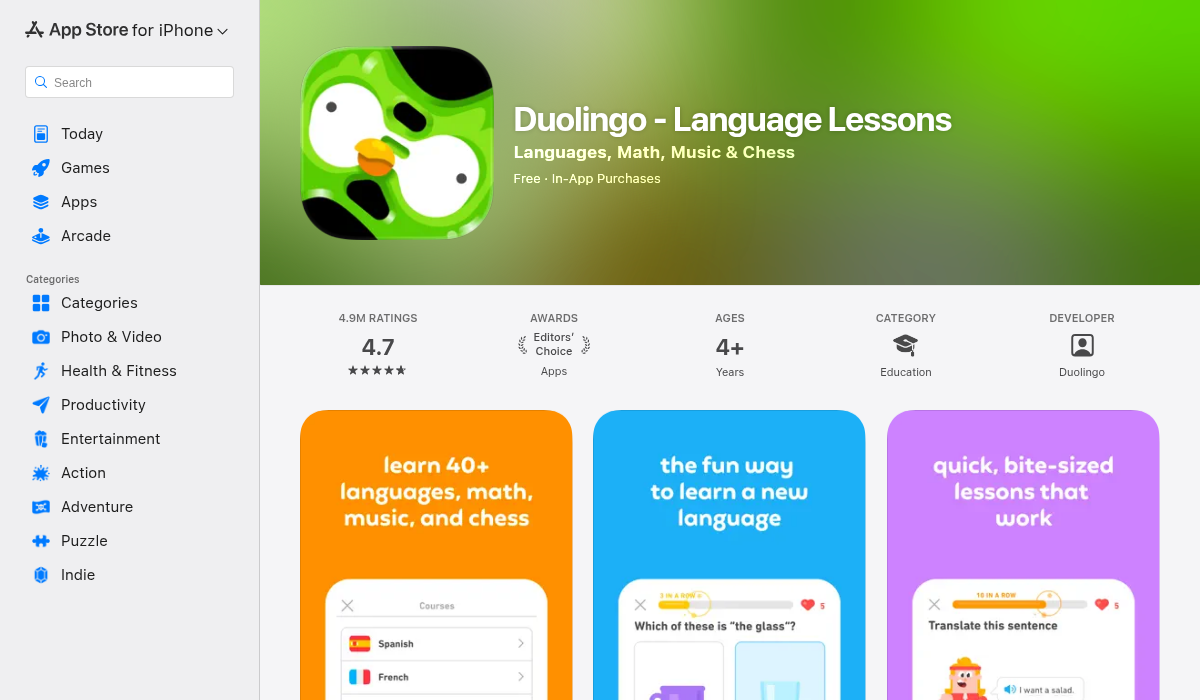
The most popular language app in the world, and for good reason. Duolingo's Arabic course covers MSA basics with gamified lessons that keep you coming back.
- ✅ Free core features
- ✅ Great for alphabet and basic vocabulary
- ✅ Gamification keeps you motivated
- ❌ Doesn't teach dialects
- ❌ Limited grammar explanations
- ❌ Can feel repetitive at higher levels
Best for: Absolute beginners who need structure and motivation. Use it for your first 2-4 weeks.
2. Learn Arabic – Starters
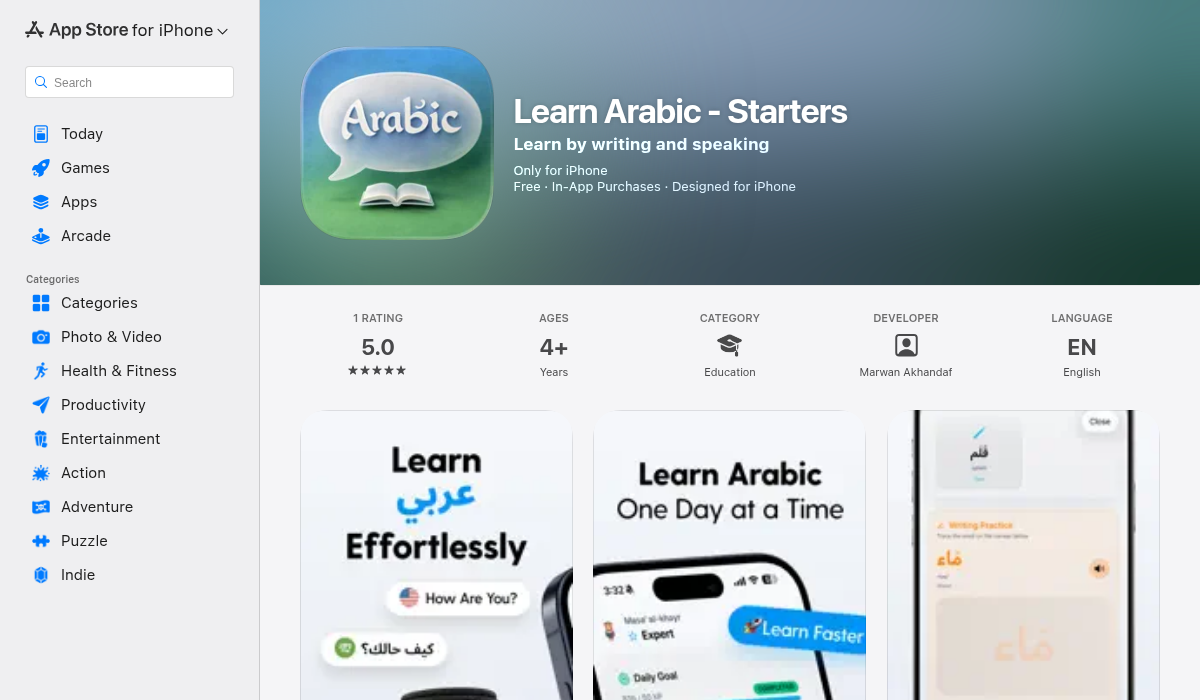
A focused app designed specifically for Arabic beginners who want to build real skills, not just streak counts. What sets it apart is the emphasis on pronunciation practice and interactive lessons that build systematically.
- ✅ Built specifically for Arabic (not adapted from other languages)
- ✅ Strong pronunciation practice with native audio
- ✅ Progress tracking keeps you accountable
- ✅ Achievement system for motivation
- ✅ Daily goals to build consistency
Best for: Beginners who want a structured path through the fundamentals with proper pronunciation from day one. Download Learn Arabic – Starters
3. MelonNote (For Retention)
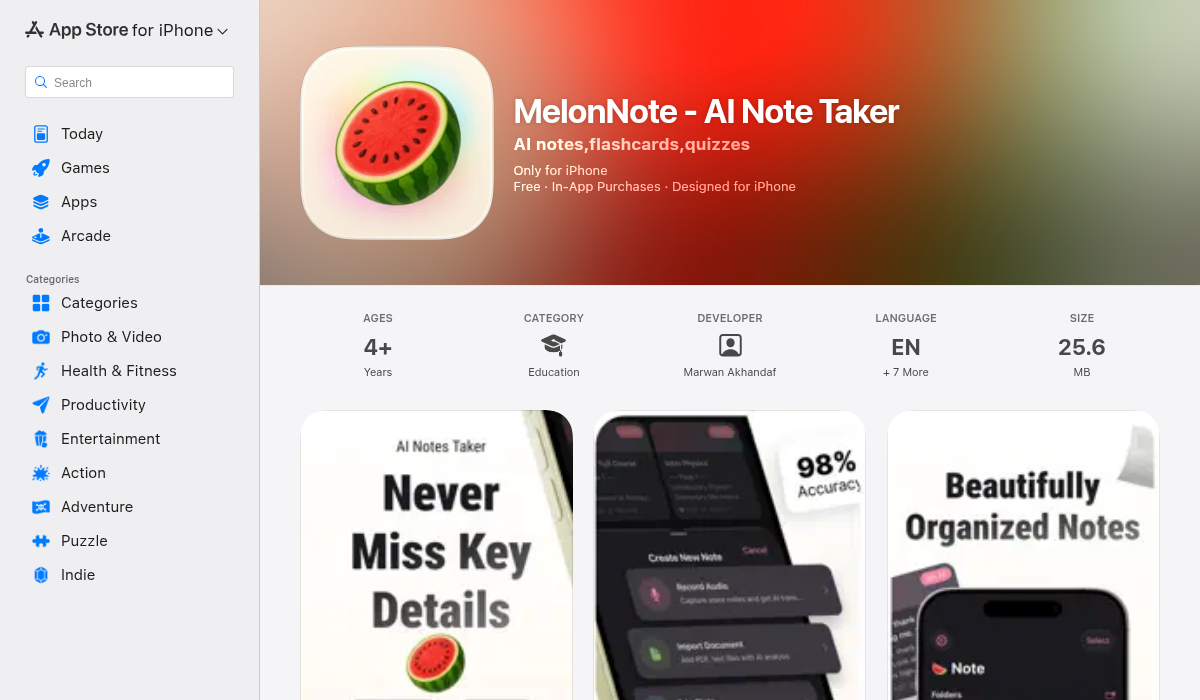
Here's something most Arabic learners miss: you need a system to retain what you learn. MelonNote is an AI-powered study companion that turns your notes into flashcards, quizzes, and even podcasts automatically.
- ✅ Auto-generates flashcards from your vocabulary notes
- ✅ AI-powered quizzes test your retention
- ✅ Turns notes into podcast-style audio for passive learning
- ✅ Works in Arabic (8 languages supported)
- ✅ Available on iOS and Android
Best for: Creating a personal Arabic study system. Import vocabulary lists, take notes on grammar rules, and let the AI quiz you until it sticks. Download MelonNote
Pro Tips From Successful Arabic Learners
- Don't skip handwriting — Writing the letters by hand builds muscle memory and helps you recognize them faster when reading. Even 10 minutes a day makes a difference.
- Learn words in context, not isolation — Instead of memorizing "كتاب = book," learn "هذا كتاب" (this is a book). Phrases stick better than words.
- Use the Anki/flashcard method seriously — Spaced repetition is scientifically proven to beat all other memorization methods. Apps like MelonNote make this automatic.
- Consume content early — Start watching Arabic YouTube videos (with subtitles) from month 2. You won't understand much, but your ear will start recognizing sounds and patterns.
- Find your "why" and write it down — On hard days, you need a reason to continue. Whether it's reading the Quran in its original language, talking to grandparents, or traveling to Morocco — keep that goal visible.
The Mistakes That Derail Most Beginners
Avoid these traps that stop most learners:
- Trying to learn MSA and a dialect simultaneously — Pick one. You can add the other later.
- Spending too long on the alphabet — You don't need to be perfect before moving on. Two weeks is enough to start reading simple words.
- Only using apps, never speaking — Apps are great for foundations, but you need to actually speak. Find a language partner early.
- Skipping pronunciation — Arabic has sounds that don't exist in English. If you don't learn them correctly early, they're hard to fix later.
- Comparing yourself to others — Everyone learns at different speeds. Focus on daily consistency, not speed.
A Realistic Timeline
With 30 minutes of daily practice, here's what to expect:
- 2 weeks: Alphabet mastered, can read slowly
- 2 months: 300-500 word vocabulary, basic sentences
- 6 months: Simple conversations, can read children's books
- 1 year: Intermediate level, can follow movies with subtitles
- 2+ years: Advanced, comfortable in most situations
These are averages. Some people move faster, some slower. The only failure is stopping.
The Bottom Line
Learning Arabic from scratch is absolutely doable. The key is starting with the right approach: master the alphabet first, pick ONE type of Arabic, use apps that focus on pronunciation, and build a retention system with flashcards.
Don't overthink it. Download an app, learn your first 5 letters today, and show up again tomorrow. That's all it takes to start.
If you're looking for a focused Arabic learning experience, Learn Arabic – Starters is worth trying. And for turning all that new knowledge into lasting memory, MelonNote handles the flashcards and quizzing automatically.
!مع السلامة — Ma'a salama — Goodbye, and good luck