
How to Reduce Face Puffiness: Complete Guide
You wake up, look in the mirror, and your face looks like it belongs to someone ten pounds heavier. Puffy cheeks, swollen under-eyes, a jawline that's gone into hiding — morning facial puffiness is one of those frustrating things that can ruin your confidence before you even have breakfast.
The good news? Face puffiness is almost always temporary, and there are proven ways to prevent it — and fix it fast when it shows up. In this complete guide, we'll cover exactly why your face gets puffy, what actually works to reduce it, and the best tools and apps that can help you track and tackle the problem for good.
Why Does Your Face Get Puffy?
Facial puffiness — sometimes called facial bloating — happens when excess fluid builds up in your face's soft tissues. Unlike body bloating that hits your stomach, facial puffiness tends to concentrate around your eyes, cheeks, and jawline. Understanding the root causes is the first step toward fixing it.
The Main Culprits
- High sodium intake — This is the number one offender. According to registered dietitian Starla Garcia, "Normally after eating a meal that is high in sodium, your body needs to balance itself out, so it will end up holding onto water in certain places, which can include the face." Soy sauce, processed meats, chips, and restaurant meals are classic triggers.
- Alcohol consumption — Alcohol dehydrates your body, causing it to retain water as a defense mechanism. That "morning after" face puffiness is directly linked to this rebound effect.
- Poor sleep position — Sleeping face-down or without elevation allows fluid to pool in your facial tissues overnight. Gravity is not your friend at a flat angle.
- Dehydration — Counterintuitively, not drinking enough water makes puffiness worse. When dehydrated, your body holds onto every drop it can — including in your face.
- Hormonal changes — Menstrual cycles, stress hormones, and thyroid imbalances can all cause fluid retention that shows up in the face first.
- Allergies and sinus issues — Inflammatory responses from allergies cause swelling around the eyes and cheeks that mimics bloating.
What Real People Are Saying
Face puffiness is one of those problems people don't talk about openly — until they find an anonymous forum. Reddit is full of people desperately searching for solutions.
"My morning face is so puffy that I feel embarrassed to go to work like that! It takes a few hours for it to actually go down."— Reddit user in r/30PlusSkinCare
"Lymphatic drainage in the shower every morning, I SWEAR BY THIS. It takes away puffiness, as someone who usually has a moon face."— Reddit user in r/beauty
The frustration is real — and so are the solutions. Let's break down what actually works in 2026.
7 Proven Ways to Reduce Face Puffiness
1. Cold Therapy — The Instant Fix
Cold temperatures constrict blood vessels and reduce swelling almost immediately. This is the fastest way to depuff your face in the morning. You can splash your face with ice-cold water, use an ice roller, or even press a bag of frozen peas against your cheeks and under-eyes for 2–3 minutes. The effect is temporary but dramatic — perfect for mornings when you need to look sharp fast.
2. Lymphatic Drainage Massage
Your lymphatic system is responsible for draining excess fluid from your tissues. Unlike your circulatory system, it doesn't have a pump — it relies on movement and manual stimulation. A simple facial massage using gentle, sweeping strokes from the center of your face toward your ears and down your neck can significantly reduce puffiness in just 5–10 minutes.
Tools like gua sha stones and jade rollers can make this easier, but your fingertips work perfectly fine. The key is light pressure and consistent direction — always toward the lymph nodes near your ears and neck.
3. Cut the Sodium
If you're consistently waking up puffy, your diet is the most likely cause. The average person consumes about 3,400 mg of sodium daily — well above the recommended 2,300 mg. Cutting back on processed foods, restaurant meals, and salty snacks can make a noticeable difference within days.
Swap soy sauce for coconut aminos, season with herbs instead of salt, and cook more meals at home. Your face will thank you within a week.
4. Stay Hydrated — Seriously
Drinking more water to reduce water retention sounds contradictory, but it works. When your body is well-hydrated, it doesn't need to hold onto excess fluid. Aim for at least 8 glasses a day, and consider adding electrolytes if you exercise regularly. Green tea is a particularly good choice — it's hydrating and contains natural anti-inflammatory compounds.
5. Elevate Your Head While Sleeping
One of the simplest fixes is sleeping with your head slightly elevated. Adding an extra pillow or using a wedge pillow prevents fluid from pooling in your face overnight. Side sleepers may also notice one cheek puffier than the other — switching sides or sleeping on your back can help balance things out.
6. Facial Yoga and Exercises
Facial exercises aren't just a TikTok trend — there's real science behind them. Studies have shown that consistent facial exercise can improve muscle tone and promote lymphatic drainage. Exercises targeting the jawline, cheeks, and under-eye area can both reduce puffiness and improve facial definition over time.
The challenge is consistency and knowing which exercises actually work. This is where technology comes in — apps that guide you through targeted routines and track your progress can make all the difference.
7. Watch Your Alcohol Intake
Even moderate alcohol consumption causes dehydration and inflammation that shows up in your face the next morning. If you notice a pattern between drinking nights and puffy mornings, consider reducing your intake or at least alternating alcoholic drinks with water. Your skin — and your jawline — will look noticeably better within a couple of weeks.
Best Apps for Tracking and Reducing Face Puffiness
In 2026, there's a growing category of apps designed specifically to help with facial bloating. We tested the top options to see which ones actually deliver results.
1. Depuff AI
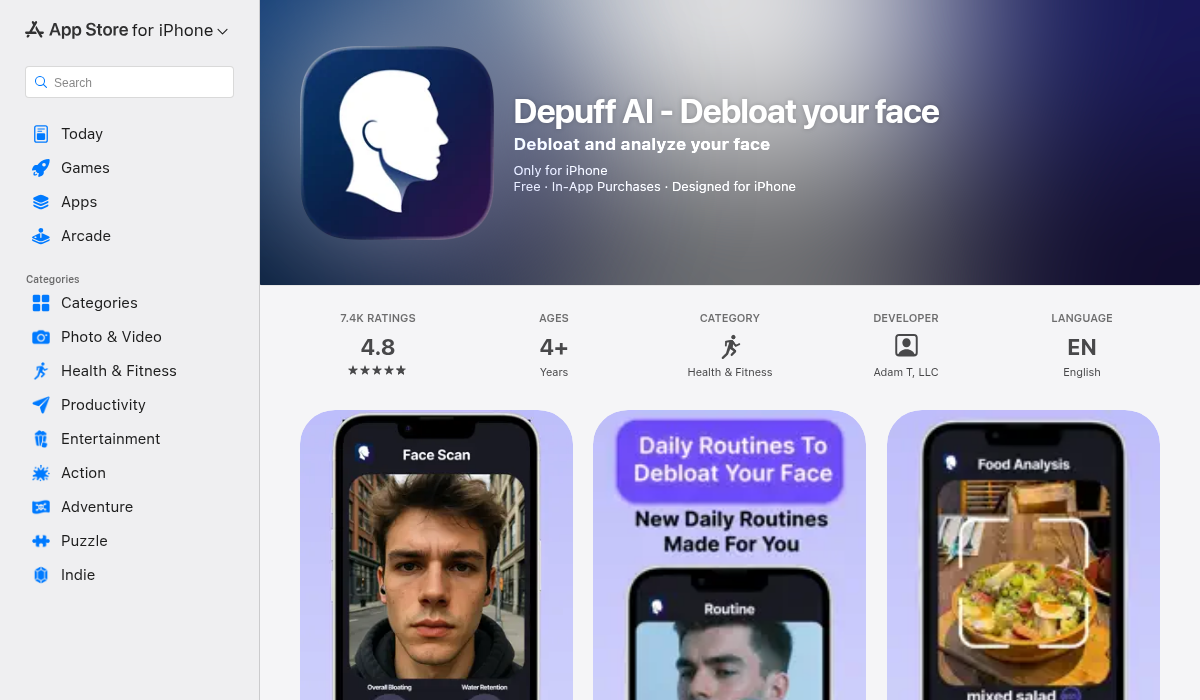
Depuff AI takes a data-driven approach to facial bloating. It uses AI to analyze your daily photos and track bloating patterns over time. The app includes a food tracker to help you identify which meals trigger puffiness, plus guided facial exercises.
- ✅ AI photo analysis for tracking progress
- ✅ Food impact tracking
- ✅ Available on iOS and Android
- ❌ Marketed primarily toward men
- ❌ Limited exercise library compared to dedicated facial yoga apps
2. Bloat Down — Debloat Your Face
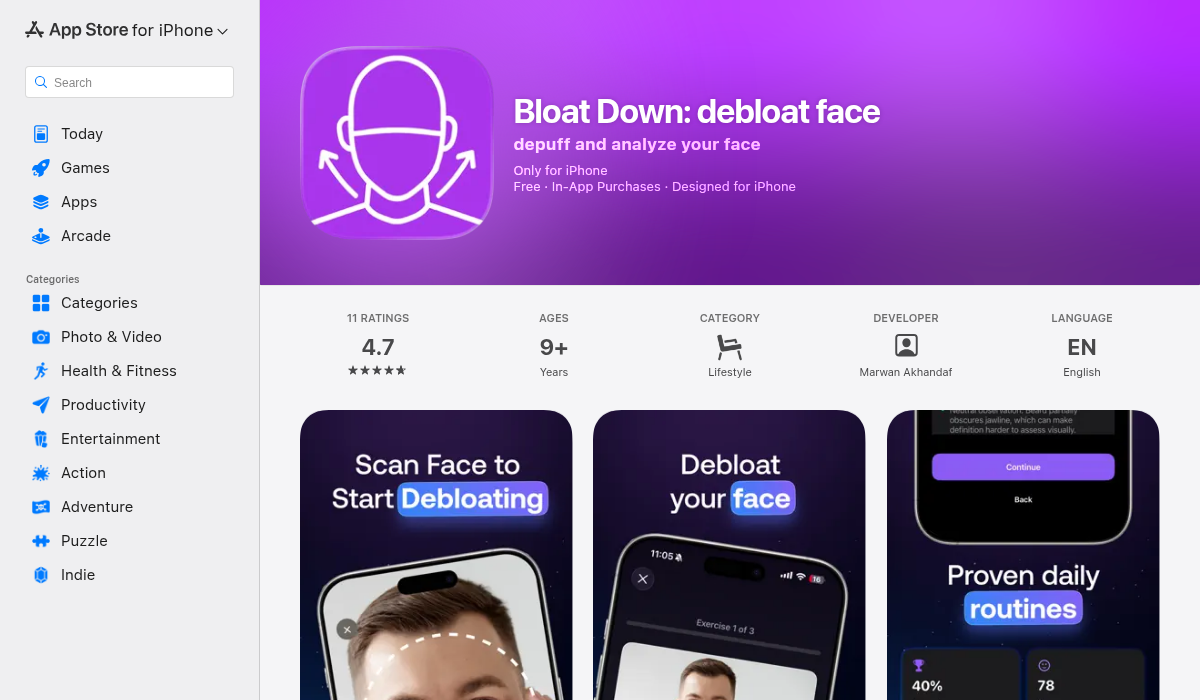
Bloat Down takes a more comprehensive, exercise-first approach to facial depuffing. Built with guidance from certified facial specialists, it combines AI-powered facial bloating analysis with science-backed facial yoga and lymphatic drainage exercises. What sets it apart is the structured routine system — rather than just showing you random exercises, it builds personalized programs targeting your specific problem areas.
- ✅ Free AI-powered facial bloating analysis
- ✅ Guided facial yoga and lymphatic drainage routines
- ✅ Targeted exercises for jawline, cheeks, and under-eyes
- ✅ Progress tracking with visual transformation tools
- ✅ Science-backed approach with specialist guidance
- ✅ Results visible in as little as 7 days
The app promises visible results within a week for consistent users, with significant long-term improvements around the 3-month mark. The progress tracking feature is particularly motivating — being able to see your jawline becoming more defined over time keeps you coming back to the exercises.
3. Zwintji — AI Calorie Scanner
While not specifically a depuffing app, Zwintji deserves a mention because diet is the biggest factor in facial puffiness. This AI-powered calorie scanner lets you photograph your meals to track nutritional content — including sodium levels. If your puffiness is diet-related, understanding exactly how much sodium you're consuming is half the battle.
Foods That Fight Face Puffiness
Beyond tracking what causes puffiness, knowing what to eat proactively can keep bloating at bay. According to Healthline, the best anti-bloat foods include:
- Potassium-rich foods — Bananas, avocados, and sweet potatoes help counterbalance sodium and flush excess fluid
- Fermented foods — Yogurt, kimchi, kombucha, and sauerkraut promote gut health and reduce overall inflammation
- Water-rich fruits and vegetables — Cucumber, watermelon, celery, and leafy greens provide natural hydration
- Whole grains — Replace refined carbs (white bread, pasta) with whole grain alternatives to reduce inflammatory responses
- Green tea — A natural diuretic with anti-inflammatory properties that fights puffiness from the inside out
On the flip side, avoid these common triggers the night before important events: ramen, sushi with soy sauce, processed meats, cheese, chips, and — of course — alcohol.
Building a Morning Depuff Routine
If you deal with regular morning puffiness, having a consistent routine makes all the difference. Here's what a solid 10-minute morning depuff looks like:
- Splash cold water on your face — 30 seconds of ice-cold water to constrict blood vessels and wake up your skin
- Apply a cold tool — Ice roller or chilled gua sha for 2–3 minutes, using upward and outward strokes
- Lymphatic drainage massage — 3–5 minutes of gentle sweeping motions from center of face toward ears and down the neck
- Targeted facial exercises — Use an app like Bloat Down for guided routines targeting your problem areas
- Hydrate — Drink a full glass of water, ideally with a squeeze of lemon for added potassium
Consistency matters more than intensity. Even 5 minutes daily will outperform an occasional 30-minute session.
When to See a Doctor
While occasional puffiness is normal and harmless, persistent facial swelling that doesn't respond to diet and lifestyle changes could signal an underlying condition. See a healthcare professional if:
- Your face is swollen all day, not just in the morning
- Puffiness is accompanied by pain, redness, or warmth
- You notice sudden, severe swelling (potential allergic reaction)
- Swelling is accompanied by difficulty breathing
- You experience unexplained weight gain alongside facial puffiness
Conditions like hypothyroidism, kidney issues, and medication side effects can all cause facial puffiness that requires medical treatment.
The Bottom Line
Face puffiness is incredibly common and almost always fixable. The biggest levers are diet (cut sodium, stay hydrated), sleep habits (elevate your head), and consistent facial exercises that promote lymphatic drainage. Most people see noticeable improvements within a week of making changes.
For those who want a structured approach, apps like Bloat Down combine AI analysis with expert-designed exercise routines to take the guesswork out of depuffing. Pair that with mindful eating and proper hydration, and your jawline will start making regular appearances again.
Your face doesn't have to be a morning mystery. A few smart habits and the right tools can make puffy mornings a thing of the past.