
How to Spot Ultra-Processed Foods by Scanning Labels
That "healthy" protein bar with 40 unpronounceable ingredients? Ultra-processed. The whole wheat bread that lasts two weeks without molding? Probably ultra-processed too. Learning to identify ultra-processed foods (UPFs) has become a major focus for health-conscious shoppers — but decoding labels isn't always straightforward.
The NOVA food classification system, developed by researchers at the University of São Paulo, categorizes foods into four groups based on processing level. Group 4 — ultra-processed foods — includes products made mostly from industrial ingredients and additives, with minimal whole food content.
But standing in a grocery aisle, how do you actually tell what's ultra-processed and what isn't?
What Makes Food "Ultra-Processed"?
Ultra-processed foods aren't just "processed" — the distinction matters. Freezing vegetables or canning beans is processing. Ultra-processing involves industrial formulations with ingredients you'd never find in a home kitchen: modified starches, hydrogenated oils, protein isolates, emulsifiers, flavor enhancers, and artificial colors.
The NOVA system breaks it down:
- Group 1: Unprocessed/minimally processed (fresh fruits, vegetables, plain meat, eggs)
- Group 2: Processed culinary ingredients (oil, butter, sugar, salt, flour)
- Group 3: Processed foods (canned vegetables, cheese, simple bread)
- Group 4: Ultra-processed foods (soft drinks, packaged snacks, instant noodles, most fast food)
"I've run into the same issue with Yuka. It's good for awareness but the scoring system can feel inconsistent. A lot of additives or processing steps don't always get flagged, so something 'excellent' on Yuka might still be ultra-processed."— Reddit user in r/ultraprocessedfood
Red Flags in Ingredient Lists
Learning to spot UPFs yourself starts with recognizing these common indicators:
Industrial Additives
- Emulsifiers (soy lecithin, mono- and diglycerides, polysorbate 80)
- Flavor enhancers (maltodextrin, yeast extract, "natural flavors")
- Modified starches and hydrolyzed proteins
- Artificial sweeteners and colors
- Preservatives with E-numbers you can't pronounce
Ingredient Count
A high ingredient count — especially over 10-15 items — often signals ultra-processing. Whole foods don't need long lists. An apple is just an apple. Ultra-processed foods need stabilizers, texturizers, and shelf-life extenders.
Marketing Red Flags
"High protein," "low fat," "vitamin enriched," "whole grain" — these health claims often appear on ultra-processed products. Real whole foods rarely need marketing claims.
Apps for Scanning Ultra-Processed Foods
1. Yuka — The Popular Choice
Yuka scans barcodes and rates products on a 100-point scale based on nutritional quality and additive concerns. It's well-designed and has a massive database.
- ✅ Huge product database
- ✅ Scans both food and cosmetics
- ✅ Suggests healthier alternatives
- ❌ Scoring system can be inconsistent
- ❌ Sometimes rates nuts as "too fatty" or meat as "too caloric"
- ❌ Doesn't specifically use NOVA classification
2. Open Food Facts — The Database
The open-source foundation behind many food apps. It shows NOVA groups, Nutri-Score, allergens, and detailed ingredient data. The app itself is functional but basic.
- ✅ Free and open source
- ✅ Shows NOVA classification directly
- ✅ Largest crowdsourced database
- ❌ Interface isn't as polished
- ❌ Relies on community data (variable quality)
3. Processed App — NOVA-Focused
Uses AI to analyze ingredients and classify foods according to the NOVA system. Can scan ingredient labels directly via photo — useful when barcodes aren't in the database.
- ✅ Specifically built around NOVA classification
- ✅ Photo-based ingredient scanning
- ✅ AI analysis explains why food is classified
- ❌ Smaller database than Yuka
- ❌ Premium features require subscription
4. FoodCheckr — Comprehensive Ingredient Analysis
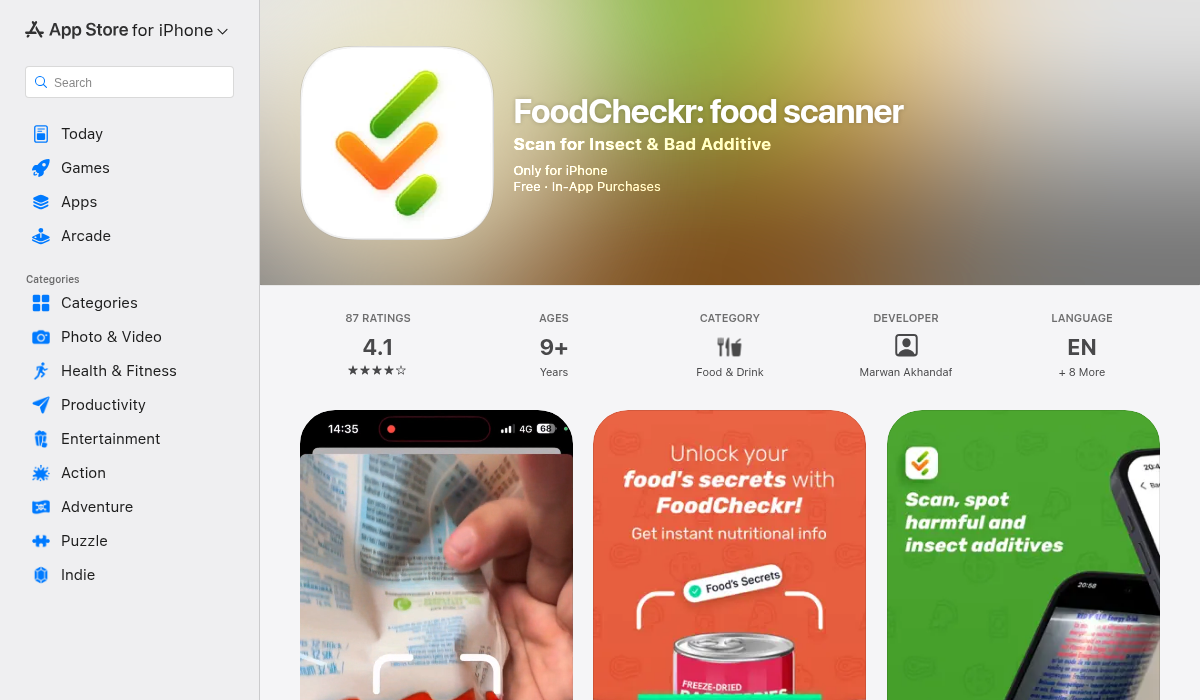
Rather than just scoring processing levels, FoodCheckr breaks down exactly what's in your food. It highlights harmful additives, detects bioengineered ingredients, and even identifies potential insect traces — issues that go beyond traditional UPF concerns.
- ✅ Full nutritional breakdown
- ✅ Harmful additive detection
- ✅ AI bioengineered ingredient detection
- ✅ Insect trace detection
- ✅ Scan history
- ❌ Doesn't use NOVA scoring specifically
For those who want to understand all the ingredients — not just whether something is "processed" — FoodCheckr gives you the complete picture.
The Limitation of Scoring Systems
Here's something worth knowing: scoring systems have tradeoffs. Yuka's algorithm can penalize natural fats in nuts while giving a pass to low-fat products loaded with additives. NOVA classification is more consistent but doesn't account for nutritional density.
A ribeye steak might get a mediocre Yuka score for being "high fat," while scoring as NOVA 1 (unprocessed). A fiber-added protein bar might look decent on paper but be solidly ultra-processed.
The best approach? Use apps as tools, not authorities. They help you notice things faster, but understanding what you're reading matters more.
Quick Tips for Spotting UPFs Without an App
- Five-ingredient rule — If it has more than five ingredients, look more closely. Not a hard rule, but a useful filter.
- Can you picture the ingredients? — Flour, sugar, eggs = yes. Methylcellulose, dextrose, sodium stearoyl lactylate = no.
- Check shelf life — Foods that last months without refrigeration often need heavy processing to get there.
- Avoid the middle aisles — Most ultra-processed foods live in the center of the grocery store. Perimeter = produce, meat, dairy.
- Be skeptical of health claims — Real food doesn't need to convince you it's healthy.
The Bottom Line
Scanner apps make identifying ultra-processed foods faster and easier, but they're not perfect. Yuka is popular but can mislead. Open Food Facts shows NOVA scores directly but has a basic interface. Dedicated apps like Processed focus specifically on this issue.
For a broader understanding of what's in your food — including additives, bioengineered ingredients, and nutritional content — FoodCheckr gives you a complete breakdown beyond just processing levels.
Ultimately, the most reliable method is learning to read labels yourself. Use apps to speed up the process and catch what you miss, but develop your own ingredient awareness. Once you know what to look for, spotting ultra-processed foods becomes almost automatic.