
Is Carmine (E120) Halal? The Truth About This Natural Red Dye
That vibrant red color in your strawberry yogurt, candy, or lipstick? It might come from crushed beetles.
Carmine, also known as E120, cochineal extract, or natural red 4, is one of the most common natural red dyes in food, cosmetics, and pharmaceuticals. For Muslims trying to eat halal, this ingredient raises serious questions — and the answer isn't as straightforward as you might think.
What Exactly Is Carmine (E120)?
Carmine is a crimson red pigment derived from the cochineal beetle (Dactylopius coccus), a scale insect that lives on prickly pear cacti, primarily in Peru and the Canary Islands. The dye is produced by harvesting female cochineal insects, drying them, and then crushing them to extract carminic acid — the compound responsible for the brilliant red color.
It takes approximately 70,000 insects to produce one pound of carmine dye. The production process involves:
- Scraping live insects off cacti
- Drying the insects (which kills them)
- Crushing them into powder
- Boiling the powder in water to extract the dye
- Filtering and processing into usable colorant
You'll find carmine listed on ingredient labels as: E120, cochineal, cochineal extract, carmine, crimson lake, natural red 4, C.I. 75470, or simply "natural coloring."
The Islamic Ruling on Carmine: Is E120 Halal or Haram?
The majority of Islamic scholars consider carmine (E120) to be haram (forbidden). Here's why:
The Quranic Foundation
Allah says in the Quran:
"He has only forbidden to you dead animals, blood, the flesh of swine, and that which has been dedicated to other than Allah."— Quran, Surah Al-Baqarah 2:173
And in Surah Al-A'raf:
"...and prohibits for them the evil (khabaith)."— Quran, Surah Al-A'raf 7:157
The term "khabaith" refers to things that are impure, disgusting, or repulsive by nature. Many scholars classify insects that people naturally find repugnant — including beetles and lice — under this category.
The Scholarly Consensus
According to major Islamic jurisprudence schools:
- Hanafi School: Considers insects that have flowing blood to be haram. While cochineal beetles don't have red blood per se, they fall under the category of "unsavory creatures."
- Shafi'i School: Classifies cochineal insects as haram because they are considered disgusting (mustakhbath).
- Hanbali School: Also considers carmine haram based on the principle of avoiding impure substances.
- Maliki School: Some Maliki scholars permit eating insects, which creates a minority opinion allowing carmine.
Major halal certification bodies including JAKIM (Malaysia), MUI (Indonesia), and IFANCA (USA) classify E120 as haram.
"Carmine (E120) is live cochineal insects scraped off cacti, then dried (thus killing them), then this dried powder is soaked in liquid to create the food coloring. It's crazy how this is considered more 'natural' than synthetic alternatives."— Reddit user in r/progressive_islam
What About the Istihalah (Transformation) Argument?
Some people argue that carmine undergoes "istihalah" — a complete transformation that changes its nature, similar to how wine transforms into vinegar and becomes halal.
However, most scholars reject this argument for carmine because:
- The essence remains: Unlike wine-to-vinegar transformation where the chemical structure fundamentally changes, carminic acid extracted from beetles retains its original chemical properties.
- Physical processing isn't enough: Grinding, boiling, and filtering don't constitute true istihalah — they're just physical processes, not chemical transformations.
- The source is still identifiable: You can trace the red color directly back to the insect origin.
The authentic transformation (like vinegar) involves a complete change in chemical composition where the original substance no longer exists. With carmine, you're essentially consuming processed insect extract.
Where Is Carmine Commonly Found?
E120 appears in more products than you might expect:
Food Products
- Strawberry and raspberry yogurts
- Red candies and gummies
- Fruit juices and drinks
- Ice cream
- Jam and preserves
- Meat products (for color enhancement)
- Red velvet cakes and pastries
Cosmetics
- Lipsticks and lip glosses
- Blushes and eyeshadows
- Nail polish
Pharmaceuticals
- Red-coated pills and capsules
- Liquid medicines
- Vitamin supplements
Halal Alternatives to Carmine
The good news? There are several halal-friendly red colorants available:
- Beetroot extract (E162): Derived from beets, 100% plant-based and halal.
- Paprika extract (E160c): Made from red peppers, naturally halal.
- Anthocyanins (E163): Extracted from grapes, berries, and red cabbage.
- Lycopene (E160d): Derived from tomatoes.
- Synthetic red dyes: Red 40 (E129), Allura Red, while synthetic, is considered halal as it contains no animal derivatives.
How to Check Your Food for Carmine
Reading ingredient labels is the first defense, but it can be tricky. Here are terms to watch for:
- E120
- Carmine
- Cochineal
- Cochineal extract
- Crimson lake
- Natural red 4
- C.I. 75470
The problem? Sometimes products just say "natural coloring" or "color added" without specifying the source. This is where a scanner app becomes invaluable.
HalalFoodScan: Your E120 Detector
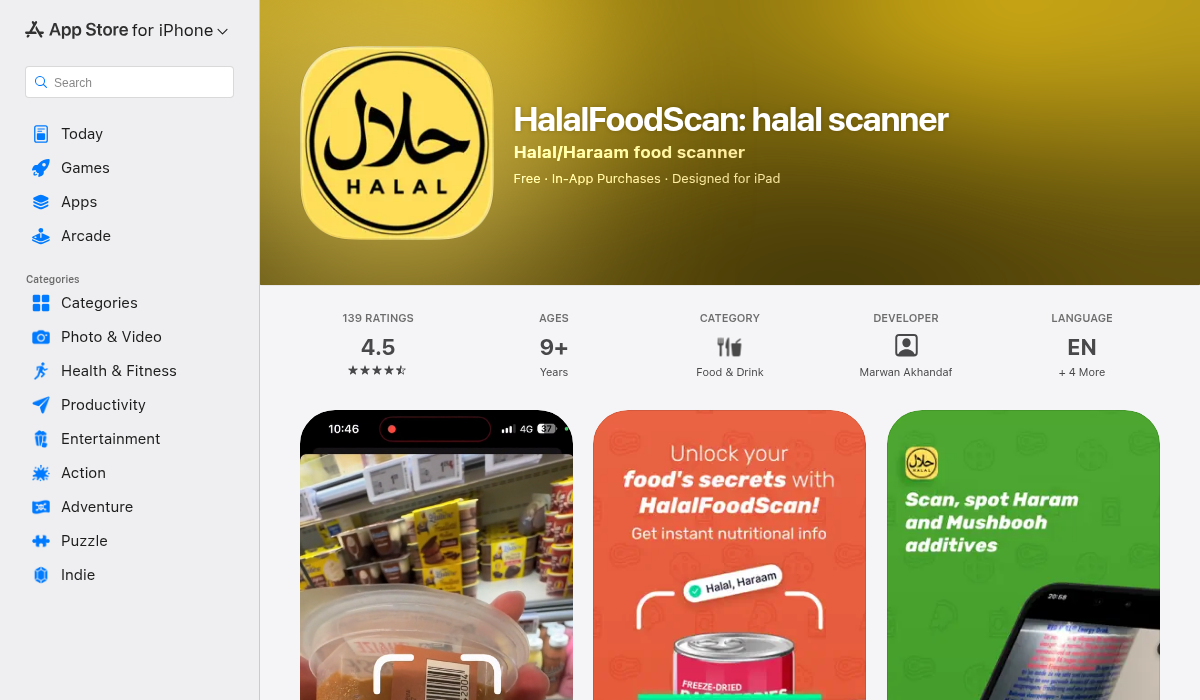
HalalFoodScan was built specifically to help Muslims navigate these confusing ingredient situations. Here's what makes it useful:
- ✅ Barcode scanning: Instantly check products against a database of millions of items
- ✅ Additive detection: AI-powered analysis that identifies E-numbers and their halal status
- ✅ E120 flagging: Automatically alerts you when carmine is detected
- ✅ Ingredient explanation: Detailed breakdowns of why something is halal, haram, or mushbooh (doubtful)
- ✅ Privacy-focused: No data collection — your scans stay private
Instead of squinting at tiny ingredient lists in the grocery store aisle, you can scan the barcode and get an immediate answer with sourcing information.
The Bottom Line on Carmine
Based on the Quran, Hadith, and majority scholarly opinion, carmine (E120) is classified as haram because:
- It's directly derived from insects (cochineal beetles)
- Insects are generally considered "khabaith" (repugnant) in Islamic dietary law
- The processing doesn't constitute true istihalah (transformation)
- Major halal certification bodies worldwide classify it as forbidden
While there is a minority Maliki opinion that might permit it, the safest approach for Muslims seeking to maintain a halal diet is to avoid E120 and opt for the many plant-based or synthetic alternatives available.
Note: For specific religious rulings (fatwa), always consult with qualified Islamic scholars or your local imam. This article provides general information based on recognized Islamic sources.
Need help identifying carmine and other questionable additives in your food? HalalFoodScan makes it easy to check any product instantly.