
Is E471 Halal? Complete Guide to This Common Food Additive
You pick up a packet of bread, flip it over, and there it is — E471. Is it halal? Is it haram? The label doesn't say where it comes from, and now you're standing in the grocery aisle wondering if you should put it back. If this sounds familiar, you're not alone.
E471 is one of the most common food additives on the planet, found in everything from ice cream to instant noodles. But for Muslims following a halal diet, this little code raises a big question. Let's break it down — what E471 actually is, when it's halal, when it's not, and how to check without spending 20 minutes Googling every product you pick up.
What Exactly Is E471?
E471 stands for mono- and diglycerides of fatty acids. It's an emulsifier — a substance that helps oil and water mix together smoothly. Without it, your bread would go stale faster, your ice cream would be icy instead of creamy, and your margarine would separate.
Here's the thing: E471 is made from fatty acids. And those fatty acids can come from two very different sources:
- Plant-based sources — soybean oil, palm oil, sunflower oil → Halal
- Animal-based sources — beef fat, pork fat (lard) → Depends on the source
If the E471 in your food comes from soybean or palm oil, it's completely halal. If it comes from pork, it's haram — full stop. And if it comes from beef or another animal, it's only halal if the animal was slaughtered according to Islamic law (zabiha).
Why Is E471 So Confusing?
The core problem is labeling. Most food manufacturers simply list "E471" or "mono- and diglycerides of fatty acids" on the ingredient label without specifying the source. They use whichever is cheapest at the time — which could be plant-based one batch and animal-derived the next.
"E471 is plant based most of the time, but it can be from animals, so best to just avoid it."— Reddit user in r/islam
This ambiguity has led many Muslims to simply avoid any product containing E471 out of caution. While that's a valid approach, it also means cutting out a large portion of processed foods unnecessarily — because the majority of E471 used in food manufacturing today is actually plant-derived.
What Do Islamic Scholars Say?
The scholarly consensus is clear: E471 is not automatically haram. Its ruling depends entirely on the source material.
"Many food additives, such as E-codes (E470, E471, E481) and mono- and diglycerides, are not automatically haram. Their ruling depends on the source. If they come from plants or are made synthetically, they are halal; but if they are derived from pork or animals not slaughtered according to Islamic law, they are haram."— Sheikh Ahmad Kutty, Islamic Institute of Toronto (About Islam, September 2025)
The Quran provides the foundational principle:
"O mankind, eat from whatever is on earth that is lawful and good."— Quran, Surah Al-Baqarah 2:168
And the Prophet ﷺ taught us in the famous hadith:
"What is lawful is clear and what is unlawful is clear, and between them are matters that are doubtful. Whoever avoids the doubtful matters has safeguarded his religion and his honor."— Sahih Bukhari 5527
This hadith is particularly relevant to E471. When the source is unknown, it falls into the category of mushbooh (doubtful). The cautious approach is to avoid it unless you can verify the source — but it's not inherently haram.
The Islamic Classification of E471
Based on scholarly guidance and halal certification bodies like JAKIM (Malaysia), MUI (Indonesia), IFANCA (USA), and HMC (UK), E471 is classified as:
- Halal (حلال) — When derived from plant-based sources (soybean, palm, sunflower oil) or synthetic production
- Mushbooh (مشبوه) — When the source is unknown or unspecified on the label
- Haram (حرام) — When derived from pork fat (lard) or non-zabiha animal fat
How to Check If E471 Is Halal in Your Product
You don't need to become a food scientist. Here are practical steps anyone can take:
1. Look for Halal Certification
The simplest check. If the product carries a recognized halal certification logo (JAKIM, IFANCA, HMC, MUI, etc.), the E471 has been verified as coming from a halal source. You're good.
2. Check for "Suitable for Vegetarians" or "Vegan"
This is a practical shortcut many Muslims use. If a product is labeled vegetarian or vegan, the E471 must be plant-based — which means it's halal. This is especially common in European products where vegetarian and vegan labeling is strictly regulated.
3. Use a Halal Scanning App
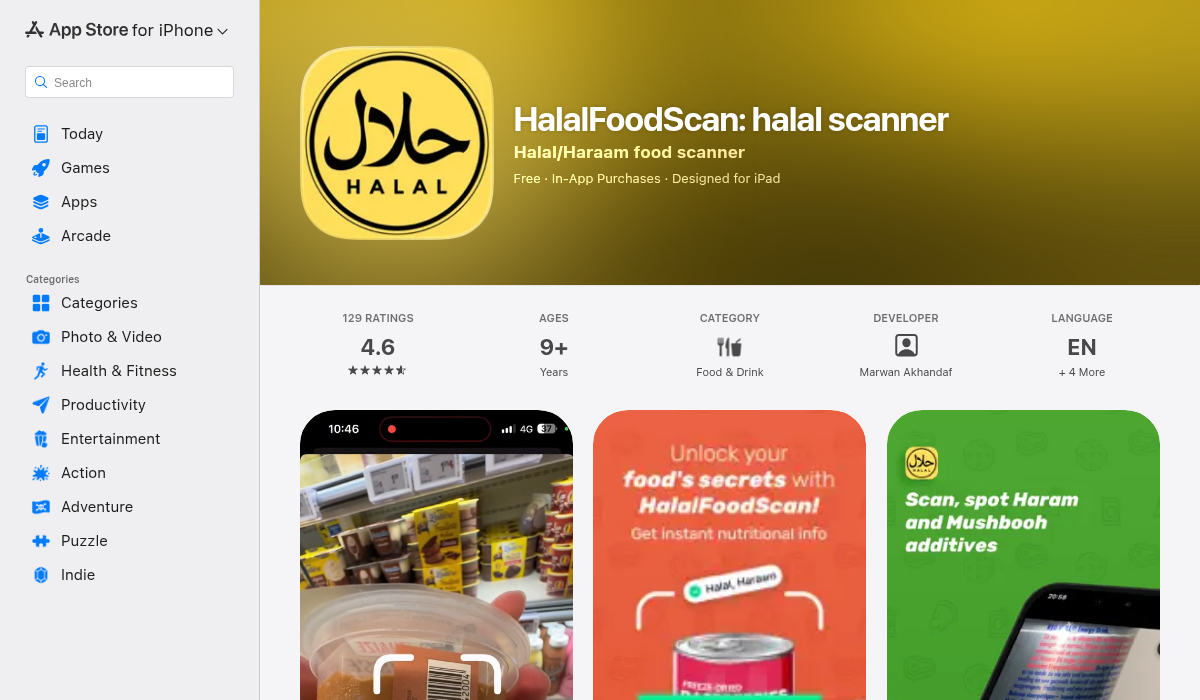
Instead of Googling every E-number, you can use an app like HalalFoodScan to scan a product's barcode and get instant halal/haram/mushbooh status for all ingredients. It's especially useful for E-numbers like E471 — the app checks the source and gives you a clear answer. For products not in the database, you can scan the ingredient list directly and the AI will analyze every additive.
4. Contact the Manufacturer
When in doubt, a quick email or check of the manufacturer's FAQ can confirm the source. Many major brands now explicitly state whether their E471 is plant-based on their websites, particularly in Europe and North America.
5. Choose Known Halal Brands
Over time, you'll learn which brands consistently use plant-based emulsifiers. Stick to these when possible.
Common Foods That Contain E471
E471 is everywhere. Here are the product categories where you'll most commonly find it:
- Bread and baked goods — Helps maintain softness and extend shelf life
- Ice cream and frozen desserts — Creates smooth, creamy texture
- Margarine and spreads — Prevents oil separation
- Chocolate and confectionery — Improves texture and coating
- Instant noodles — Helps with texture during cooking
- Processed meats — Emulsifies fat and water
- Cakes and pastries — Improves crumb structure
- Peanut butter — Prevents oil from separating
Other E-Numbers Muslims Should Know About
While we're on the topic of E-numbers, here are a few other common ones that deserve attention:
- E120 (Carmine) — Haram. Derived from crushed cochineal insects. Used as a red food coloring.
- E441 (Gelatin) — Check source. Pork gelatin is haram, beef gelatin needs to be from zabiha animal, fish gelatin is halal.
- E322 (Lecithin) — Usually halal. Mostly derived from soy. Check for egg-based lecithin if concerned.
- E904 (Shellac) — Mushbooh. Secretion of lac insects. Scholars differ on this one.
- E470 (Fatty acid salts) — Same as E471. Depends on plant or animal source.
- E481 (Sodium stearoyl lactylate) — Mushbooh. Can be plant or animal derived.
The European Advantage
If you're shopping in Europe, there's some good news. Due to the massive growth of vegetarian and vegan product demand, European food manufacturers have increasingly shifted to plant-based emulsifiers. Sheikh Ahmad Kutty noted that "in many regions, such as Europe, plant-based emulsifiers are widely used due to vegetarian and vegan demand." However, he added that "certainty is always better than assumption."
The "Suitable for Vegetarians" label on European products is legally regulated, making it a reliable indicator that E471 is plant-based.
A Balanced Approach
Islam encourages balance — neither extreme negligence nor excessive paranoia about food:
"He has only forbidden you dead animals, blood, the flesh of swine, and that which has been dedicated to other than Allah. But whoever is forced by necessity, neither desiring it nor transgressing its limit — there is no sin upon him."— Quran, Surah Al-Baqarah 2:173
The practical takeaway: educate yourself, use the tools available to you, and don't stress beyond reason. A halal scanner app like HalalFoodScan on your phone makes checking E-numbers take seconds instead of minutes — turning a stressful grocery trip into a confident one.
The Bottom Line
E471 is not inherently haram. It's an emulsifier that can be perfectly halal when derived from plant sources — which is increasingly the norm, especially in Europe. The key is knowing how to check:
- Look for halal certification on the packaging
- Check for "Suitable for Vegetarians" or "Vegan" labels
- Use a barcode scanning app to check ingredients instantly
- When in doubt, contact the manufacturer or choose an alternative product
The Prophet ﷺ taught us to avoid doubtful matters when possible — but also that Islam is a religion of ease, not hardship. Equip yourself with knowledge and the right tools, and eating halal becomes straightforward.
Note: For specific religious rulings (fatwa), always consult with qualified Islamic scholars or your local imam. This article provides general information based on recognized Islamic sources.