
Is Rennet Halal? The Complete Cheese Guide for Muslims (2026)
You're at the grocery store, picking up cheese for your sandwich, and suddenly the ingredient list becomes a religious minefield. "Enzymes," "rennet," "microbial enzymes"—what does it all mean, and more importantly, is any of it halal?
If you've ever stood in the dairy aisle googling "is rennet halal" on your phone, you're not alone. Cheese is one of the most confusing foods for Muslims to navigate, and the conflicting information online doesn't help. One source says all rennet is haram, another says it's fine—so which is it?
In this guide, we'll break down everything you need to know about rennet, the different types, the scholarly opinions, and how to make confident choices at the store in 2026.
What Exactly Is Rennet?
Rennet is an enzyme that curdles milk, separating it into curds and whey—the essential first step in cheesemaking. Without rennet, you can't make most traditional cheeses like cheddar, parmesan, or gouda.
Here's where it gets complicated for Muslims: traditional rennet comes from the stomach lining of calves. The enzyme pepsin, found in the fourth stomach of young ruminants, is incredibly effective at curdling milk.
But animal-derived rennet isn't the only option anymore. In 2026, you'll encounter several types:
- Animal Rennet — From calf, goat, or lamb stomachs
- Microbial Rennet — From fungi or bacteria (vegetarian-friendly)
- Vegetable Rennet — From plants like thistle or fig leaves
- FPC (Fermentation-Produced Chymosin) — Genetically engineered, but not from animals
The Muslim Community's Confusion
Reddit threads about cheese and halal are filled with conflicting advice and genuine frustration. One user in r/islam captured the struggle perfectly:
"Cheeses made with rennet enzyme is Halal if the calf is slaughtered according to Islamic rites."— Reddit user in r/islam
But here's the thing—how do you know if the calf was slaughtered properly? Mainstream cheese brands don't advertise their slaughter methods. Another Reddit user pointed out the scholarly difference:
"In the Hanafi School, rennet obtained from an animal slaughtered by a non-Muslim or Muslim in accordance with Islamic law or contrary to it, in all cases is permissible, as long as the animal in question is not a pig."— Reddit user in r/EatingHalal
This is where the madhab differences become crucial—and why many Muslims feel lost.
What Do Islamic Scholars Say?
The ruling on rennet varies between the four major schools of Islamic jurisprudence (madhahib). Here's what the scholars say:
The Hanafi Opinion
The Hanafi school takes a more lenient position. According to Hanafi scholars, rennet is permissible (halal) regardless of whether the animal was slaughtered Islamically, as long as it's not from a pig. The reasoning is based on the principle that the rennet itself is a pure substance (tahir) that doesn't take on the ruling of the dead animal (maytah).
This opinion is attributed to Imam Abu Hanifa and has been confirmed by contemporary Hanafi scholars like Mufti Taqi Usmani.
The Shafi'i, Maliki, and Hanbali Opinion
The majority of scholars from these three schools hold that animal rennet is only halal if:
- The animal is from a halal species (cow, goat, sheep—not pig)
- The animal was slaughtered according to Islamic law (dhabiha)
If the animal wasn't slaughtered properly, anything extracted from it—including rennet—would be considered impure (najis) and therefore haram.
The Evidence
Both positions have evidence from the Sunnah. There's a narration that the Prophet ﷺ and his companions ate cheese, even though the source of the rennet may not have been from halal-slaughtered animals:
The companions ate cheese from the lands of the Persians and Romans without investigating the source of the rennet.— Referenced in various fiqh texts
However, other scholars argue this doesn't establish a general ruling, and Muslims should be cautious.
Practical Guide: How to Choose Halal Cheese
Given the scholarly differences, here's a practical approach based on your madhab and comfort level:
Option 1: Vegetarian or Microbial Rennet (Safest)
If you want to avoid the debate entirely, look for cheeses labeled:
- "Vegetarian Cheese"
- "Microbial Enzymes"
- "Non-Animal Rennet"
- "Suitable for Vegetarians"
These are halal according to all scholarly opinions. Many major brands now use microbial rennet because it's cheaper and appeals to vegetarian consumers.
Option 2: Halal-Certified Cheese
Look for cheese with halal certification from recognized bodies like IFANCA, ISNA, or your local halal authority. These cheeses use either vegetarian rennet or animal rennet from halal-slaughtered animals.
Option 3: Following the Hanafi Opinion
If you follow the Hanafi madhab, you can eat cheese with animal rennet (enzymes) as long as it's not from pork. Most mainstream cheese uses bovine (cow) rennet, which would be permissible under this opinion.
Cheeses That Are Usually Safe
Many popular cheese brands have moved to microbial rennet:
- Tillamook — Uses microbial enzymes in most products
- Organic Valley — Many varieties use microbial rennet
- Store Brands — Check the label; many say "microbial enzymes"
Cheeses That Often Use Animal Rennet
- Parmigiano-Reggiano — Traditional recipe requires calf rennet (look for halal-certified versions)
- Gruyère — Traditional animal rennet
- Gorgonzola — Usually animal rennet
How Technology Can Help
Checking every cheese label at the store is exhausting. This is where apps like HalalFoodScan become invaluable.
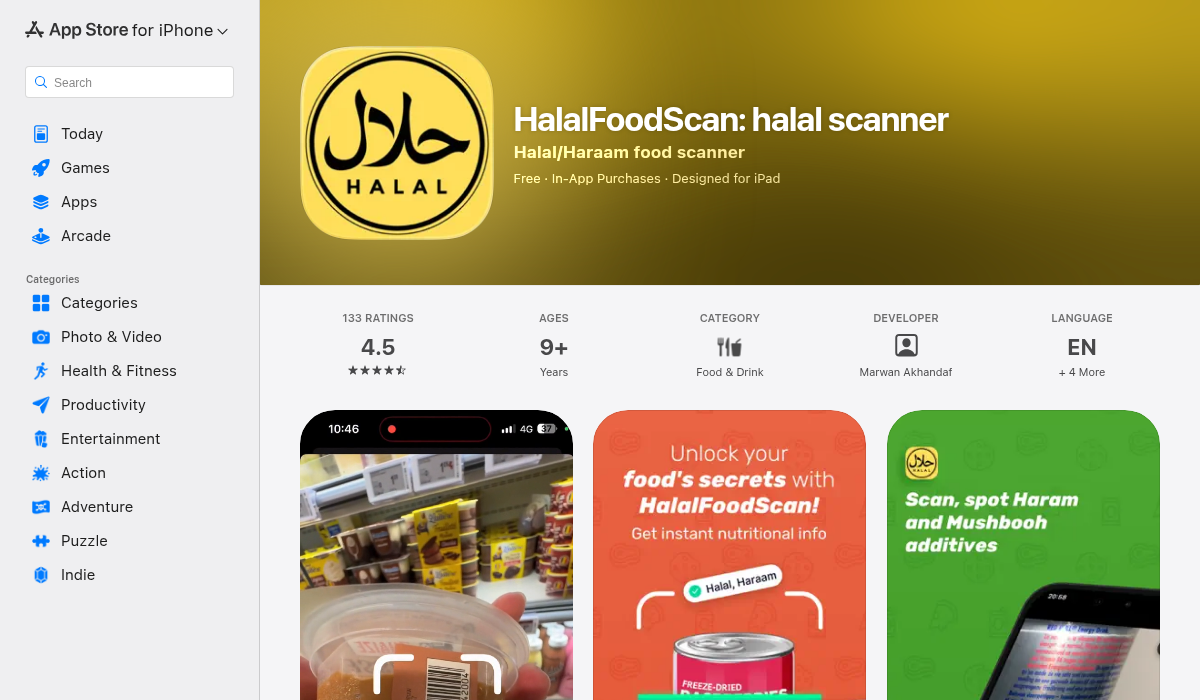
HalalFoodScan lets you scan any product barcode and instantly see its halal status. For cheese products, the app identifies the type of rennet used and provides a clear Halal, Haram, or Mushbooh (doubtful) classification.
The app's database covers millions of products, and for items not in the database, you can use the AI-powered ingredient scanner to analyze the back of the package. It specifically flags:
- ✅ Microbial/vegetable rennet — Halal
- ⚠️ Animal enzymes (non-pork) — Mushbooh (depends on madhab)
- ❌ Pork enzymes — Haram
Quick Reference: Rennet Types Breakdown
| Rennet Type | Source | Halal Status |
|---|---|---|
| Microbial | Fungi/bacteria | ✅ Halal (all opinions) |
| Vegetable | Plants (thistle, fig) | ✅ Halal (all opinions) |
| FPC | Fermentation | ✅ Halal (all opinions) |
| Animal (bovine) | Calf stomach | ⚠️ Depends on madhab |
| Porcine | Pig stomach | ❌ Haram (all opinions) |
Pro Tips for Cheese Shopping
- Check for "Suitable for Vegetarians" — This is the easiest indicator that no animal rennet was used.
- Look for "Microbial Enzymes" or "Non-Animal Enzymes" — These are always halal-friendly.
- Use a scanning app — Apps like HalalFoodScan save time and provide instant clarity.
- When in doubt, ask — Contact the manufacturer; most have customer service that can clarify enzyme sources.
- Know your madhab — If you follow the Hanafi opinion, you have more flexibility with non-pork animal rennet.
The Bottom Line
Rennet and cheese don't have to be confusing. Here's what you need to remember:
- Microbial, vegetable, and FPC rennet are halal according to all scholarly opinions—look for these first.
- Animal rennet depends on your madhab: Hanafis consider it permissible (as long as it's not pork), while others require halal-slaughtered animals.
- Pork-derived rennet is haram according to all opinions—but it's rare in mainstream cheese.
When in doubt, technology makes life easier. Scanning a barcode takes seconds and removes the guesswork from grocery shopping.
Note: For specific religious rulings (fatwa), always consult with qualified Islamic scholars or your local imam. This article provides general information based on recognized Islamic sources and scholarly opinions.
If you want to simplify your halal food journey, HalalFoodScan is worth trying—it's free to download and covers millions of products worldwide.