
Red Dye 40 Checker Apps: What Parents Should Know
Red Dye 40 is everywhere — from kids' cereal to strawberry yogurt — and parents are increasingly concerned about its effects on behavior and health.
If you've ever noticed your child becoming unusually hyperactive after eating certain colorful snacks, you're not alone. Red Dye 40, also known as Allura Red AC or E129 in Europe, has been linked to hyperactivity symptoms in children, particularly those with ADHD. The EU already requires warning labels on foods containing this dye, but in the US, it's still used freely in thousands of products.
The good news? There are now apps designed to help parents identify these hidden additives before they end up in your shopping cart. Here's what you need to know about Red Dye 40 and how technology can help you make safer choices for your family.
Why Parents Are Worried About Red Dye 40
Red Dye 40 is a synthetic food coloring made from petroleum. It's used to make foods look more appealing — think bright red candies, strawberry-flavored products, and even some "white" foods that use it to create a more vibrant appearance.
The concern stems from research linking artificial food dyes to behavioral issues in children. The famous "Southampton Six" study in 2007 found that certain food dyes — including Red 40 — were associated with increased hyperactivity in children. This led to EU regulations requiring warning labels on products containing these colorings.
"It's literally in everything and my toddler is starting to have some behavioral issues. He's very hyperactive even for his young age. I'm considering a diet change as I've read and heard red dye causes behavior issues in kids."— Reddit user in r/ParentingADHD
The tricky part? Red Dye 40 hides in unexpected places. It's not just in obviously red foods — it shows up in pickles, chocolate products, vitamins, and even some medications. Checking every label at the grocery store can feel impossible.
What the Research Actually Says
Let's be clear about the science: Red Dye 40 isn't poison, and it won't harm every child. However, research suggests that some children — particularly those already sensitive to additives or diagnosed with ADHD — may experience exacerbated symptoms after consuming it.
Key findings include:
- The Southampton study found increased hyperactivity in children who consumed artificial colors
- Effects were more noticeable to parents than teachers or doctors
- Individual sensitivity varies significantly — some kids show no reaction at all
- The EU requires warning labels stating products "may have adverse effects on activity and attention in children"
"This kind of labelling could change lives, because mental health issues in children don't lead to parents scrutinizing labels. It leads parents to find therapists and medicate instead."— Reddit user in r/foodscience
Apps That Help You Check for Red Dye 40
The easiest way to avoid Red Dye 40 and other concerning additives is to use a food scanning app. Here's what's available in 2026:
1. Yuka
Yuka is one of the most popular food scanning apps with a clean interface and health scores for products. It identifies additives and rates them based on potential health impacts.
- ✅ Large product database
- ✅ Easy-to-understand health scores
- ❌ Doesn't specifically flag insect-derived ingredients
- ❌ Limited AI analysis features
2. FoodCheckr — AI-Powered Additive Scanner
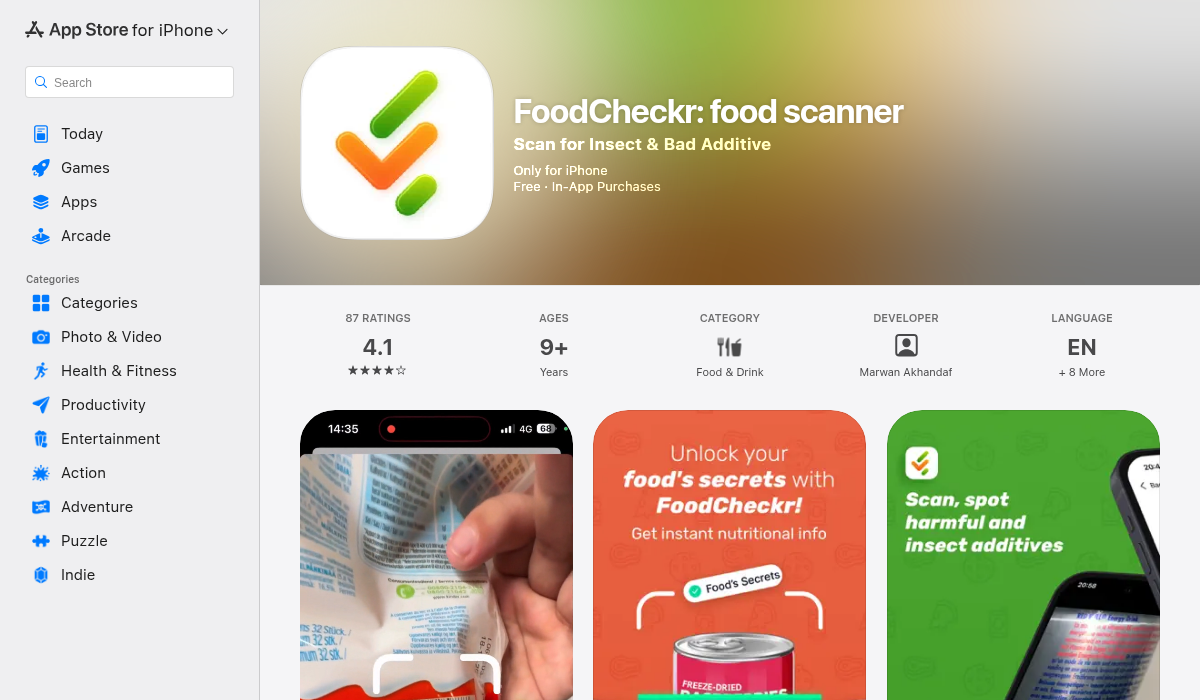
FoodCheckr takes a different approach with AI-powered ingredient analysis specifically designed to catch harmful additives. What sets it apart is its focus on the additives that actually matter to health-conscious parents.
The app categorizes additives into risk levels:
- 🟢 Safe — Generally recognized as safe
- 🟡 Caution — Some concerns, limit intake
- 🔴 Avoid — Potentially harmful, avoid if possible
Key features for parents worried about dyes:
- ✅ Identifies Red Dye 40 (E129), Yellow 5 (E102), and other synthetic dyes
- ✅ AI-powered bioengineered ingredient detection
- ✅ Insect-derived ingredient detection (carmine, shellac)
- ✅ Complete nutritional breakdown
- ✅ Scan history for quick reference
- ✅ No data collection — privacy-focused
FoodCheckr specifically flags the "Southampton Six" dyes that have been linked to hyperactivity, making it particularly useful for parents managing ADHD or behavioral concerns.
3. Open Food Facts
Open Food Facts is a free, community-driven database with information on millions of products. It's comprehensive but can be overwhelming due to the amount of data presented.
- ✅ Free and open-source
- ✅ Huge product database
- ❌ Interface can be complex
- ❌ Data quality varies (community-contributed)
Pro Tips for Avoiding Red Dye 40
- Scan before you buy — Take 5 seconds to scan products at the store. It becomes second nature quickly.
- Check unexpected products — Red Dye 40 hides in pickles, marshmallows, chocolate syrup, and vanilla ice cream. Don't assume a product is safe just because it's not red.
- Look for natural alternatives — Many products now use beet juice, paprika, or other natural colorings instead. These are often labeled "no artificial colors."
- Check medications too — Children's vitamins and liquid medicines often contain artificial dyes. Ask your pharmacist about dye-free alternatives.
- Track reactions — Keep a simple log of what your child eats and their behavior. This helps identify personal sensitivities.
The Bottom Line
Red Dye 40 isn't necessarily dangerous for all children, but if you've noticed behavioral changes in your kids after eating certain foods, it's worth investigating. The science supports being cautious, especially for children with ADHD or known sensitivities.
The simplest approach? Use a scanning app to quickly check products before buying. It takes seconds and can save you hours of label-reading frustration. Apps like FoodCheckr make it easy to identify not just Red Dye 40, but all the additives you might want to avoid — from artificial colors to preservatives to insect-derived ingredients.
Your kids don't need artificial colors to enjoy their food. And now, avoiding those additives has never been easier.