
Seed Oil Detector Apps: Can You Really Scan for It?
You've probably heard the buzz about seed oils being everywhere — in chips, salad dressings, even "healthy" granola bars. But actually finding products without canola, soybean, or sunflower oil? That's where things get complicated.
The anti-seed-oil movement has exploded in recent years, with communities on Reddit like r/StopEatingSeedOils growing rapidly as people try to reduce their intake of omega-6-heavy vegetable oils. The challenge isn't commitment — it's identification. Seed oils hide under vague labels like "vegetable oil" or get buried in ingredient lists.
So can you actually scan a product and find out if it contains seed oils? We tested the options.
Why People Are Avoiding Seed Oils
The concern centers on polyunsaturated fatty acids (PUFAs) and their high omega-6 content. While some omega-6 is necessary, modern diets often contain a wildly imbalanced omega-6 to omega-3 ratio — sometimes as high as 20:1 when closer to 4:1 might be healthier.
Critics argue that excessive seed oil consumption may contribute to inflammation, oxidative stress, and various metabolic issues. Whether you're fully on board with avoiding them or just curious about what's in your food, knowing what you're eating is always valuable.
"Is there no app that does a good job? Particularly an app that has all the foods WITHOUT seed oils in the database. By scanning it into the system, it would help others quickly identify what foods are safe & which to avoid."— Reddit user in r/StopEatingSeedOils
The Challenge With Scanning for Seed Oils
Here's the problem: seed oils aren't always clearly labeled. "Vegetable oil" on a US label could mean soybean, canola, corn, or a blend. Some products list "and/or" ingredients depending on what's cheaper that week. And many barcode databases simply don't have detailed enough ingredient data.
This means a seed-oil-specific scanner needs to either:
- Have an extensive ingredient database with detailed oil breakdowns
- Use OCR/AI to read ingredient labels directly from photos
- Flag ambiguous terms like "vegetable oil" as potential concerns
Apps That Actually Help
1. Seed Oil Food Scanner
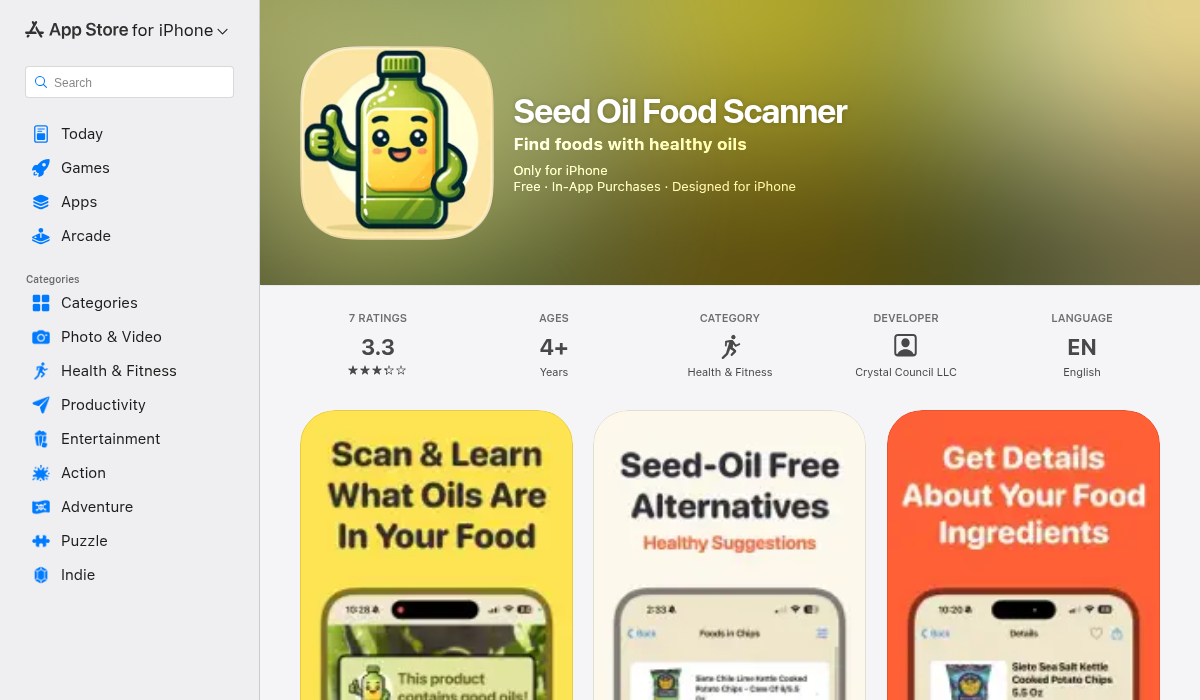
This dedicated seed oil scanner lets you scan barcodes to check if products contain seed oils. It uses a database approach, pulling ingredient data and highlighting problematic oils.
- ✅ Purpose-built for seed oil detection
- ✅ Barcode scanning
- ✅ Community-driven database
- ❌ Database coverage can be limited for regional products
- ❌ May miss products not in the database
2. Seed Oil Detector (Label Photo Scanning)
A newer approach that uses AI to read ingredient labels directly from photos. You snap a picture of the ingredients list, and it identifies seed oils — including detecting when "vegetable oil" is likely seed oil based on the product type.
- ✅ Works on any product with readable ingredients
- ✅ Doesn't rely on barcode database
- ✅ Explains omega-6 risks with research links
- ❌ Requires clear photos of ingredient lists
- ❌ AI interpretation isn't perfect
3. FoodCheckr — Broader Additive Scanner
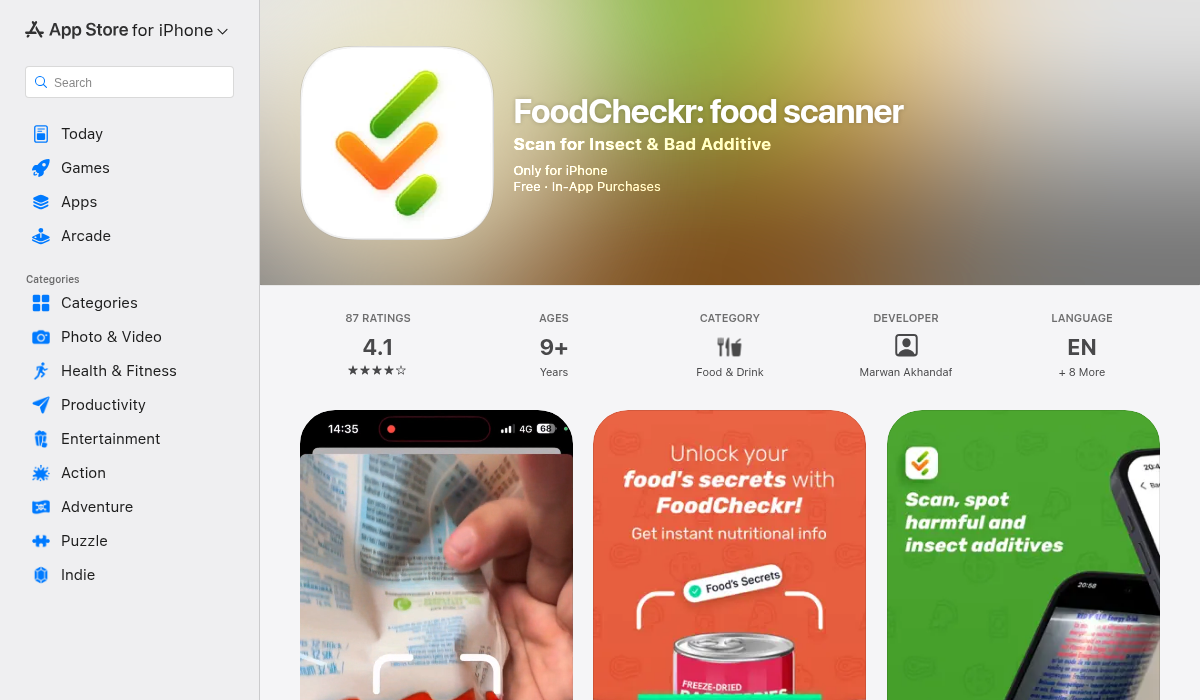
While not specifically a seed oil app, FoodCheckr takes a comprehensive approach to ingredient scanning. It flags harmful additives, bioengineered ingredients, and insect traces — and its ingredient analysis helps you spot oils in the ingredient list.
- ✅ Full nutritional info (energy, proteins, sugars, fats)
- ✅ Harmful additive detection
- ✅ AI bioengineered ingredient detection
- ✅ Insect trace detection
- ✅ Scan history for tracking
- ❌ Not specifically designed for seed oil detection
For those who care about seed oils as part of a broader clean-eating approach, FoodCheckr offers a more holistic view of what's in your food beyond just oils.
4. Restaurant Finders: Seed Oil Scout & Local Fats
Dining out is arguably harder than grocery shopping when avoiding seed oils. Most restaurants cook with vegetable oils because they're cheap. These apps take a different approach — mapping restaurants that cook with healthier fats like tallow, lard, butter, or olive oil.
- ✅ Community-reviewed restaurant data
- ✅ Helps with the hardest part: eating out
- ❌ Limited coverage outside major cities
- ❌ Restaurant practices can change
What Works Best in Practice
After testing these approaches, here's the reality:
- For packaged foods: Combining a barcode scanner with photo-based ingredient reading gives you the best coverage. Barcodes work when the product is in the database; photo scanning handles everything else.
- For restaurants: Community-driven apps help, but honestly, asking the restaurant directly is still the most reliable method.
- For overall ingredient awareness: A comprehensive scanner like FoodCheckr helps you understand everything in your food, not just oils.
Pro Tips for Avoiding Seed Oils
- Learn the aliases — Vegetable oil, canola oil, rapeseed oil, soybean oil, sunflower oil, safflower oil, corn oil, grapeseed oil, rice bran oil, and cottonseed oil are all seed oils
- Check the order — Ingredients are listed by weight; oils near the top mean more in the product
- Watch "and/or" labels — "Contains one or more of: soybean, canola, sunflower oil" means they use whatever's cheapest
- Cook at home — The surest way to avoid seed oils is controlling your own kitchen with butter, olive oil, tallow, or coconut oil
The Bottom Line
Can you really scan for seed oils? Yes — but with caveats. Dedicated seed oil scanners work well for products in their database. Photo-based AI scanning handles products without barcodes. And comprehensive ingredient scanners like FoodCheckr give you the full picture of what's in your food.
The technology is getting better, but reading labels yourself remains a reliable backup. At minimum, these apps make the process faster and catch things you might miss — especially those sneaky "vegetable oil" listings.
If you want to understand everything in your food beyond just oils, FoodCheckr gives you a complete breakdown including additives, bioengineered ingredients, and nutritional data.